
By: Abdul Razak*
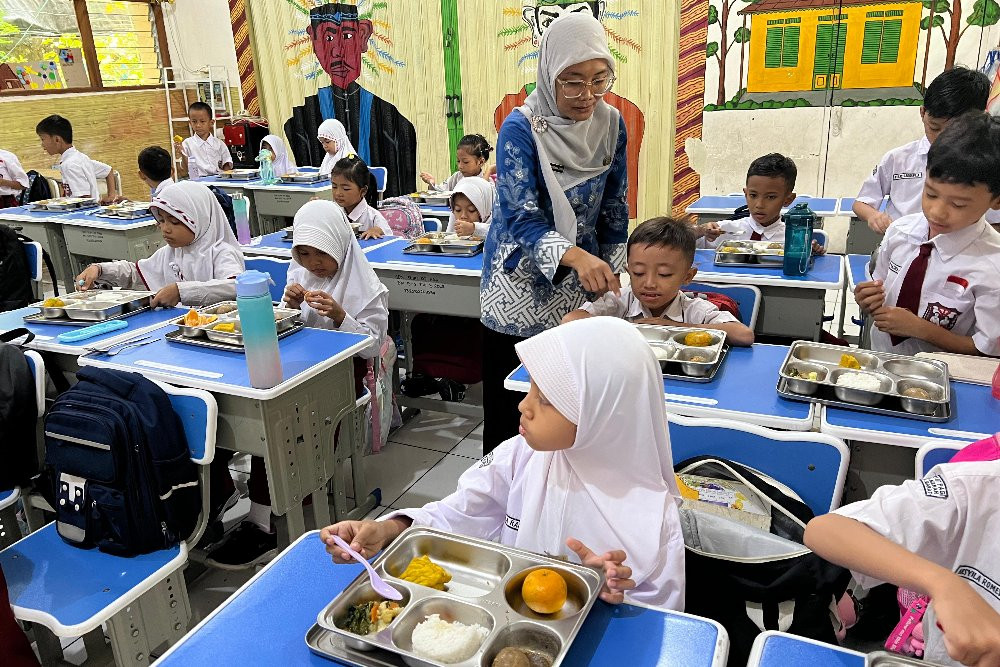
The government’s efforts to expand access to quality education are now further strengthened through the implementation of the Free Nutritious Meals Program (MBG). This program, a national priority during President Prabowo Subianto’s administration, not only focuses on meeting children’s nutritional needs but has also transformed into a strategic instrument to promote equitable education quality, particularly in underdeveloped, frontier, and outermost (3T) regions.
The government’s latest policy demonstrates a clear commitment to regions with persistent nutritional challenges. MBG for schoolchildren in 3T regions will now be provided up to six days a week. In fact, additional distribution on Saturdays is being implemented specifically in areas with a high risk of stunting as an affirmative measure to ensure children’s nutritional adequacy is maintained.
The Head of the National Nutrition Agency, Dadan Hindayana, explained that this policy is the result of program strengthening discussed in a high-level coordination meeting with the President. He explained that providing MBG on Saturdays in areas with a high risk of stunting is a strategic step to ensure children receive adequate nutrition every day.
Generally, MBG implementation follows the school day, i.e., five days a week. However, the government is implementing a special approach in vulnerable areas to ensure distribution continues even outside of school hours. This approach emphasizes that the MBG program does not simply follow the rhythm of formal education but is oriented towards the real needs of children as students and the future generation.
Furthermore, Dadan Hindayana emphasized that the implementation of this policy is based on measurable and accurate data. The determination of priority areas refers to the results of the 2024 Indonesian Nutrition Status Survey (SSGI), which maps areas with a high risk of stunting. He stated that his office is collaborating with regional education and health offices to ensure data validity so that the program can be targeted effectively.
The data collection includes the number of schools, the number of students, and the prevalence of stunting in each region. Several regions in eastern Indonesia, as well as several areas in Sumatra and Papua, are prioritized due to the persistent challenges of meeting nutritional needs in these areas. Dadan also emphasized that data integrity is key to the program’s success, as it directly relates to the health and future of the younger generation, as well as ensuring that no child is left behind in terms of nutritional needs.
These concrete steps taken by the central government have also been actively responded to by local governments. One example is the commitment of the Bengkayang Regency Government in West Kalimantan, which is finalizing preparations for implementing the MBG program in the 3T (third-most remote) areas. This effort is being carried out through intensive coordination with the National Nutrition Agency to ensure technical readiness and infrastructure in the field.
The Regent of Bengkayang, Sebastianus Darwis, stated that the consultations with the National Nutrition Agency (BGN) are a crucial part of ensuring the MBG program is effective, on-target, and able to address the challenges of meeting nutritional needs in remote areas. He added that the local government has also discussed various technical aspects, from food distribution mechanisms and operational standards for the Nutrition Fulfillment Service Unit (SPPG) kitchens to strategies for reaching areas with limited access.
He hopes that with thorough preparation, the MBG program in his region can have a real impact on improving the nutritional quality of the community while supporting the well-being of residents in remote areas. This commitment aligns with the government’s efforts to accelerate development in the 3T (frontier and outermost) regions, which continue to face various limitations.
Not only the central and regional governments, but also academics are playing a role in ensuring the success of the MBG program. Hasanuddin University (Unhas) is one example of a university committed to supporting the program’s implementation through the development of the Nutrition Fulfillment Service Unit (SPPG), or MBG kitchen.
Unhas Rector, Prof. Jamaluddin Jompa, emphasized that the nutritious food provision program must be part of the impactful campus concept. He stated that the SPPG functions not only as a production kitchen but also as a center for integrating research, expertise, and the implementation of sustainable community nutrition programs.
According to him, the entire SPPG process is driven by the campus’s internal strengths, including the involvement of nutrition experts and the utilization of superior campus products. He explained that this approach aims to ensure that each product produced is of high quality and can ensure the community’s nutritional needs are met.
Furthermore, Prof. Jamaluddin Jompa also views the SPPG as a living laboratory connecting education, research, and community service. Through this facility, students and lecturers can be directly involved in the production, research, and development of nutrition-based food products. Thus, the MBG not only provides direct benefits to recipients but also creates a practical and sustainable learning ecosystem.
He added that the SPPG has great potential to become a center of innovation in the development of sustainable nutrition-based food products. Therefore, accelerating the operation of this facility is crucial so that it can function optimally and become a national model for university-based nutrition services.
Through synergy between the central government, local governments, and educational institutions, the Free Nutritious Meal Program is increasingly demonstrating its role as a strategic instrument in equitable distribution of quality education. Optimal nutrition is believed to improve learning concentration, student attendance, and academic achievement, especially in areas that have historically faced limitations.
)* Policy Analyst
