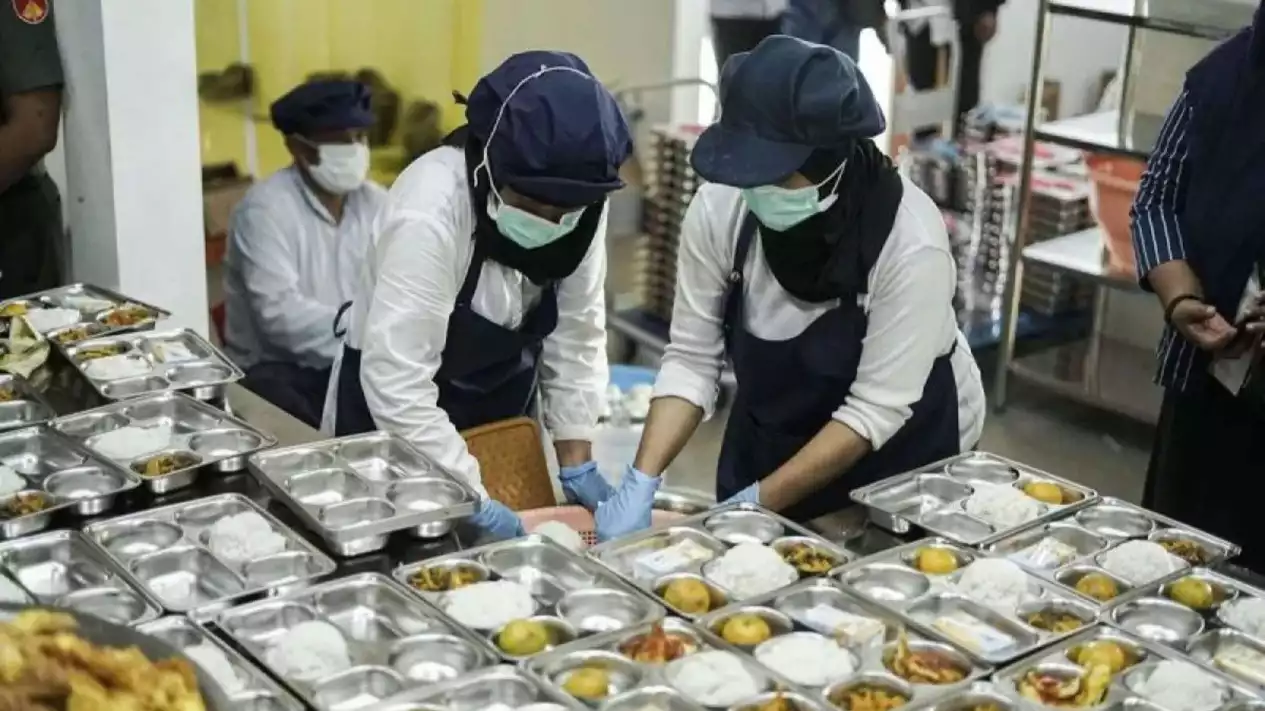

Jakarta – The Free Nutritious Meals (MBG) program continues to demonstrate its multidimensional impact on national development. Focusing not only on fulfilling the nutritional needs of Indonesian children, the MBG is also designed to stimulate regional economies while sustainably strengthening the education sector.
Deputy Minister of Home Affairs, Bima Arya Sugiarto, emphasized that the MBG is a strategic program with a comprehensive design. “The MBG is designed not only to focus on health, but also on economic empowerment and education. Therefore, the Ministry of Home Affairs’ focus is on ensuring that all regional heads continue to work together,” Bima said.
According to him, the success of the MBG program is largely determined by cross-sector collaboration, particularly the active role of local governments. In its implementation, 17 local governments support the program, ranging from strengthening the food ecosystem, ensuring food security, collecting beneficiary data, to health education and monitoring. All of these roles are regulated by Presidential Regulation No. 115 of 2025 concerning Governance of the MBG Program.
Bima emphasized the importance of strengthening the Hygiene Sanitation System (SLHS) as part of efforts to maintain the quality and safety of distributed food. This strengthening aligns with Government Regulation No. 1 of 2026 concerning Food Safety.
“So that other agencies and regional government agencies can also be involved. Not just the Health Agency, but also the food security agency, and coordination with the Food and Drug Monitoring Agency (BPOM). So, this circular from the Minister of Home Affairs will focus first on SLHS in more detail, and secondly on strengthening the supply chain,” he said.
This strengthening of the supply chain also creates opportunities for local economic empowerment. The involvement of farmers, MSMEs, and regional cooperatives in providing food for the MBG creates a productive economic cycle. Thus, the state budget not only impacts improving children’s nutritional status but also strengthens the economy at the grassroots level.
In terms of education, MBG is believed to improve students’ concentration and participation in learning. Adequate nutritional intake will directly impact children’s comprehension and stamina at school, thereby boosting the quality of learning.
Bima also emphasized the importance of regularly monitoring children’s nutritional status as part of the program evaluation. “We need to consider the technical mechanism, whether it’s through the National Agency for National Development Planning (BGN), the Health Office, or included in the free health checks. So, every three months, we can monitor our children,” he added.
With strong synergy between the central and regional governments, MBG serves not only as a food aid program but also as a strategic instrument for human development. By strengthening nutrition, empowering local economies, and supporting quality education, MBG serves as a crucial foundation for developing a healthy, intelligent, and productive generation, leading to a more advanced Indonesia.
