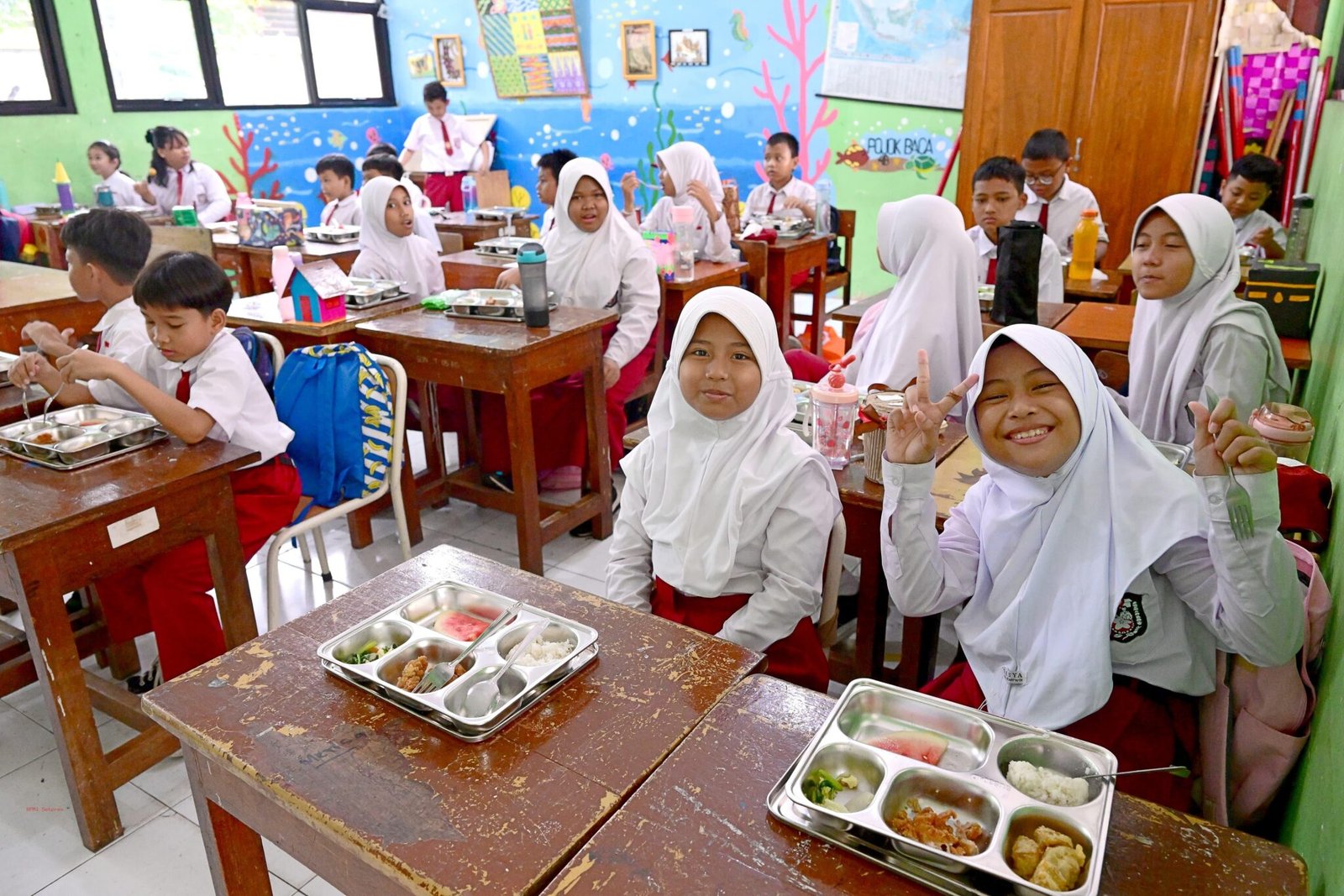
MBG is tangible evidence of the state’s presence in fulfilling children’s rights to balanced nutrition

By: Maheswary Putri )*
The Free Nutritious Meal Program (MBG) is one of the government’s concrete steps to ensure children’s right to balanced nutrition. Its presence is not merely a social policy, but also a tangible manifestation of the state’s presence in meeting the basic needs of the nation’s future generations. With support from various ministries, institutions, and local governments, the MBG continues to expand its reach to reach all levels of society, including children in remote areas.
Health Minister Budi Gunadi Sadikin emphasized that the Ministry of Health plays a crucial role in ensuring the quality and safety of food distributed through Nutrition Fulfillment Service Units (SPPG). The Ministry is responsible for multi-layered oversight, from reporting standardization and food safety certification to field distribution monitoring.
Budi explained that standardization is necessary to anticipate potential food poisoning cases, while certification is implemented in the form of a Certificate of Hygiene and Sanitation, a Hazard Analysis and Critical Control Points certification for food risk management, and halal certification. These three standards are designed to ensure that the nutritious food children receive is not only healthy but also safe and complies with applicable regulations.
In addition, the Ministry of Health is also developing a data consolidation system with the National Nutrition Agency (BGN) to record daily and weekly reports on potential food security disruptions. This data serves not only for evaluation but also allows for regular publication, similar to the mechanism used during the pandemic. The government is committed to ensuring that any potential cases can be quickly anticipated through an emergency response task force involving regional health offices, public hospitals, and school health units.
Supervision focuses not only on food production but also on the beneficiaries. Schools and Islamic schools (madrasah) are key points in daily monitoring. Through collaboration with the Ministry of Primary and Secondary Education and the Ministry of Religious Affairs, the School Health Program (UKS) is involved in conducting initial inspections before food is consumed by children. The government wants to ensure that any indication of changes in food, such as an abnormal color or odor, can be addressed promptly before they cause health problems.
As part of a comprehensive evaluation, the Ministry of Health has established a program to monitor students’ nutritional status through regular height and weight measurements. This data will be recorded in detail to monitor children’s development and evaluate the long-term effectiveness of the MBG. Furthermore, the scope of the annual nutrition survey has been expanded, extending beyond stunting to include school-age children aged five and older.
Meanwhile, the Head of the National Nutrition Agency, Dadan Hindayana, assessed that the MBG program has shown positive results even though it has only been running for a few months. He explained that the program’s benefits are not only evident in the number of beneficiaries, which has reached millions of children, but also in the tangible improvements in students’ health and eating habits. Dadan revealed that the program’s initial target was only 500 Nutrition Implementation Units, but this number has now increased more than tenfold. This reflects the high level of enthusiasm and support for the MBG program.
The program’s direct impact is also evident in education. Field reports indicate that student attendance rates, previously around 70 percent, have increased to 95 percent following the MBG program. Research at several nutrition centers has shown healthy weight gain, improved health test results, and a decrease in the number of children suffering from malnutrition. This demonstrates that investing in nutrition through MBG has a significant impact on the quality of life of the younger generation.
Dadan also explained that the program’s nutritional standards are balanced, with 30 percent protein, 40 percent carbohydrates, and 30 percent fiber. The menu is tailored to local wisdom and children’s tastes in each region, allowing children to enjoy the food without wasting it. For example, in Sukabumi, children prefer beef, while in Banten, catfish is the preferred choice. These menu adjustments demonstrate the program’s flexibility and respect for local food cultures.
The success of the MBG is also inseparable from its regional division strategy. The National Development Planning Agency (BGN) differentiates between agglomeration areas managed by partners and 3T areas managed by task forces under the coordination of the Ministry of Home Affairs. This step was taken to ensure that no child is left behind, even in hard-to-reach areas.
To ensure quality implementation, every SPPG officer is required to undergo intensive training before going into the field. Furthermore, transparency mechanisms are strengthened by requiring each MBG kitchen to post daily menus on social media. This way, the public can provide direct feedback, creating a more transparent, participatory oversight system.
The presence of the MBG program is concrete evidence that the government is committed to ensuring every child’s right to balanced nutrition. With strict supervision, adaptive implementation, and direct benefits felt by millions of children, this program is a crucial foundation for the birth of a healthy, intelligent, and productive generation of Indonesians. The government is optimistic that through the MBG, the vision of a Golden Indonesia 2045 will become even more a reality, as healthy children today are strong leaders of tomorrow.
)* Public Policy Observer
