
By: Ricky Rinaldi
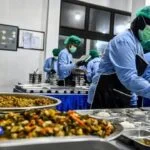
The Indonesian government continues to reinforce its commitment to building national economic self-sufficiency through various strategic policies. One of its flagship initiatives currently showing tangible impacts on people’s economic welfare is the Free Nutritious Meals Program (MBG). More than just aiming to improve children’s nutrition, MBG has become a new engine driving the growth of micro, small, and medium enterprises (MSMEs) and creating jobs, especially in rural areas.
Implemented gradually, the MBG program has reached nearly five million beneficiaries as of mid-June 2025, supported by 1,716 Nutritional Service Units (SPPG). The government has allocated IDR 4.4 trillion to support its implementation and plans to raise the budget up to IDR 100 trillion to meet the target of 82.9 million recipients by the end of the year.
Riza Adha Damanik, Deputy for Micro Enterprises at the Ministry of MSMEs, emphasized that around 80% of the MBG budget is allocated for food purchases, most of which are supplied by farmers, fishermen, livestock breeders, and food-sector MSMEs. This opens up vast opportunities for approximately 29 million rural MSMEs to participate in the MBG ecosystem and significantly increase their income.
In addition, the program positively impacts around 12 million traditional market vendors who have the potential to become staple goods suppliers, as well as 30,000 small-scale catering businesses capable of preparing thousands of meal portions daily. This involvement naturally leads to the creation of more jobs in food production, distribution, and services.
Beyond the food sector, MBG is also creating new business opportunities in waste management. Riza noted that both organic and non-organic food waste can be processed by micro-entrepreneurs into economically valuable products. Such innovations play a vital role in developing an inclusive and sustainable circular economy.
Aligned with MBG’s development, the Ministry of MSMEs has launched new initiatives to broaden MSME participation within the program ecosystem. One such example is the collaboration with Al-Ashr Islamic boarding school in Bogor, proving that cross-sectoral partnerships can effectively strengthen people-centered economic resilience.
Muhammad Arbani, founder of Kami UMKM, believes that MBG has the potential to boost economic growth by up to 8%, provided that MSMEs receive regular support. He also highlighted the importance of protecting credible MSMEs so they can play an optimal role in the MBG ecosystem—particularly in areas like supply reliability, packaging, and distribution.
Riza added that to maximize the program’s impact, a more structured economic strategy is needed, especially through a clustering approach. Micro-enterprises often struggle with productivity, financing, and market access. Grouping them into economic clusters could enable them to thrive by forming partnerships with small, medium, and even large businesses, creating a more integrated business ecosystem.
According to the Ministry’s data, 99% of MSMEs in Indonesia are micro-enterprises, most of which remain outside the scale economy. This makes growth difficult. Through clustering, common challenges—like high financing costs and limited markets—can be overcome collectively.
One of the strategies currently being implemented is the formation of MSME holding companies based on productive sectors. The ministry has established nine main clusters, including the MBG sector, which already involves over 82,000 MSMEs. Other clusters include tourism, culinary arts, handicrafts, health and beauty, and public housing. Each cluster is expected to become a new economic pillar that drives inclusive and equitable growth.
This clustering strategy is considered effective in reducing input costs, enhancing competitiveness, and expanding market access for MSMEs. Furthermore, MSME participation in larger supply chains will accelerate their transition to higher business classes. The partnerships formed within this ecosystem enable cross-scale synergy, which ultimately supports sustainable national economic growth.
Riza emphasized that if this clustering approach is expanded and matured, an 8% national economic growth target is attainable. By engaging more MSMEs in MBG-related production, distribution, and waste management, the government is effectively building economic resilience from the grassroots up.
The MBG Program is not just a nutrition solution—it is a milestone in people-centered economic development. Through this program, millions of MSMEs gain new opportunities, millions of new jobs are created, and rural economies are revitalized. If properly managed, MBG can become a catalyst for inclusive, sustainable national economic growth that empowers ordinary people.
—Strategic Issues Analyst
