
By: Rindiana Saraswati )*
The MBG Program was introduced not only as a solution to nutritional problems among Indonesian children but also as a stimulus for the national economy. Behind every meal served to students, santri, and pregnant women lies a cycle of economic activity involving many hands—from farmers in rural areas to small business owners in cities. The program has created a new, inclusive economic ecosystem in which state funds do not remain concentrated at the center but instead flow strongly to the grassroots, revitalizing real sectors that have long been the backbone of the people’s economy. This is tangible proof that investing in human capital can go hand in hand with strengthening the people’s economy.
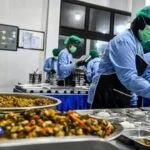
Head of the National Nutrition Agency (BGN), Dadan Hindayana, explained that the program aims to create a new ecosystem that drives community-level economic activity. One of the most visible impacts of MBG implementation is the massive creation of new job opportunities across Indonesia. The establishment of Nutrition Service Units in various regions requires a significant number of operational workers—from cooks, kitchen assistants, and cleaners to logistics and administrative staff. BGN projects that each community kitchen unit will absorb dozens of local workers, which, when accumulated nationwide, could reach millions of new jobs.
Beyond direct employment, the MBG Program also acts as a catalyst for the growth of MSMEs and cooperatives. The government has emphasized its commitment not to monopolize food supply through large-scale factories, but to empower community kitchens and local catering services instead. This policy encourages local MSMEs to upgrade their quality, as they must meet strict nutritional and hygiene standards. With consistent and guaranteed daily orders, local culinary businesses enjoy a stable market, allowing them to grow, expand their assets, and improve employee welfare. This represents a true model of a collaborative people’s economy that empowers local potential.
The agriculture, livestock, and fisheries sectors have also received tremendous positive benefits through the program’s food supply chain mechanisms. The daily demand for large quantities of staple ingredients such as rice, eggs, chicken, fish, vegetables, and milk creates a steady market for local farmers and fishers. MBG acts as an off-taker that ensures their harvest is absorbed at fair prices. As a result, farmers are no longer haunted by fears of price drops during harvest seasons or difficulties finding buyers. This stability motivates them to increase land productivity and improve crop quality to meet the nutritional needs of children in their own communities.
Deputy Head of BGN, Sony, emphasized that the state budget allocated for this program is intended to circulate within society. The trillions of rupiah disbursed for MBG are not merely pass-through funds but become capital that circulates repeatedly at the village and district levels. This multiplier effect occurs when food providers spend their income to purchase raw materials from farmers, pay wages to workers, and cover operational expenses. The rapid and widespread flow of money at the local level naturally boosts purchasing power and stimulates more equitable regional economic growth.
The MBG Program also helps reduce household spending, ultimately increasing family welfare. When nutritious school lunches are fully covered by the government, parents can reallocate the money otherwise used for pocket money or lunchboxes toward other essential needs such as education savings or household expenses. On an aggregate level, this cost saving increases disposable income, which in turn stimulates household consumption—one of the key drivers of national economic growth.
Member of Commission IX of the Indonesian House of Representatives, Sukur H. Nababan, noted that the program’s success relies on strong synergy between the central government, local governments, and community stakeholders in overseeing distribution and production. The involvement of Village-Owned Enterprises (BUMDes) and cooperatives in the supply chain is also an effective strategy to ensure that the economic benefits of the program are enjoyed by village economic institutions rather than large corporations. In this way, MBG serves as a powerful instrument for wealth distribution, narrowing the economic gap between urban and rural areas.
Ultimately, the MBG Program must be viewed through a comprehensive lens—as a dual strategy for human and economic development. It is not merely a charitable social program but a long-term investment building the foundation for Indonesia Emas 2045. With full stomachs and adequate nutrition, Indonesian children will grow into intelligent and productive generations; and with strong economic activity in villages, Indonesia will stand firm with robust economic resilience. MBG is proof that the state is present to honor its people, nurture their health, and improve their well-being.
*) The author is an observer of community-based economic development
