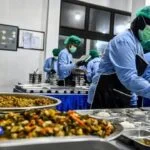

Jakarta – The government continues to intensify the implementation of the Free Nutritious Meals Program (MBG) as a national priority initiative to improve the quality of human resources from an early age. Initiated under the leadership of President Prabowo Subianto, the program targets elementary-level students across Indonesia, especially in regions with high stunting rates and limited access to healthy food.
MBG not only focuses on fulfilling children’s nutritional needs but also touches on the economic dimension. In its implementation, the government encourages food sourcing from local farmers, livestock breeders, and micro and small enterprises (MSMEs). This scheme not only opens new opportunities for the domestic economy but also creates a supply chain that empowers rural communities and accelerates regional economic circulation.
Diah Satyani Saminarsih, Founder and CEO of the Center for Indonesia’s Strategic Development Initiatives (CISDI), believes that the success of MBG can significantly contribute to the Human Development Index (HDI), particularly in the areas of life expectancy and education. This will have a direct impact on the quality of future generations entering the workforce.
“The impact of MBG is extensive. If children’s nutritional needs are met from school age, they grow up healthier, with better cognitive abilities and lower health risks. Healthy and intelligent children are the main capital for shaping a strong workforce in the future,” she stated.
Similarly, Mohammad Faisal, Executive Director of the Center of Reform on Economics (CORE) Indonesia, emphasized that, from a macroeconomic perspective, the program supports long-term human capital development.
“MBG can push HDI improvements, especially in life expectancy and education indicators. This has major implications for the quality of our future workforce. So this program is not just about free meals – it’s a long-term investment in the nation’s future,” he said.
Meanwhile, Head of the National Nutrition Agency (BGN), Dadan Hindayana, highlighted that with a multisectoral and participatory approach, MBG is expected to be a key foundation in building a healthy and productive generation of Indonesians. Beyond addressing child nutrition, the program stimulates grassroots economic activity.
“MBG is designed with a multisector and participatory approach, so the impact goes beyond schools to reach grassroots economies. If managed consistently and transparently, I believe MBG could become one of the most impactful social policy programs in Indonesia’s history,” he remarked.
Data from the Ministry of Education shows that regions piloting the MBG program have seen increased school attendance and improved student concentration. Children who previously went to school hungry now receive nutritious meals prepared by school kitchens or local catering services. On the economic side, purchasing ingredients from local producers brings direct benefits to farmers and small food businesses.
Local governments are encouraged to integrate MBG into their Regional Development Plans (RPJMD) and form integrated supervision teams to ensure food distribution is effective, hygienic, and well-targeted. Looking ahead, the MBG Program is expected not only to improve the nutritional quality of Indonesian children, but also to serve as a sustainable driver of local economies.
