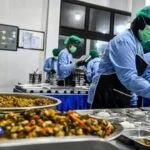

JAKARTA – The Free Nutritious Meals Program (MBG), launched by the government on January 6, 2025, continues to demonstrate its tangible contributions as a strategic breakthrough in developing the quality of Indonesia’s Human Resources (HR) from an early age. The program not only provides solutions to food access disparities, but also reinforces the government’s commitment to nurturing a superior generation toward Golden Indonesia 2045.
Professor Sandra Fikawati, a Professor at the Department of Nutrition and Deputy Chair of the Center for Nutrition and Health Studies at the University of Indonesia’s Faculty of Public Health, views MBG as a visionary policy capable of strengthening the foundations of children’s development comprehensively. “MBG is a major opportunity. This program can improve our competitiveness because our human resources are nurtured from an early age,” she said on Friday, November 28, 2025. She emphasized that for many years, Indonesia has lost competitiveness due to insufficient attention to children’s nutritional fulfillment.
Prof. Fika added that MBG significantly improves learning capacity, cognitive development, and school attendance, especially in disadvantaged and remote regions. According to her, the program is not merely a food assistance initiative, but a long-term investment to build a healthy, intelligent, and productive generation. “MBG must be a sustainable program. If it stops, we are the ones who will bear the loss,” she asserted.
A simulation of nutritious meal distribution in six regions showed a reduction in severe malnutrition from 2.0 percent to 0.5 percent within 15 weeks. Children experienced an average weight gain of 2 kg, height gain of 2.9 cm, and an increase in nutritional adequacy from 69.9 percent to 93.4 percent.
President Prabowo Subianto described MBG as a concrete step by the government to ensure that every Indonesian child grows healthy, strong, and competitive. He asserted that the program reflects the state’s commitment to its young citizens and represents a long-term investment in national human capital development. “This program was born out of my concern after seeing firsthand children suffering from malnutrition and stunting,” he said.
As of October 2025, the government has built 11,900 MBG kitchens to serve more than 35 million children and pregnant women. Beyond improving nutritional quality, the program also stimulates rural economies through the involvement of small-scale farmers, fishermen, MSMEs, and cooperatives as key suppliers.
Head of the National Nutrition Agency (BGN), Dadan Hindayana, emphasized that MBG is a crucial intervention to ensure Indonesia does not lose its demographic bonus. “If we don’t intervene now, the demographic bonus could turn into a demographic disaster,” he warned.
With these numerous achievements, the MBG Program is increasingly viewed as a driving force in improving human resource quality from an early age and a solid foundation for building a healthier, smarter, and more competitive Indonesian generation.
