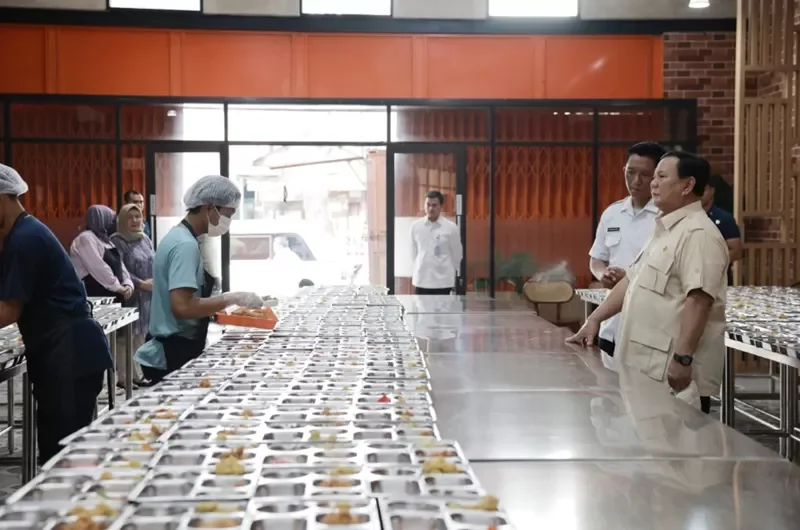

BGJakarta – The Free Nutritious Meals Program (MBG) launched by the government continues to show positive impacts, both in terms of community welfare and local economic growth. Since its implementation, the program has successfully absorbed new workers in various regions, creating employment opportunities and strengthening food security. By actively involving local communities, MBG not only focuses on providing nutritional meals but also contributes to enhancing the local economy.
The Deputy Head of the National Nutrition Agency (BGN), Sony Sonjaya, stated that one of the key factors behind the success of MBG is community involvement in sourcing raw materials. Sony emphasized that community participation is crucial, especially in ensuring a smooth supply of ingredients.
“Community involvement will help maintain the supply of raw materials, in line with the increasing number of Nutrition Service Operational Units (SPPG),” said Sony.
The success of MBG is evident from the rising number of BGN kitchens, which now total more than 15,000 units nationwide. However, the demand for certain commodities such as vegetables, eggs, and fruits has started to increase significantly.
To address this, Sony encouraged communities to maintain food supply stability by participating in urban farming or growing crops in their home gardens. “Urban farming can be a solution so that regions are not too dependent on long distribution chains,” he added.
The MBG program also supports local governments in coordinating food production based on village potential. For example, one village focuses on planting carrots, another on bananas, and another on raising layer or broiler chickens. With this approach, each area maintains a stock of raw materials to meet the needs of MBG kitchens, which continue to grow.
This achievement is further strengthened by the enthusiasm of MSMEs, with nearly 200 business actors directly involved in supplying raw materials and warmly welcoming this cross-sector initiative.
Meanwhile, the Indonesian Chamber of Commerce and Industry (Kadin) has also made significant contributions to the implementation of MBG. The Chairman of Kadin, Anindya Novyan Bakrie, revealed that Kadin has successfully built around 500 Nutrition Fulfillment Service Units (SPPG). The next target is to establish 1,000 units, which will absorb even more workers.
“We have spent Rp 750 billion to build these 500 SPPGs without any bank credit, as a form of trust in the government,” Anindya stated.
The MBG program initiated by the government has also had a positive impact on the local economy. Each MBG kitchen has created 50 jobs, meaning that around 25,000 workers are now involved in the program’s operations.
Additionally, the program has increased the demand for food commodities, stimulating the downstream agricultural sector and providing opportunities for farmers and businesses to supply raw materials for MBG.
In Central Kalimantan, the MBG program has successfully driven the local economy by involving more than 1,800 workers and 233 local suppliers. The Head of the Regional Office of the Directorate General of Treasury (DJPb) of Central Kalimantan, Herry Hernawan, stated that the program has helped improve the quality of life for the community, especially in previously underserved areas.
“With 58 active SPPGs, the program has served more than 150,000 beneficiaries, reaching various segments of the population from toddlers to adults,” said Herry.
The continued success of the MBG program demonstrates the government’s commitment not only to improving the nutritional status of the population but also to creating employment opportunities, empowering local economies, and strengthening national food security.
