
By: Frans Telenggen
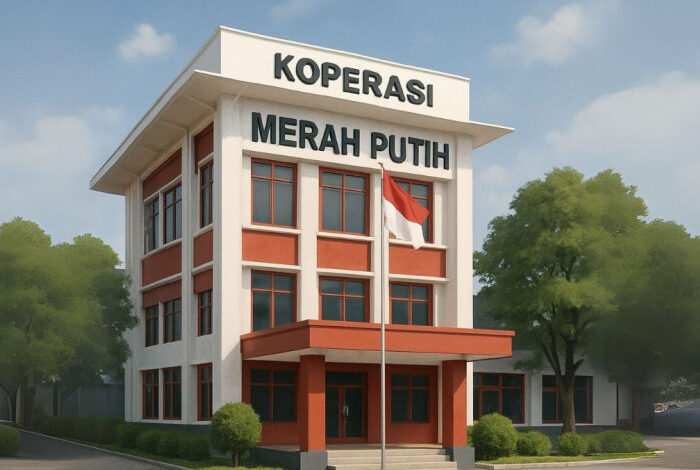
Fair and equitable economic development is a dream shared by all Indonesians, including the people of Papua. However, in reality, disparities in economic access and the dominance of unfair distribution structures remain major challenges—especially for villagers in remote parts of Papua. To address these issues, the government has taken strategic action by establishing the Koperasi Desa Merah Putih (Merah Putih Village Cooperatives). This policy is a concrete effort to bring about economic justice at the grassroots level while reducing dependence on middlemen and loan sharks who have long profited off the hard work of the poor.
The Merah Putih Village Cooperative is more than just an economic institution—it is a collective movement that revives the spirit of mutual cooperation (gotong royong), self-reliance, and active community participation in managing village potential. In Papua, the presence of this cooperative brings new hope to farmers, fishers, and other local economic actors who have long been burdened by lengthy and unprofitable distribution chains. These overly long chains have caused an imbalance in the prices of agricultural products and basic necessities, disadvantaging producers in villages and consumers in urban areas.
Minister of Villages and Underdeveloped Regions, Yandri Susanto, views the Merah Putih Village Cooperative as a concrete solution to cut off unfair distribution links. With these cooperatives, farmers no longer need to sell their harvest through intermediaries who often exploit their weak bargaining position. The cooperative will serve as the center for production, storage, and distribution of agricultural products and essential goods—ensuring farmers receive fair prices while consumers enjoy stable prices. This is a revolutionary step in creating a village economic structure that sides with the common people.
The establishment of these cooperatives is also in line with the constitutional mandate, particularly Article 33 of the 1945 Constitution, which positions cooperatives as a pillar of the national economy. The Governor of Central Papua, Meki Nawipa, emphasized that cooperatives are not merely economic entities but also embodiments of economic democracy. Every cooperative member has equal voting rights in determining the direction and policies of the cooperative, regardless of the amount of capital they contribute. The principle of “one person, one vote” is the moral foundation for building an equitable and inclusive economic system.
The launch of this cooperative initiative in Central Papua marks an important milestone in the region’s development journey. The Provincial Government of Central Papua has shown strong commitment to accelerating the formation of cooperatives. With over 1,200 villages and urban neighborhoods having been socialized, 847 villages having conducted village deliberations, and 581 cooperatives already legally established, this initiative is clearly more than just rhetoric—it is being implemented concretely on the ground. These numbers confirm that the Papuan people are welcoming the cooperatives as vehicles for local economic empowerment.
The Merah Putih Cooperative is also designed to be multifunctional. Beyond managing agricultural output and basic needs, it will also serve as a public service hub. The presence of subsidized goods outlets, village clinics and pharmacies for health services, as well as logistics warehouses and transportation facilities, positions the cooperative as a key node in the socio-economic activities of the village. This way, villagers no longer have to depend on urban centers for basic needs, as everything is available within their own communities.
The implementation of Merah Putih Cooperatives is based on Presidential Decree No. 9 of 2025 on the Acceleration of Merah Putih Village Cooperative Development. This demonstrates that these cooperatives are not standalone efforts but are part of a national policy framework with strong legal grounding. The central government places significant attention on accelerating village-based economic development, especially in underdeveloped areas like Papua. It is hoped that within the next few years, every village in Papua will have an active and productive cooperative driving the people’s economy.
Of course, the challenges are not insignificant. Changing the public mindset from consumption-oriented to
