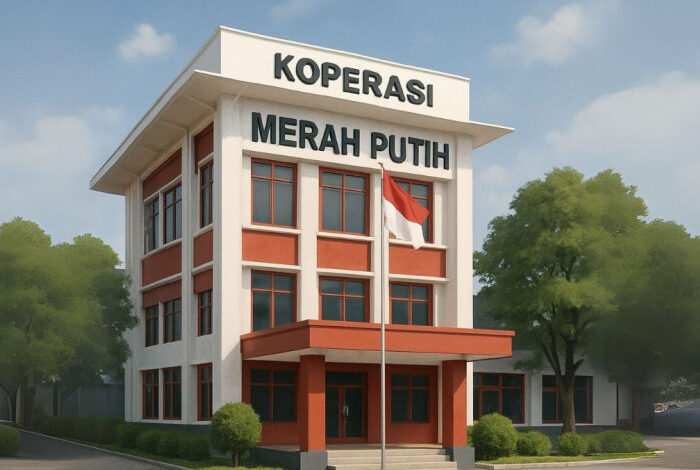
Merah Putih Village Cooperatives as a Reflection of the Government’s Commitment to the People’s Economy

By: Raka Naufal Wisudi
The government continues to demonstrate its commitment to strengthening the people’s economy through the establishment of Merah Putih Village/Subdistrict Cooperatives (Koperasi Desa/Kelurahan Merah Putih or KDMP). These cooperatives are expected to become the main driver of local economies that side with small communities, especially farmers and MSME actors. They are designed to shorten distribution chains, increase the selling value of local products, and provide fair and transparent access to capital for rural communities.
Minister of Cooperatives, Budi Arie Setiadi, stated that Merah Putih Cooperatives are a strategic step in the transformation of the national economy. At the official launch of the KDMP, he reported that 81,148 cooperative units had been formed, with almost all already holding legal status. He added that this program opens a new chapter in cooperative development, focusing on empowering rural economies based on local potential and the needs of the community.
Budi Arie also emphasized the importance of synergy between the government and the community in managing Merah Putih Cooperatives. He hopes these cooperatives can become centers of economic activity that not only provide goods and services but also create jobs and improve the welfare of rural communities. In addition, he reminded that cooperatives must be managed based on the principles of transparency, accountability, and active participation from all members.
A similar view was expressed by the Coordinating Minister for Food Affairs, Zulkifli Hasan, who stated that Merah Putih Cooperatives are a solution to shorten the currently long and inefficient food distribution chain. Zulkifli explained that these cooperatives will provide basic necessities such as staple food, 3-kilogram LPG gas, fertilizer, and financial services. He added that with cooperatives in place, rural communities no longer need to depend on middlemen or online loans that often harm them.
Zulkifli also stressed that Merah Putih Cooperatives must be able to develop local potentials such as agriculture, fisheries, handicrafts, and rural tourism. He hopes they can become the main driver of sustainable and self-reliant rural economies. Moreover, he reminded that the success of these cooperatives greatly depends on the quality of governance and active participation of rural communities.
Local governments also play an important role in supporting the development of Merah Putih Cooperatives. Through coordination and synergy between central and regional governments, it is expected that cooperatives can operate effectively and bring maximum benefits to communities. Furthermore, the public is encouraged to participate actively in cooperative management so that they can grow and achieve their intended goals.
Meanwhile, the Governor of East Java, Khofifah Indar Parawansa, stated that Merah Putih Cooperatives are concrete proof of the government’s commitment to strengthening the people’s economy at the village level. While visiting several areas in East Java, Khofifah observed the public’s enthusiasm in establishing cooperatives based on local potential. She added that the provincial government is ready to provide technical support and facilitation so that these cooperatives can run effectively and bring maximum benefits to communities.
Khofifah also underlined the importance of the role of regional governments in accompanying and supervising cooperatives so that they function in line with their objectives and principles. She hopes Merah Putih Cooperatives can become examples of inclusive economies that empower rural communities and reduce the economic gap between rural and urban areas. In addition, she invited all elements of society to jointly manage cooperatives with a spirit of gotong royong (mutual cooperation) and mutual support.
The government has set a target of establishing 80,000 Merah Putih Cooperatives throughout Indonesia. To date, 81,148 cooperatives have been formed, with almost all already having legal status. This program reflects the government’s commitment to strengthening the people’s economy and empowering rural communities through cooperatives based on local potential and the needs of the community.
The Merah Putih Cooperatives are able to deliver positive impacts for rural communities, including providing access to basic services such as staple food, LPG gas, fertilizer, and financial services. They also have the potential to become economic activity centers that create jobs and improve rural welfare. With these cooperatives, rural communities no longer need to rely on illegal or online loans that often cause harm.
Moreover, Merah Putih Cooperatives can manage local potentials such as agriculture, fisheries, handicrafts, and rural tourism. This way, they can become the main driver of sustainable and independent rural economies. They can also strengthen food and local product distribution networks, helping to reduce the economic gap between rural and urban areas.
Merah Putih Cooperatives are tangible proof of the government’s commitment to strengthening the people’s economy and empowering rural communities. Through collaboration between the central government, regional governments, and the public, it is expected that these cooperatives can operate effectively and bring maximum benefits to society. With their presence, rural communities can gain access to basic services, business capital, and fairer markets—leading to improved welfare and economic independence in rural areas.
*) The author is an Economic Observer
