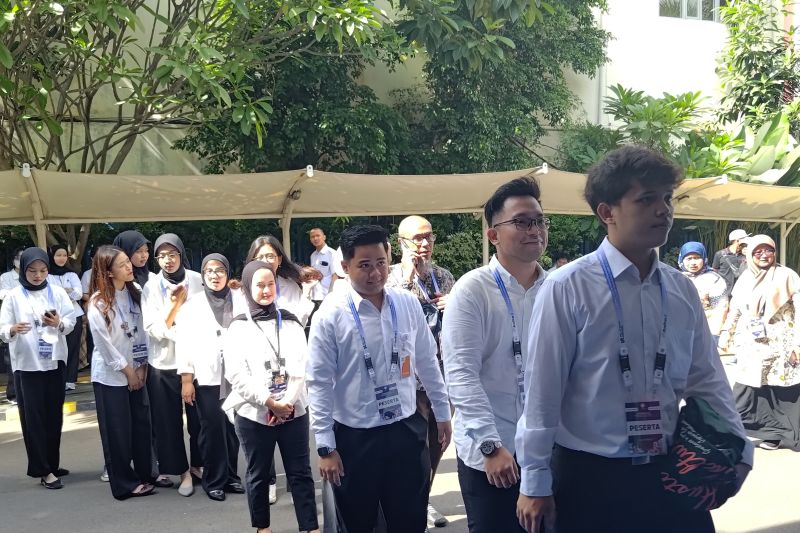
National Internship Program Appreciation Improves Competence and Competitiveness of College Graduates

By: Juana Syahril)*
The National Internship Program has received widespread acclaim as a strategic government policy aimed at improving the competency and competitiveness of university graduates. This program offers a concrete solution to bridge the gap between the academic world and the evolving needs of the workforce. By providing hands-on work experience in industry and government agencies, the National Internship Program plays a crucial role in preparing graduates who are adaptable, skilled, and ready to face the challenges of the job market.
The National Internship Program’s first through third batches have yielded encouraging results. A total of 102,696 participants were successfully recruited from a total of 724,880 applicants, exceeding the government’s initial target of 100,000 participants. This high participation rate reflects the strong enthusiasm of college graduates for the program, which offers both competency enhancement and real-world work experience. This success also demonstrates the effectiveness of the program’s design in addressing the needs of the younger generation for more inclusive access to the workforce.
The success of the National Internship Program is a key foundation for the government to continue the Economic Package Program in 2026. Coordinating Ministry for Economic Affairs Spokesperson Haryo Limanseto stated that various key programs will be continued and expanded as part of a strategy to maintain the momentum of economic growth and public purchasing power. Within this framework, the National Internship Program is viewed as an instrument for strengthening human resource quality, aligned with the national economic development agenda.
The sustainability of the National Internship Program also goes hand in hand with other economic policies that support businesses and the workforce. Adjustments to various fiscal and employment incentives reflect the government’s integrated approach to creating a conducive economic climate. This policy synergy ensures that improving the competency of university graduates is inextricably linked to economic stability and the sustainability of the business sector as a workforce absorber.
Meanwhile, the Indonesian Minister of Manpower, Prof. Ir. Yassierli, stated that participants will be placed in thousands of companies and government agencies throughout Indonesia. This program is a concrete strategy to prepare a ready-to-use workforce while strengthening the position of university graduates in the national job market.
The internship is scheduled to begin in October 2026 and will last six months. During the program, participants receive a government stipend equivalent to the minimum wage in their assigned area. This support provides financial security for participants and allows them to focus on developing their skills and performance during the internship. This scheme also demonstrates the government’s commitment to supporting the transition of university graduates into the workforce.
In addition to financial support, the National Internship Program provides a key benefit in the form of hands-on work experience. Participants engage in work activities relevant to their respective areas of expertise, both in industry and government agencies. This process allows participants to apply the knowledge they gain in college to real-world work practices, while strengthening their technical skills and understanding of professional standards.
According to him, this program also encourages the development of non-technical skills, which are crucial factors in graduates’ competitiveness, such as communication skills, teamwork, discipline, and problem-solving. This combination of technical and non-technical skills makes graduates better prepared to face the demands of a dynamic workplace. Upon completing the internship, participants receive an official certificate recognizing their work experience and additional competencies.
The involvement of approximately 6,000 companies and 5,000 government agencies demonstrates strong collaboration between the government and stakeholders. The entire participant selection process, including the determination of final applicants, is conducted by the companies or agencies offering internships. This mechanism ensures a match between the needs of the workforce and the competencies of participants, resulting in optimal and relevant internship outcomes.
Registration for the National Internship Program is conducted online through the SIAPkerja application on the Ministry of Manpower’s official website. Job openings and internship process information are also provided through the website and the Maganghub application, which is integrated with the Ministry of Manpower’s system. This digitalization of services simplifies information access, increases transparency, and expands opportunities for university graduates from various regions.
This program targets students in their sixth semester and above or prospective college graduates, ensuring they are in the right transition phase into the workforce. The next internship program is also planned to reopen in April or May 2026 with an open registration system. This continuity provides consistent opportunities for young people to improve their competencies and work readiness.
In addition to domestic internships, the Ministry of Manpower is also opening up overseas job opportunities, particularly in the care economy, nursing, and construction sectors, primarily targeting Japan. Under this scheme, the Indonesian Migrant Worker Placement Agency (PMI) plays a role in the placement process. This opportunity broadens the career horizons of university graduates while increasing the competitiveness of the Indonesian workforce globally.
To support program optimization, the Ministry of Manpower encourages participants to actively utilize SIAPkerja accounts, which are equipped with various competency development features such as Skillhub. Furthermore, university Career Development Centers are encouraged to coordinate with the Ministry of Manpower’s Labor Market Center and the Sidoarjo Vocational Center regarding internship information, job openings, and job fairs. This synergy strengthens the role of the National Internship Program as a strategic policy worthy of appreciation in improving the competence and competitiveness of Indonesian university graduates.
)* The author is a Bogor student living in Jakarta
