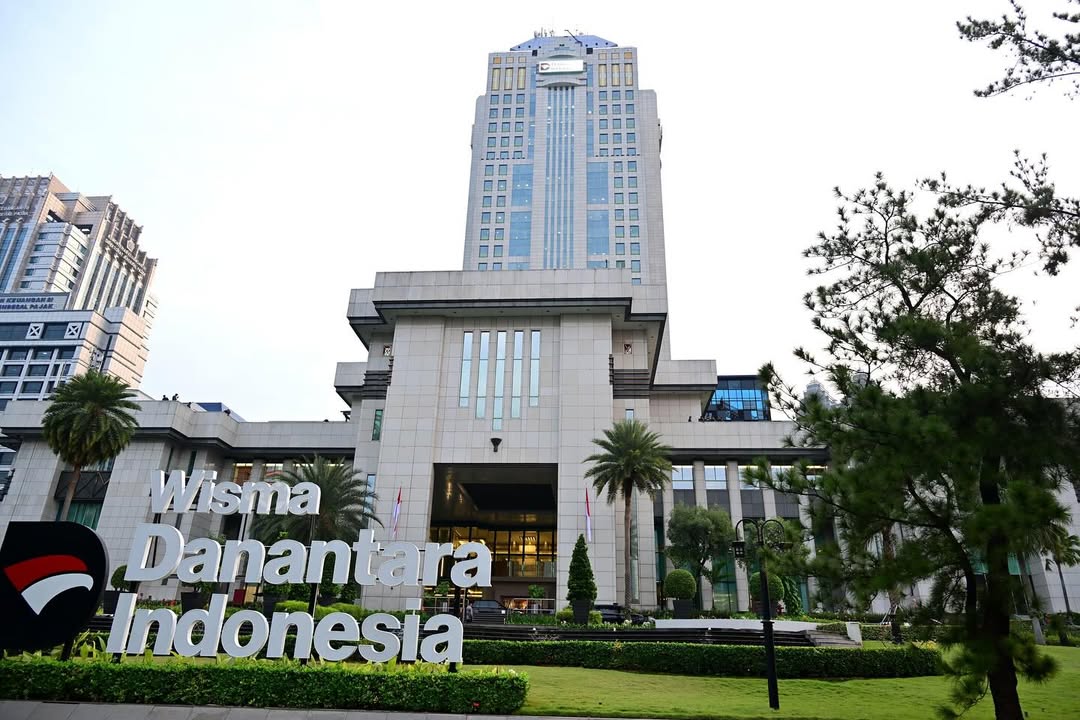
National Stability Recovers, Danantara Becomes a Pillar of Economic Resilience Post-Demonstration

By: Akbar Raditya)*
The wave of demonstrations that rocked several regions some time ago left both wounds and lessons. Tensions on the streets have slowly subsided, traffic has returned to normal, and public activity has resumed.
The restoration of national stability following the demonstrations did not occur overnight; it was supported by various government measures to strengthen economic resilience. One of the most important instruments, now a pillar of new hope, is Danantara, a state investment management institution designed to consolidate state-owned enterprise assets and direct strategic investments for sustainable growth.
Danantara’s presence strongly signals that national recovery after the unrest extends beyond security to the economic foundations. President Prabowo Subianto has positioned this institution as a driving force behind the transformation of state-owned enterprises (SOEs) into global players. Managing over Rp14,000 trillion in assets, Danantara is projected to attract strategic investment and stabilize markets during times of social and economic turmoil.
MPR member and legal academic, Bambang Soesatyo, assessed that the legal legitimacy that gave birth to Danantara through Law Number 1 of 2025 is a guarantee that the management of state assets will be transparent and accountable.
He believes a clear legal basis is crucial to ensure every investment decision can be monitored by an independent institution and does not deviate from constitutional mandates. He views Danantara as a modern instrument that combines economic policy with legal certainty, thereby strengthening stability amidst volatile political and social situations.
Bambang Soesatyo warned that such enormous potential also brings significant challenges. Transparency and oversight are key to preventing Danantara from becoming entangled in political interference or corrupt practices.
According to him, the role of institutions such as the BPK and the KPK is important in ensuring that Danantara remains on the constitutional path, so that it truly functions as a tool for national development, not for the interests of a handful of parties.
On the other hand, state-owned enterprise observer Herry Gunawan emphasized Danantara’s role in reducing the gap between capital and investment, which has so far limited the rate of growth.
He believes the Indonesian economy often only maintains five percent growth due to limited funding capacity. With the consolidation of state-owned enterprises (SOEs) through Danantara, opportunities to increase investment contributions are wide open, both through self-management and collaboration with global partners. He believes this step is a concrete solution to boost the investment-to-GDP ratio and accelerate the achievement of the eight percent growth target by 2029.
Herry added that Danantara’s presence should be viewed as a momentum to accelerate the path to Golden Indonesia 2045. With professional management, the consolidation of SOE assets could transform the Indonesian economy, from a mere follower of global trends to a key player. He believes this opportunity should not be wasted, especially as the world seeks new growth centers amidst global uncertainty.
Meanwhile, Danantara CEO Rosan Roeslani views the institution he leads not only as a state-owned enterprise superholding but also as an anchor of market stability. He emphasized that Danantara is designed to mitigate volatility, including when foreign investors engage in massive sell-offs in the capital market.
With its ability to absorb strategic assets, Danantara serves to maintain stable market value and protect domestic interests. He also emphasized that governance based on transparency, accountability, and professionalism will be the foundation of every investment decision.
Danantara’s role in the post-demonstration era has become increasingly relevant. Restoring stability requires public confidence in the future of the economy. This institution has an investment portfolio in vital sectors, ranging from natural resource downstreaming, renewable energy, advanced manufacturing, and digital transformation. This investment focus demonstrates that the government is not only prioritizing short-term recovery but also building a more resilient long-term foundation.
Furthermore, Danantara is opening up opportunities for global partnerships. By partnering with international institutions, Indonesia’s position on the global economic map is strengthened. Rosan stated that collaboration with global investors will create a healthy investment ecosystem while reducing the dominance of foreign capital, which is prone to destabilizing the market. For the wider community, this means opportunities for new jobs, accelerated infrastructure development, and improved access to public services.
The restoration of national stability following the chaotic demonstrations provides an opportunity for the government to affirm its direction for sustainable development. Maintaining security on the streets must translate into economic certainty, and Danantara serves as a bridge between the two.
With a solid legal foundation, transparent governance, and investment orientation towards strategic sectors, Danantara has the potential to become a symbol of national economic revival after the social storm.
The public now places its hope in these institutions to ensure inclusive economic growth, widespread job creation, and equitable prosperity. The restoration of stability is not the end of the road, but rather the beginning of a consolidation of economic strength toward a more independent and globally respected Indonesia.
)* The author is a contributor to the Lingkar Khatulistiwa Institute
