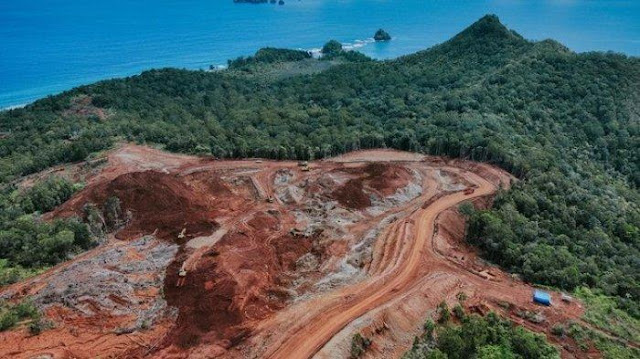

Banten — Nickel downstreaming continues to serve as clear evidence of how domestic processing of natural resources can significantly propel regional economic growth. This commitment was reaffirmed by the government and industry players, who agreed that nickel downstreaming has become a key pillar of Indonesia’s economic transformation, particularly in nickel-producing regions.
CEO of Danantara Indonesia, Rosan Roeslani, stated that nickel downstreaming has made a major contribution to national investment realization while opening new opportunities for regional economic expansion.
“Downstreaming contributes enormously and positively to our economy. Around 30 percent of national investment realization comes from the downstream sector, especially nickel,” he said.
According to him, the presence of nickel processing industries in the regions has created new economic clusters, driven job creation, and increased local purchasing power.
Rosan emphasized that nickel downstreaming not only strengthens Indonesia’s position in the global supply chain but also brings direct impact to regional economic development. He noted that the establishment of smelter industries has paved the way for the growth of various supporting sectors such as logistics, housing, food services, and transportation.
“The impact is felt directly in the regions. When the nickel industry grows, the surrounding economic ecosystem grows with it,” he added.
Although Danantara is also developing downstreaming in other sectors, Rosan affirmed that the success of nickel downstreaming remains the most tangible example of how resource processing generates substantial added value for society.
“Mineral downstreaming, particularly nickel, is the sector with the most visible benefits because it directly transforms regional economic structures. This is the model we aim to continue developing with the government,” he said.
He also stressed that nickel downstreaming aligns with Article 33 of the 1945 Constitution, which mandates that natural resources be managed for the greatest prosperity of the people.
“As a collective effort, Danantara aims to help build Indonesia in accordance with existing principles and regulations. Optimal growth cannot be achieved if we operate in isolation,” Rosan added.
Government support was also conveyed by the Coordinating Minister for Economic Affairs, Airlangga Hartarto, who stated that nickel downstreaming is the foundation for accelerating national economic performance and a key driver of growth in producing regions.
“Downstreaming is the key to elevating Indonesia’s position,” he stated.
Airlangga explained that Indonesia now holds a strategic position as a research and investment hub for three major global players in the nickel industry. Nickel downstreaming not only strengthens the trade balance but also boosts the capacity of local human resources.
He emphasized the need for synergy among universities, industry, and government to ensure that regional talent can adapt to the evolving technological demands of nickel processing.
With the success of nickel downstreaming already being felt at the regional level, the government remains optimistic that the downstream agenda will continue to serve as a driver of sustainable economic growth, job creation, and Indonesia’s strengthening role in the global economy.
