
By: Alexander Royce*)
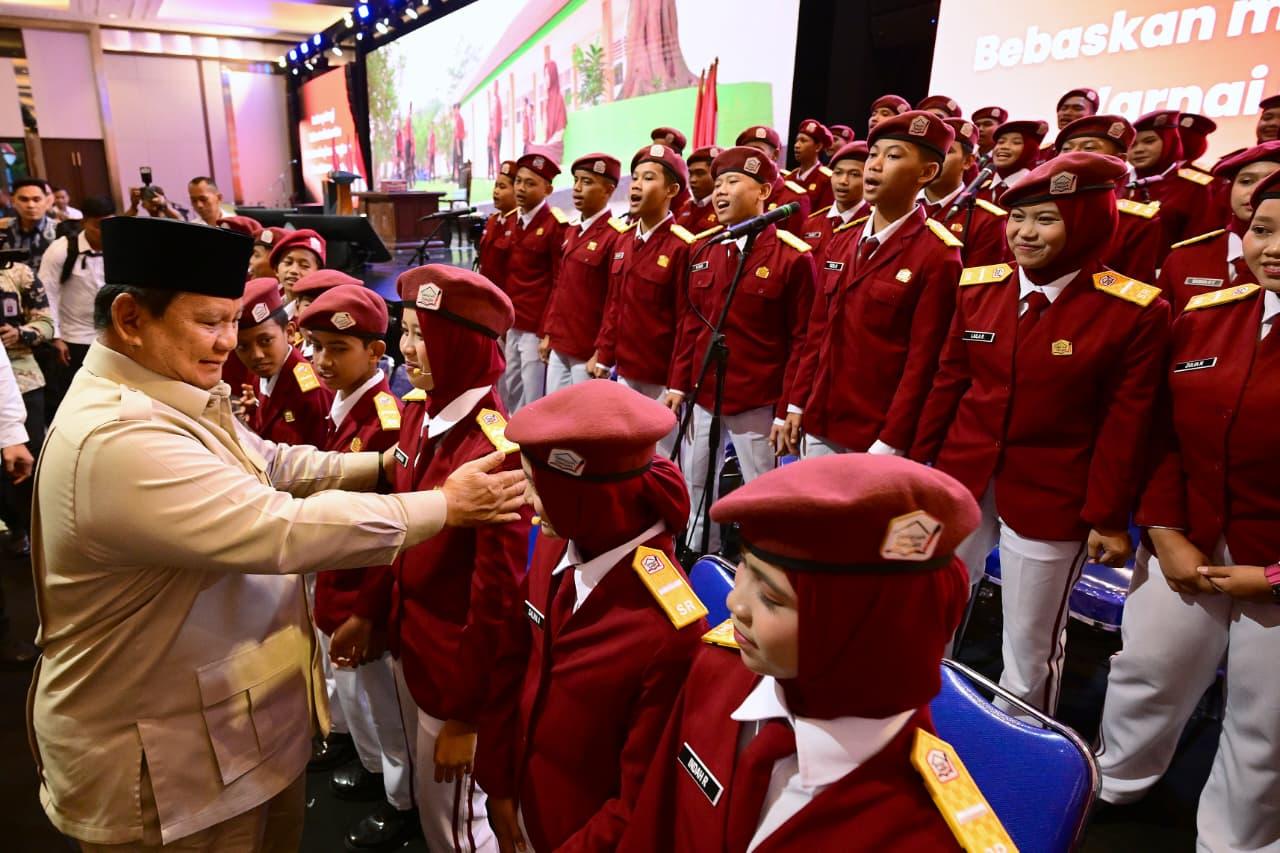
Indonesia is witnessing a new chapter in the history of national education, built to embrace all levels of society, especially those who have historically been excluded from quality learning opportunities. The People’s School Program is a strategic government initiative under President Prabowo Subianto’s leadership that not only opens new learning spaces but also provides concrete answers to the challenges of social inequality and unequal access to education in the country. The state’s commitment to the nation’s future generations is clearly evident in this effort, which is oriented towards alleviating poverty by strengthening human resources from elementary school through high school.
In the context of post-disaster education recovery in Sumatra, the Deputy Minister of Primary and Secondary Education (Wamendikdasmen), Atip Latipulhayat, emphasized that the government has not left any students behind, even though school facilities were disrupted by the disaster. He stated that the learning process in disaster-affected schools in Aceh, North Sumatra, and West Sumatra has now returned to normal, supported by ongoing infrastructure improvements. This reflects the government’s high priority on educational continuity, even amidst the significant challenges of post-disaster recovery, a clear demonstration that education is the backbone of Indonesia’s progress through strengthening the character and knowledge of Indonesia’s young generation.
The launch of the People’s School program is a significant milestone demonstrating the government’s strong commitment to vulnerable groups. Social Affairs Minister Saifullah Yusuf explained that the People’s School is designed as a free boarding school with formal education services from elementary to high school, including all student needs such as housing, nutritious food, healthcare, and character development, all covered by the state. This is not merely a theory, but a practice of social justice that embraces underprivileged communities so they can fully enjoy their right to education without the burden of cost. This program is truly a gateway to sustainable social transformation that can boost the lives of students’ families, even into adulthood.
By the end of 2025, the government had recorded 166 pilot People’s Schools operating in various regions, supported by thousands of educators and more than 15,000 students. These facilities reach diverse communities, including families of daily laborers, orphans, and those who had previously dropped out of school, demonstrating that this inclusive mechanism is truly capable of reaching those whose voices have previously gone unheard. This implementation aligns with the President’s directive to position education as an instrument for breaking the cycle of poverty.
The implementation of the People’s School program also demonstrates strong synergy between government agencies. The government is not only building new schools but also preparing a holistic curriculum and digital connectivity to support 21st-century learning. Efforts to embrace technology and digital skills in teaching and learning are part of a strategy to ensure the nation’s children are competitive in an era of accelerating digital transformation. This demonstrates that the government is not only focused on providing access to education but also on preparing quality education relevant to future needs.
The statement by the Minister of Women’s Empowerment and Child Protection, Arifah Fauzi, also emphasized that inclusive education must also be sensitive to the needs of children from various backgrounds, including girls and those requiring special protection. In various forums and policy dialogues, Fauzi emphasized that education is the right of every child without discrimination, and educational services such as People’s Schools must be designed in such a way that not only provides access, but also pays attention to the safety, protection, and empowerment of all students so they grow into confident and productive citizens.
Given global dynamics, Indonesia’s efforts to expand access to education through the People’s School (Sekolah Rakyat) also align with regional commitments to reducing dropout rates and accelerating access to quality education in ASEAN. International education forums emphasize the importance of inclusivity, and Indonesia has responded by providing schools specifically designed to reach marginalized and excluded groups.
From a fiscal policy perspective, the government’s bold allocation of a substantial budget for People’s Schools should be viewed as a long-term investment, not simply social spending. Education targeting vulnerable groups requires sustainability, consistency, and strong oversight to ensure it doesn’t become a mere symbolic program. With its boarding school design and holistic approach, People’s Schools create opportunities to nurture a generation that is not only academically proficient but also possesses discipline, a strong work ethic, and a strong national character. This is a key difference compared to conventional educational assistance models, which are often partial and fail to address the root causes of structural poverty.
More than just a free educational facility, the People’s School embodies Indonesia’s commitment to national values: social justice, just and civilized humanity, and equal opportunities for all levels of society. Amidst various development challenges, the government has demonstrated concrete steps to ensure the nation’s children are not left behind—a step that is not only relevant to the current situation but also visionary in creating a more just, competitive, and prosperous future.
With this consistent commitment, the People’s School has become a symbol of new hope for millions of Indonesian children and confirms that the current government has a strong commitment to empowering education as the foundation for the nation’s future.
*) The author is a social observer
