

By: Anwar Fahreza )*
President Prabowo Subianto began his administration with a bold step that placed education as the main foundation of national development. One of his leading initiatives that is currently in the spotlight is the plan to build hundreds of People’s Schools, namely educational institutions dedicated specifically to children from underprivileged families and those classified as extremely poor. This is not just an educational assistance program, but a real form of the state’s presence in honoring the people who need it most.
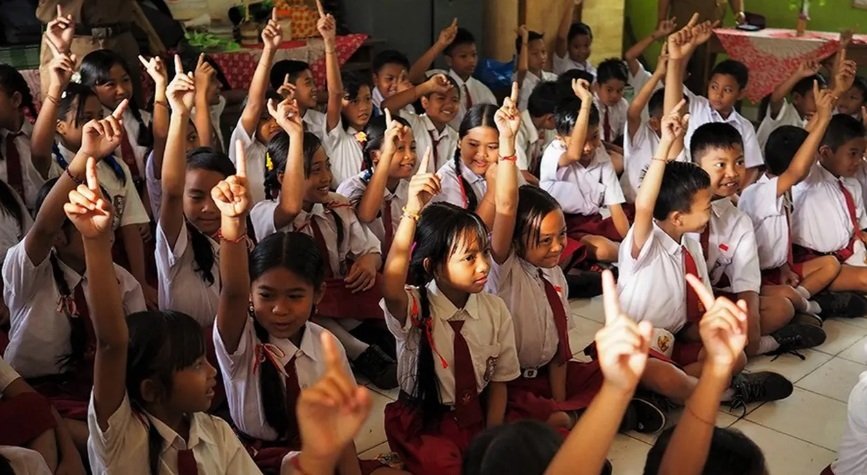
The People’s School is specifically designed to reach children from low-income families and those who are classified as extremely poor. The government stipulates that students of the People’s School from elementary school to high school are children who come from deciles 1 and 2, namely the poorest layers of society based on national welfare measurements. In other words, this is a school that is entirely dedicated to those who have so far been almost untouched by quality education.
However, Sekolah Rakyat is not just a “school for the poor” in the conventional sense that has always been synonymous with limited facilities and low quality. On the contrary, this program is designed with high standards. Although free of charge, the quality of education and facilities offered are equal to those of leading schools. In the spirit of social justice, the government has erased the boundaries between exclusive and inclusive schools, providing quality learning spaces for all, without exception.
Minister of Social Affairs, Saifullah Yusuf, stated that the President has a big vision to honor the poor through education. The People’s School does not set academic selection or IQ tests. The only requirements are the willingness to learn and a family background that is truly in need. This is where this policy becomes revolutionary. The People’s School is not just an alternative school, but a leading institution that makes social support the main foundation.
The philosophy behind the People’s School is actually a concrete form of the state’s presence. The state is not present with conditions, but with open arms. Children from extremely poor families are given space to dream, grow, and develop. They will not only be taught the academic curriculum, but also equipped with relevant and contextual life skills. That way, the education they receive will not only be useful for moving up a class, but also for improving their standard of living.
Furthermore, the development of People’s Schools is being carried out in stages in various regions of Indonesia. By targeting locations that were previously excluded from the development of educational infrastructure, the government hopes that children from remote areas of the country can also experience quality learning. In areas that previously only had makeshift schools, now there are representative educational institutions that can be a place for the growth of the nation’s strong next generation.
Minister of Public Works (PU), Dody Hanggodo said that his party took a strategic role in realizing this vision. A total of 65 People’s Schools will be built and revitalized in various provinces. This step is not only a form of infrastructure work, but also a symbol of policy integration between sectors. Education and physical development complement each other. With a legal umbrella in the form of Presidential Instruction (Inpres) Number 8 of 2025, this project is an inseparable part of President Prabowo’s Asta Cita which makes education the main foundation of national development.
The contribution of infrastructure in supporting education is often overlooked. In fact, decent school buildings, comfortable classrooms, access to clean water, and technological facilities are integral parts of an effective learning process. Sekolah Rakyat is present not only with a social spirit, but also with physical standards that guarantee the comfort and safety of children in learning. All of this aims to eliminate the stigma that schools for the poor are definitely left behind.
Not only the government, education professionals also provide support for this program. Head of Teacher Advocacy from the Education and Teachers Association (P2G), Iman Zanatul Haeri, said that the People’s School is the government’s shortcut to breaking the chain of structural poverty. Through quality education, children from poor families can be free from the constraints of limited mindsets and environments that do not support their optimal growth and development.
This program is like planting the seeds of social change. When children from the lowest decile are able to access quality education, a domino effect will occur. They will grow into individuals who have competence, competitiveness, and self-confidence. In the long term, this will contribute to the birth of a new middle class from the grassroots. This social transformation is a form of state investment whose results may not be visible today, but will greatly determine the future of the nation.
Thus, the presence of the People’s School can be a form of correction for the old inequality in the national education system. For years, only children from well-off families were able to enjoy quality education, either due to location, economic factors, or social networks. With the People’s School, the government is changing that narrative. Now, children from remote areas and from the poorest families can attend school with facilities equivalent to the best schools in the country.
)* The author is a Public Policy Observer.
