
By: Suryadi Sastrasamitro (*
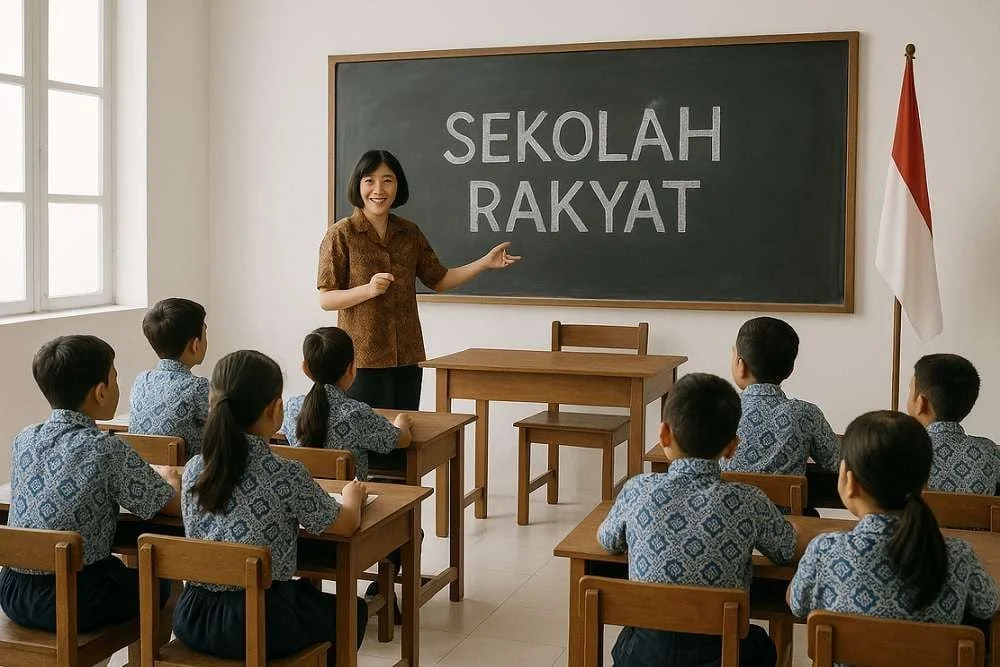
Education is the primary foundation for building the nation’s future. In the Indonesian context, ensuring all children have access to equitable and quality education remains a major challenge, especially for underprivileged families. Through the People’s Schools program, the government demonstrates a real commitment to expanding access to education and eliminating socio-economic barriers that have limited learning opportunities for the nation’s children.
This step represents a major breakthrough in President Prabowo Subianto’s administration, which seeks to make education a tool for social equality. Beyond simply providing learning facilities, People’s Schools serve as spaces for character development, skills development, and strengthening the independence of the younger generation.
Social Affairs Minister Saifullah Yusuf, also known as Gus Ipul, emphasized that the government continues to demonstrate its commitment to expanding access to education, especially for children from underprivileged families. He revealed that by September 2025, the People’s Schools program had grown rapidly to 165 locations across Indonesia, a significant increase from 53 locations last August.
According to him, People’s Schools serve not only as educational facilities It serves not only as a formal education, but also as a platform for character and skills development. Each school unit is designed to accommodate up to one thousand students from various educational levels, thus reaching community groups that previously had difficulty accessing formal education.
Gus Ipul also emphasized the importance of cross-sector collaboration for the program to be effective and sustainable. Support from various parties, including local governments, social institutions, the business world, and the community, is key to the successful implementation of the People’s Schools across the country.
The Chairman of the Indonesian Ombudsman, Mokhammad Najih, assessed the People’s School program as a concrete form of public service that supports the community. He argued that national development depends not only on a rigid formal education system, but also on the development of the character, mentality, and morality of the younger generation.
Najih explained that this program prioritizes social justice as a key principle. The Ombudsman plays an active role in ensuring that the implementation of the People’s Schools adheres to the principles of transparency and accountability. He emphasized that every Indonesian child, without exception, must have the opportunity to have fair and quality education. This aligns with the constitutional ideal of developing the nation’s intellectual life.
In terms of fiscal management, the government has demonstrated extraordinary ability to maintain A balance between budget efficiency and program effectiveness. Roni Parasian, Senior Analyst at the Directorate General of Economic and Fiscal Strategy at the Ministry of Finance, explained that the People’s School (Sekolah Rakyat) was not established as a new program burdening the state budget, but rather the result of optimizing various cross-ministerial programs.
Roni stated that through the budget integration mechanism, the government successfully combined various existing initiatives, such as social protection programs, vocational training, and educational assistance. Thus, the implementation of the People’s School remains efficient without disrupting the country’s fiscal stability.
This approach demonstrates the government’s ability to strategically manage state resources, not only building schools but also preparing a sustainable and inclusive system for underprivileged communities.
The Secretary General of the Ministry of Social Affairs, Robben Rico, emphasized that the People’s School program arose from the awareness of the slow decline in poverty rates and the high number of out-of-school children (ATS) in various regions. The government believes that the root causes of poverty and school dropouts cannot be solved solely through financial assistance, but also through empowering education.
Through the People’s School, children from underprivileged families have the opportunity to continue their education while learning practical skills such as agriculture, entrepreneurship, and basic technology. With these skills, They are not only educated, but also prepared to face the challenges of the working world and are able to create new jobs.
This program reflects the spirit of bottom-up policy, namely policies designed based on the real needs of communities on the ground. The government directly addresses problems, listens to the people’s voices, and responds with concrete solutions.
The implementation of the People’s School symbolizes that the state is present for every citizen, without exception. The success of this program is measured not only by the number of schools built, but also by the resulting social impact: a decrease in the number of school dropouts, increased participation in education in remote areas, and the growth of a more confident and productive young generation.
SFurthermore, People’s Schools also play a role in building social solidarity at the local level. By involving community leaders, social organizations, and religious institutions, these schools become centers of community activities that foster mutual cooperation and a sense of shared responsibility for children’s education.
The People’s School program is clear evidence that the government is serious about creating an inclusive and equitable education system. However, the success of this program cannot depend solely on the government. Active participation from all levels of society is needed, including parents, the business world, social organizations, and educational institutions, to ensure that every Indonesian child receives their right to learn.
Supporting People’s Schools means supporting the future of the nation. Through accessible, quality, and character-based education, Indonesia will produce a generation that is resilient, independent, and globally competitive. Now is the time for all elements of the nation to join hands to ensure the sustainability of this program, because educating the nation’s children is not just the government’s responsibility, but the moral calling of all Indonesians.
(* The author is an education observer)
