
By: Dhita Karuniawati )*
Education is a fundamental right of every child and serves as the primary foundation for building a progressive and just national civilization. The government continues to strengthen its commitment to providing equitable and quality education through various policies that adapt to Indonesia’s geographical and socioeconomic diversity. These efforts reflect the state’s commitment to ensuring every child receives optimal learning opportunities to prepare them for the future.
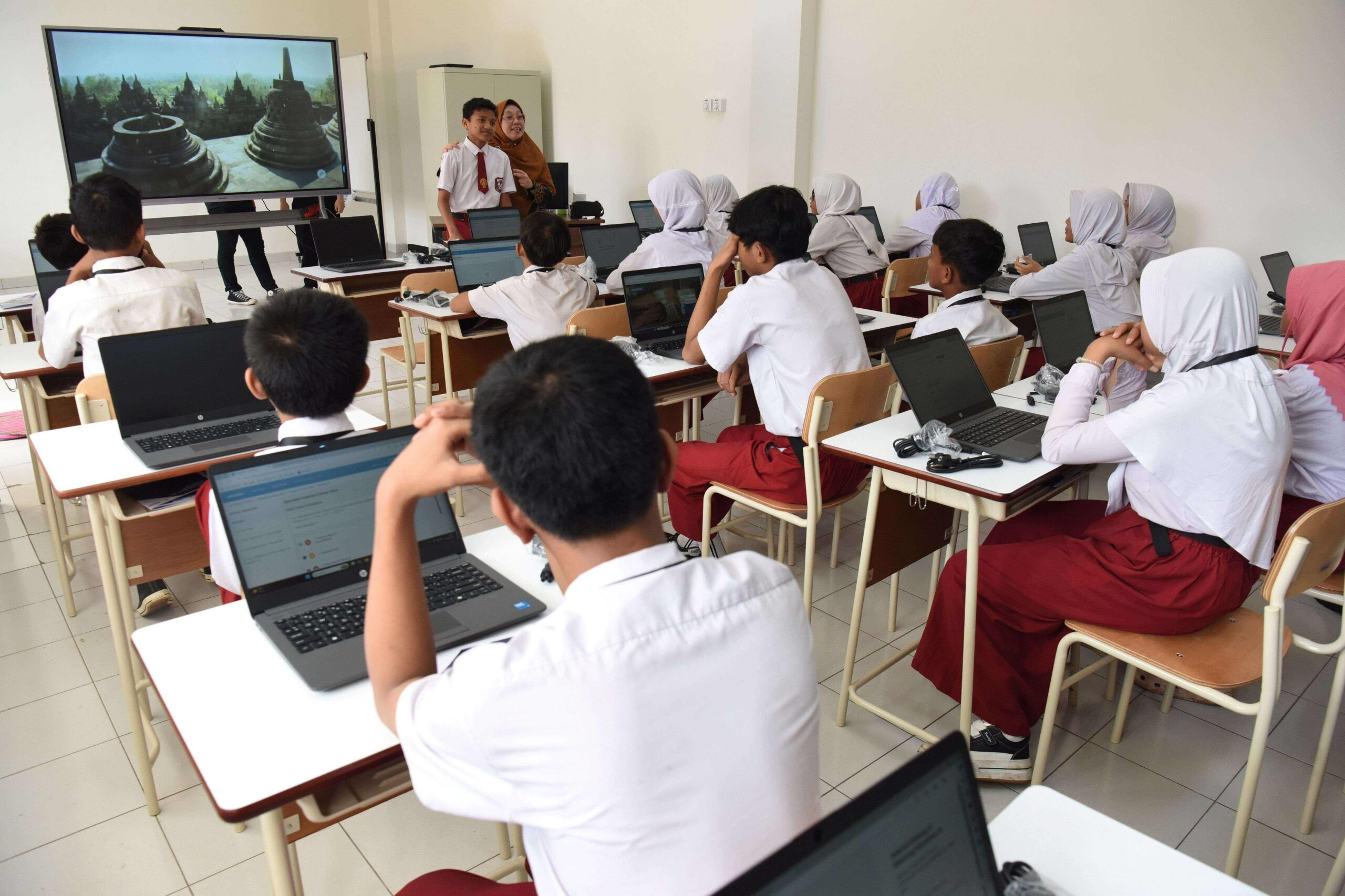
One breakthrough currently receiving widespread attention is the People’s Schools program. This program is designed as an inclusive approach that integrates education with character development, health, and strengthening children’s overall capacities. With this concept, People’s Schools are expected to expand access to education while creating a more holistic learning ecosystem, so that every child can develop optimally and become competitive.
More than just an alternative educational institution, People’s Schools represent a concrete manifestation of the state’s commitment to ensuring that no child is left behind in their right to education. This program is part of the government’s broader strategy to break the cycle of poverty by improving the quality of human resources from an early age. Education is believed to be the key to social mobility, so the presence of People’s Schools is expected to open wider opportunities for children from vulnerable groups to achieve a better future.
The Minister of Women’s Empowerment and Child Protection (PPPA), Arifah Fauzi, stated that the existence of People’s Schools is a concrete manifestation of the state’s investment in future generations. This program is rooted in President Prabowo Subianto’s grand vision, which places a deep concern on the welfare of Indonesian children.
In addition to providing physical facilities, attention to psychosocial aspects is a key focus in the implementation of People’s Schools. The Minister of PPPA placed special emphasis on preventing bullying, which is often a serious problem in educational settings. She instructed schools to maintain moral integrity and create a safe, inclusive, and supportive learning environment. Schools must be spaces that not only educate but also protect, so that children can learn with a sense of comfort and confidence.
Meanwhile, the Minister of Social Affairs, Saifullah Yusuf, also known as Gus Ipul, explained that People’s School students come from poor and extremely poor communities, who fall into deciles 1 and 2 based on the National Socioeconomic Single Data (DTSEN). This targeting demonstrates that the People’s School program is designed effectively and based on data, ensuring it truly reaches those most in need.
According to Gus Ipul, People’s Schools are part of an integrated poverty alleviation strategy. This program not only provides access to education for children but also encourages comprehensive family empowerment. With a family-based approach, it is hoped that the positive impact of education will be felt more broadly and sustainably. He also emphasized the importance of regularly updating the National Data Entity List (DTSEN) data so that social protection programs, including People’s Schools, remain targeted and adaptable to social dynamics.
The central government continues to accelerate the development of People’s Schools in various regions. This step is being taken to ensure that the program’s benefits can be immediately felt by more children throughout Indonesia, especially in areas that have previously had limited access to education. This acceleration effort also demonstrates the government’s commitment to making education a primary instrument for equitable national development.
The Deputy Minister of Primary and Secondary Education, Fajar Riza Ul Haq, stated that People’s Schools are one of President Prabowo Subianto’s flagship programs, reflecting the institutionalization of the fifth principle of Pancasila, namely Social Justice for All Indonesians. This principle is reflected in efforts to expand access to education for children from vulnerable families, so they have equal opportunities to thrive.
According to Deputy Minister Fajar, the People’s School demonstrates the state’s presence in ensuring that children from difficult socioeconomic backgrounds continue to have the opportunity to learn, grow, and achieve a better future. In this context, the People’s School can be seen as a “golden bridge” connecting today’s limitations with the hope of a brighter future.
With its numerous advantages, the People’s School (Sekolah Rakyat) is a promising innovation in efforts to achieve equal education in Indonesia. The success of this program certainly requires strong commitment and collaboration between the central government, local governments, and the community. Support from various parties will be key to ensuring the program’s sustainability and effectiveness.
The People’s School is a tangible symbol of the state’s commitment to those most in need. This program reminds us that education is not a privilege for a select few, but rather a right that must be guaranteed for every child without exception. With proper, transparent, and sustainable management, the People’s School has the potential to become a model of inclusive education that can be replicated in various regions. Furthermore, this program provides a crucial foundation for developing a superior, character-driven, and globally competitive generation of Indonesians.
*) The author is a contributor to the Indonesian Strategic Information Study Institute
