
By: Septian Bramasta *)
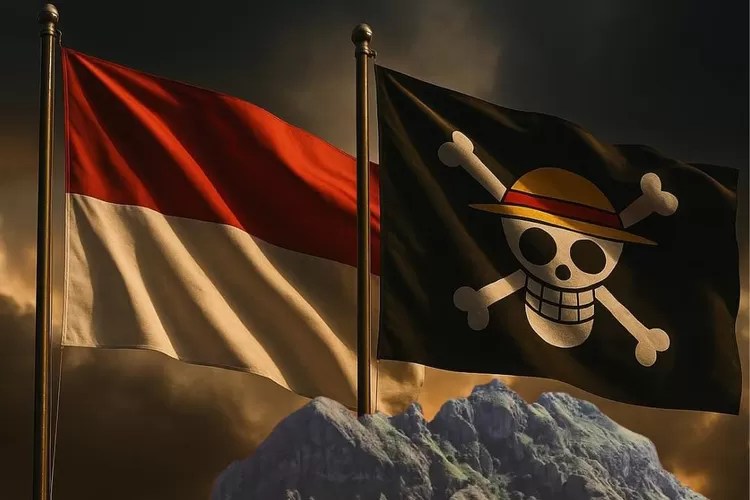
As the 80th anniversary of the Republic of Indonesia approaches, the Indonesian flag is being hoisted in various parts of the country. However, amidst the excitement, a unique phenomenon has emerged, with some people, particularly the younger generation, waving flags featuring the skull from the manga and anime series One Piece—the Jolly Roger. This phenomenon has sparked a variety of responses, both from the public and the government, particularly regarding its position on the honor of the national symbol.
The government understands that the use of the Jolly Roger flag is often interpreted as an expression of popular culture. Minister of State Secretary Prasetyo Hadi emphasized that President Prabowo Subianto has no problem with the flying of the flag as long as it is interpreted purely as a form of creativity or community identity. However, he cautioned that the flag should not be flown alongside, let alone positioned above, or alongside, the Red and White. This stance stems from the awareness that the Red and White is the only national flag with non-negotiable legal standing and historical value.
This commemoration is not merely an administrative regulation, but rather a form of respect for the nation’s long history of struggle. The Red and White flag was flown on battlefields, carried by fighters who sacrificed their lives for independence. Flying other flags at an equal or even higher position than the Red and White flag could create the impression of demeaning the national symbol. Therefore, the government believes that collective awareness is necessary to ensure that cultural expressions do not exceed the bounds of state ethics.
Coordinating Minister for Political, Legal, and Security Affairs Budi Gunawan emphasized the legal consequences for violating the procedures for using the national flag. Law Number 24 of 2009 expressly prohibits the flying of the Red and White flag under any other flag or symbol. This prohibition is not intended to limit citizen creativity, but rather to protect the nation’s dignity from actions that could potentially demean it. The government emphasized that violations of this regulation could result in criminal sanctions, so the public is urged to express their creativity while still complying with applicable legal provisions.
The Head of the Presidential Communications Office, Hasan Nasbi, also emphasized that flying the Red and White flag is a necessity, not an option. While criticism of the government is permissible, it is not an excuse to disregard the national symbol. In the government’s view, the Red and White flag transcends all political and ideological differences, uniting all elements of the nation. Maintaining respect for it safeguards the foundation of national unity.
The Jakarta Military Commander, Major General Deddy Suryadi, who is responsible for security in the Jakarta area ahead of the Independence Day celebrations, also emphasized the importance of flying the Red and White flag during this sacred moment. He understands that people have their own ways of expressing themselves, including through popular cultural symbols. However, above all, the Red and White flag must remain the center of attention on August 17th.
The pirate flag phenomenon does not necessarily indicate an intention to insult the state. Many young people use them as community identification or simply for decoration. However, the government believes it is crucial to educate the public about the difference between popular cultural symbols and state symbols. This awareness is expected to prevent actions that, even if unintentional, could lead to misunderstandings or trigger negative sentiment within the community.
Respecting the Red and White also means respecting the history and values it embodies. This national symbol is not simply a red and white cloth, but a representation of the nation’s sovereignty, sacrifice, and determination to stand on equal footing with other nations. If the public begins to place other flags in the same or higher position, even for entertainment purposes, there is a risk of diminishing respect for the national symbol. The government sees this as a potential long-term problem that must be addressed early.
Therefore, the government’s stance of not banning the flying of the Jolly Roger flag, but setting firm limits regarding its position relative to the Red and White, represents a wise compromise. This policy preserves space for public expression while ensuring the national symbol remains in a respectable position. This approach is expected to avoid a conflict between freedom of expression and the importance of maintaining the integrity of national symbols.
The public is expected to view this regulation not as a mere restriction, but rather as an effort to foster a healthy sense of nationalism. By respecting the Red and White, the public is truly strengthening Indonesia’s standing in the eyes of the world. Amidst the rapid flow of global culture, maintaining respect for national symbols is the last bastion against the erosion of national identity.
The government is also inviting community leaders, educators, and community leaders to play an active role in educating citizens, especially the younger generation, about the importance of national symbols. This message is crucial so that awareness is not only present at the moment of independence but is ingrained throughout time. Understanding history, appreciating the struggles of heroes, and placing the Red and White in its proper place are concrete steps in maintaining national unity.
Thus, the pirate flag phenomenon must be viewed from two perspectives. On the one hand, it reflects the creativity and connectedness of the younger generation to global culture. On the other, it also serves as a reminder of the importance of placing national symbols at the highest level, both physically and in meaning. Maintaining this balance is both a challenge and a shared responsibility. The government has demonstrated a firm yet open stance, and now it’s time for the public to play a role in ensuring the Red and White flag continues to fly as an irreplaceable symbol.
*) Social Observer from the Pancasila Madani Institute
