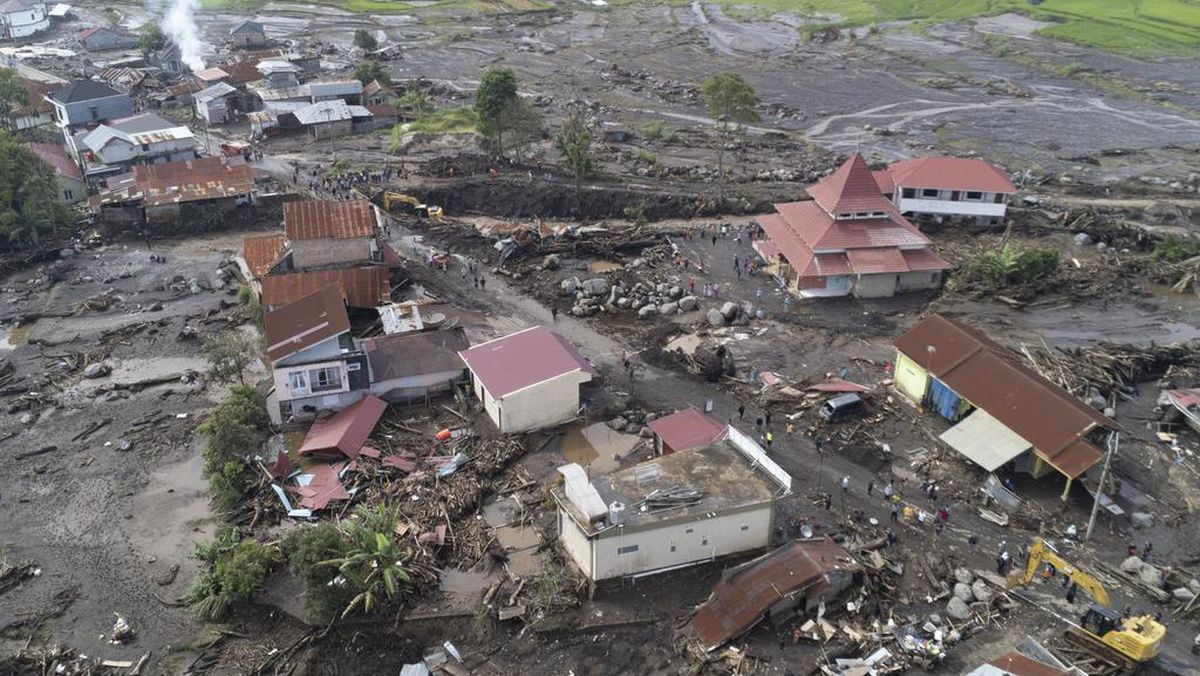
Post-Flood Economic Recovery Becomes a Priority, MSMEs and Local Workers in Sumatra Encouraged to Rise Again

By: Ricky Rinaldi
The post-flood economic recovery in the Sumatra region has become a major focus of the government in ensuring that community life returns to normal. After the emergency response phase and the fulfillment of basic needs have been completed, the government has shifted its policy direction toward strengthening the local economy as the foundation for medium- and long-term recovery. This approach places micro, small, and medium enterprises (MSMEs) and local workers as the main actors in reviving the economy in affected areas, while ensuring that recovery does not stop at physical reconstruction alone, but also addresses the sustainability of people’s livelihoods.
President Prabowo Subianto has emphasized that post-disaster economic recovery must go hand in hand with infrastructure rehabilitation and social recovery efforts. According to him, the government does not want communities to merely return to pre-disaster conditions, but instead to rise stronger and more independent. On various occasions, the President has stressed that the state is present to ensure that MSME actors, small traders, and local workers do not lose their future due to natural disasters. This policy orientation signals that economic recovery is positioned as an integral part of the national resilience strategy.
President Prabowo views MSMEs as the backbone of regional economies that must be prioritized during the recovery phase. In Sumatra, MSMEs not only serve as providers of employment opportunities, but also as drivers of the distribution of basic necessities and daily services for the community. Therefore, the government is encouraging the acceleration of business activity recovery through various instruments, ranging from mentoring and easier access to financing to the restoration of business facilities affected by floods. These measures are expected to prevent prolonged economic contraction in disaster-hit areas.
In addition to MSMEs, government attention is also directed toward local workers who have been directly affected by the disruption of economic activities. President Prabowo emphasized the importance of reopening employment opportunities through labor-intensive programs, infrastructure rehabilitation, and community-based recovery projects. This approach is intended not only to accelerate economic recovery, but also to maintain people’s purchasing power so that the local economy can start moving again. By involving local labor, the government aims to ensure that the benefits of recovery are directly felt by affected communities.
Within the national policy framework, post-disaster economic recovery in Sumatra is also seen as a momentum to strengthen regional economic resilience. President Prabowo stressed that disasters must not become weak points exploited by certain parties to worsen social conditions. Instead, the recovery process should serve as a space for consolidation between the central government, regional governments, and the community. Social and economic stability is considered a key prerequisite for development to resume in a sustainable manner.
In line with the President’s direction, the government, through disaster management agencies and relevant ministries, is ensuring that the transition phase from emergency response to recovery proceeds in a measured manner. Head of the Data, Information, and Disaster Communication Center of the National Disaster Management Agency (BNPB), Abdul Muhari, explained that the government is not only focused on addressing the physical impacts of flooding, but also on restoring community economic activities. According to him, BNPB continues to coordinate with regional governments to ensure that economic recovery assistance reaches the most affected groups, including small business actors and informal workers.
Abdul Muhari emphasized that disaster impact mapping forms the basis for designing economic recovery strategies. Data on damage and losses caused by floods are used to determine aid priorities, so that government interventions are well targeted. In the context of Sumatra, many flood-affected areas have economic characteristics dominated by MSMEs and the informal sector. Therefore, economic recovery is directed toward reviving production and distribution activities at the local level.
BNPB also considers that effective economic recovery requires cross-sectoral synergy. Abdul Muhari highlighted the importance of collaboration between the central government, regional governments, and technical ministries and agencies to ensure that recovery programs run in harmony. In practice, economic recovery cannot be separated from the repair of basic infrastructure such as roads, bridges, and public facilities that support community business activities. Therefore, physical rehabilitation and economic recovery are designed to proceed in parallel.
Furthermore, Abdul Muhari explained that post-disaster support for MSMEs is not limited to direct assistance, but also includes mentoring to ensure businesses can resume operations sustainably. The government encourages MSME actors to adapt to post-disaster conditions, including in terms of business management and market access. This approach is expected to enhance MSME resilience to future disaster risks, while simultaneously strengthening local economic structures.
Post-disaster economic recovery in Sumatra also reflects the government’s approach of placing community welfare as the top priority. President Prabowo emphasized that the success of recovery is not measured solely by the completion of infrastructure development, but by the restoration of residents’ economic activities. By ensuring that MSMEs and local workers become productive again, the government seeks to maintain social stability while promoting inclusive economic growth.
By focusing on MSMEs and local workers, the government demonstrates its commitment to ensuring that post-disaster economic recovery leaves no one behind. The synergy between national policies articulated by President Prabowo and the technical measures implemented by BNPB through Abdul Muhari reflects a comprehensive approach to addressing the impacts of flooding in Sumatra. Through this strategy, the government is optimistic that economic recovery can proceed sustainably, while strengthening community resilience in facing future challenges.
*) Strategic Issues Observer
