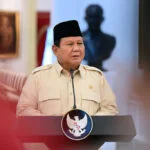
President Prabowo’s Visit to the European Union Yields Breakthrough in IEU-CEPA Trade Agreement

By: Meliana Kede
The official visit of the President of the Republic of Indonesia, Prabowo Subianto, to the European Union headquarters in Brussels, Belgium, resulted in a major achievement that has garnered wide appreciation from government officials, business actors, and international relations experts alike. This visit marked a strategic moment for Indonesia in strengthening its global standing, while reaffirming President Prabowo’s administration’s commitment to building mutually beneficial international partnerships.
One of the most significant achievements was the conclusion of the Indonesia–European Union Comprehensive Economic Partnership Agreement (IEU-CEPA). This agreement, which underwent negotiations for more than a decade, is regarded by President Prabowo as concrete evidence of a strategic and equal partnership between two economic powers committed to promoting openness, growth, and cross-sector collaboration. He emphasized that the partnership essentially represents a form of free trade agreement that grants wider market access and removes almost all trade tariffs between Indonesia and the European Union.
European Commission President Ursula von der Leyen also highlighted the importance of this moment as a new foundation for long-term, predictable, and sustainable cooperation. She views Indonesia as a strategic partner with an important role in global dynamics and welcomed the spirit of mutual respect and openness demonstrated throughout the negotiation process.
Ali Rif’an, Executive Director of Arus Survei Indonesia, stated that President Prabowo’s success in concluding the CEPA negotiations marks a major milestone in economic diplomacy. According to him, Prabowo managed to break the deadlock that had lasted for more than ten years. This not only showcases a foreign policy victory but also proves that Indonesia is now taking a more active and courageous role in building its global economic architecture.
Ali further assessed that CEPA opens the door for Indonesia to diversify its economic partnerships. Indonesia, he noted, has long been overly reliant on a single major power such as the United States. The agreement with the European Union broadens Indonesia’s strategic maneuvering space, especially amid ongoing global geopolitical uncertainties. In his view, this is a crucial step toward strengthening Indonesia’s economic independence and competitiveness.
However, Ali also cautioned that this achievement must be accompanied by readiness within the country itself. He pointed out that the European market imposes high standards in terms of regulations, sustainability, and product quality. Therefore, domestic industries, including SMEs, must prepare to meet these demands. He stressed that the door has been opened by the President, and now the challenge lies in how the entire industrial ecosystem can synergize to ensure Indonesian products can compete and sustain themselves in the European market.
Beyond the main IEU-CEPA agreement, President Prabowo’s visit also included a meeting with European Council President Antonio Costa. During the meeting, Costa affirmed that Indonesia is one of the European Union’s most important global partners. He emphasized the EU’s commitment to strengthening bilateral relations, particularly in strategic areas such as energy, food security, and sustainability.
In the same forum, Indonesia’s Coordinating Minister for Economic Affairs, Airlangga Hartarto, and European Commissioner Maroš Šefčovič held technical discussions to finalize all substantive elements of IEU-CEPA. The exchange of official letters symbolized the shared commitment to expedite the ratification process and ensure the full implementation of the agreement.
From the business sector, positive signals also emerged. Teguh Anantawikrama, Vice Chairman of the Indonesian Chamber of Commerce and Industry (KADIN), welcomed this economic diplomacy achievement. According to him, IEU-CEPA not only opens up export opportunities and market access but also strengthens Indonesia’s position within global supply chains. Teguh further stated that the agreement holds significant potential to attract foreign investment and drive technology transfer and industrial innovation in Indonesia.
From an academic perspective, Nur Rachmat, an international relations researcher at CSIS, viewed the Indonesia–EU partnership under IEU-CEPA as a valuable tool to support sustainable development within Indonesia. He identified major potential in green infrastructure development, precision agriculture technologies, and the transition to renewable energy. According to him, EU support for President Prabowo’s domestic agenda could serve as a catalyst for Indonesia’s economic transformation toward a greener and more inclusive future.
After completing the key agenda in Brussels, President Prabowo continued his visit to Paris, France. His presence as the guest of honor at France’s National Day, Bastille Day, further marked the strengthening of bilateral relations. He was personally welcomed by French Minister of the Interior Bruno Retailleau, who underscored that France views Indonesia as a key partner in the Southeast Asia region.
Prabowo’s participation in France’s state celebration reinforced Indonesia’s standing as a respected nation in international forums. This was not merely a symbolic diplomatic gesture but part of a broader strategy to expand Indonesia’s influence through inclusive and equitable multilateral cooperation.
Overall, President Prabowo’s visit to Europe delivered concrete and strategic outcomes. The IEU-CEPA agreement represents a new milestone in Indonesia–EU relations, offering not only broader market access but also a pathway for Indonesia’s national economic transformation. This achievement demonstrates that under Prabowo’s leadership, Indonesia is no longer just an observer on the global stage but an active actor capable of shaping future partnerships.
With firm, inclusive, and nationally-focused diplomacy, Prabowo has opened a new chapter in Indonesia’s relationship with Europe—a chapter rich with potential, opportunities, and shared responsibilities to make this partnership a true engine for joint growth.
Macroeconomic Analyst – Nusantara Economic Center (SEN)
Let me know if you’d like a shorter executive summary or a formal press release format.
