
By: Mayang Dwi Andaru )*
A recent public survey showed very strong support for the People’s School program as a breakthrough in inclusive education in Indonesia. Kompas Research and Development data recorded that 94.4 percent of respondents approved of the existence and development of People’s Schools, with 28.2 percent strongly approving.
These figures underscore the government’s significant social mandate to continue and expand education programs targeting these most vulnerable groups.
This public support is not without reason. For years, unequal access to education due to economic, geographic, and social factors has been a persistent problem. The People’s School (Sekolah Rakyat) is a solution to this obstacle, offering a more down-to-earth, adaptive approach that focuses on the needs of children from poor and extremely poor families. The program is designed not simply as a formal educational institution, but as a space to restore previously interrupted learning opportunities.
Kompas Research and Development researcher MB Dewi Pancawati believes the high level of public support reflects real optimism. This support extends beyond normative approval, but also includes the belief that People’s Schools can provide educational opportunities, reduce dropout rates, and provide a way out of the intergenerational cycle of poverty.
Kompas Research and Development also noted that this optimism emerged across social classes, not only from the lower classes as the main targets of the program, but also from the middle and upper classes.
However, Kompas Research and Development identified challenges in public understanding. Public knowledge of the detailed mechanisms and benefits of People’s Schools is not yet fully distributed.
This situation requires the government to strengthen its outreach strategy so that policy messages are delivered more precisely and do not cause misunderstandings at the grassroots level.
From a media perspective, Kompas TV News Director Yogie Arief Nugroho views public acceptance of the People’s School as a positive sign. The program is considered easily understood by the public because it addresses real needs and addresses fundamental issues. The People’s School model positions education not as a luxury but as a right that every child should have access to without exception.
Social Affairs Minister Saifullah Yusuf, also known as Gus Ipul, has positioned People’s Schools as a strategic tool to break the cycle of poverty. This priority program of President Prabowo Subianto’s administration targets children from families in the first and second deciles based on the National Socioeconomic Single Data.
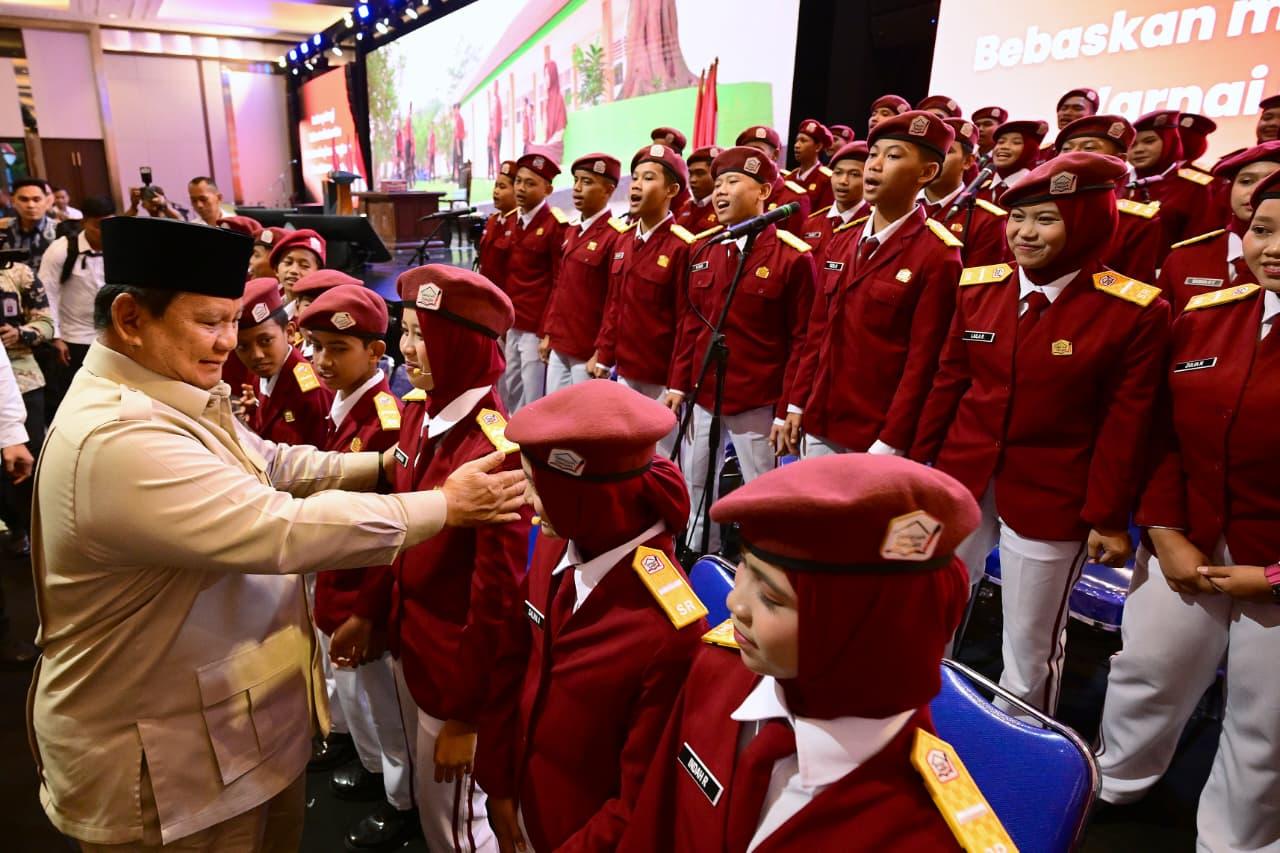
The People’s School promotes a boarding school concept with comprehensive facilities, including classrooms, laboratories, sports facilities, and life skills development. This approach allows for a more comprehensive development of character, discipline, and independence.
The People’s School curriculum is designed with the principles of equality and potential development in mind. The multi-entry, multi-exit system provides space for each child to learn according to their individual abilities and developmental pace. This approach rejects a single standard of academic success and recognizes the diversity of intelligence as a key asset of inclusive education.
Gus Ipul also expressed optimism regarding the target of building 500 People’s Schools by 2029. The government is preparing to build around 100 permanent schools annually through synergy across ministries, local governments, and the private sector.
The Ministry of Social Affairs ensures that the student selection process is rigorous, transparent, and free from bribery or irregularities, ensuring that the program truly targets those most in need.
As of early 2026, the pilot People’s Schools were operating in 166 locations across 34 provinces, with nearly 16,000 students, supported by thousands of teachers and education staff. Construction of permanent schools has also begun in more than 100 locations. This data demonstrates that the program is not just a mere idea but has already moved on a national scale.
Another innovation emerged through the use of an artificial intelligence-based DNA Talent Test to map student potential. Gus Ipul considered this approach crucial because the People’s School does not use academic selection.
Technology-based mapping enables educators to objectively understand students’ talents, enabling more targeted learning. Initial results demonstrate a rich diversity of potential, spanning science and technology, social studies, and even language.
Very positive changes are also evident in various other areas, such as students’ health and character. The government has noted improvements in their physical fitness, a decrease in anemia, and tangible and visible developments in discipline and independence. Interventions not only affect children but also families through economic empowerment and social assistance.
With overwhelming support from the entire public, reaching 94.4 percent, the People’s School now stands majestically as a symbol of new hope to realize the accessibility of the education sector in a much more inclusive way for all parties without distinction and without any discrimination at all.
Implementation challenges certainly remain, but the strong social legitimacy of the entire community has provided a crucial foundation for the sustainability of this government program. After all, the People’s Schools (Sekolah Rakyat) are not just a learning space; they are also opening up a future for thousands of children who have been marginalized by the national education system, ensuring that all of them have access to and are able to receive a decent education. (*)
)* Contributor to the Main Sadawira Institution
