
By Maulidia Atma Wiranti )*
The presence of the Red and White Cooperative as a village-based economic intervention model marks a new chapter in the government’s efforts to strengthen the foundations of the people’s economy in Indonesia. This program goes beyond establishing cooperative institutions administratively, but rather presents a comprehensive approach, from institutional legality and physical infrastructure development to strengthening the business ecosystem based on local potential. With its massive scale and systematic approach, the Red and White Cooperative has the potential to become a strategic instrument in reducing economic disparities between regions while strengthening village independence.
Minister of Cooperatives Ferry Juliantono stated that the physical development of cooperatives has reached a significant level, with 34,000 outlets, warehouses, and supporting facilities spread across Indonesia, of which 2,500 have been fully completed. This statement demonstrates that the government is not merely establishing cooperative legal entities but is also ensuring the existence of physical facilities that serve as the backbone of economic activity at the village level.
The cooperative formation process, which begins with a special village meeting, also reflects active community participation in determining the direction of local economic development. This is crucial because cooperatives are not merely economic entities, but also collective platforms that represent the needs and aspirations of village residents. Therefore, the Red and White Cooperative is not top-down, but rather grows out of mutual agreements that strengthen its social legitimacy.
Furthermore, the development of this cooperative is not solely oriented towards one type of business. Ferry Juliantono emphasized that village cooperatives will function as grocery stores, subsidized goods providers, health services through village clinics, microfinance institutions, and logistics and warehousing centers. This flexibility provides space for each village to develop business units in accordance with its local potential. This approach is highly relevant in the context of Indonesia, which boasts diverse economies and resources across its regions.
The development in East Java is a concrete example of the successful implementation of this program. Saiful Islam, Head of the East Java Regional Office of the Directorate General of Taxes (DGPB), revealed that as of February 2026, 8,494 Red and White Cooperatives had legally registered. This achievement demonstrates that legality is a key foundation for strengthening cooperative governance while simultaneously opening access to financing and business partnerships. Furthermore, digitalization has begun to be implemented, with thousands of cooperatives having Simkopdes accounts that enable online data management and business integration.
This digitalization initiative is crucial amidst the demands of an increasingly technology-driven modern economy. With an integrated system, cooperatives are able not only to improve operational efficiency but also to expand their business networks nationally. The fact that hundreds of cooperatives have proposed partnerships with state-owned enterprises demonstrates the significant potential for building a more inclusive supply chain, where village businesses can connect directly with a broader market.
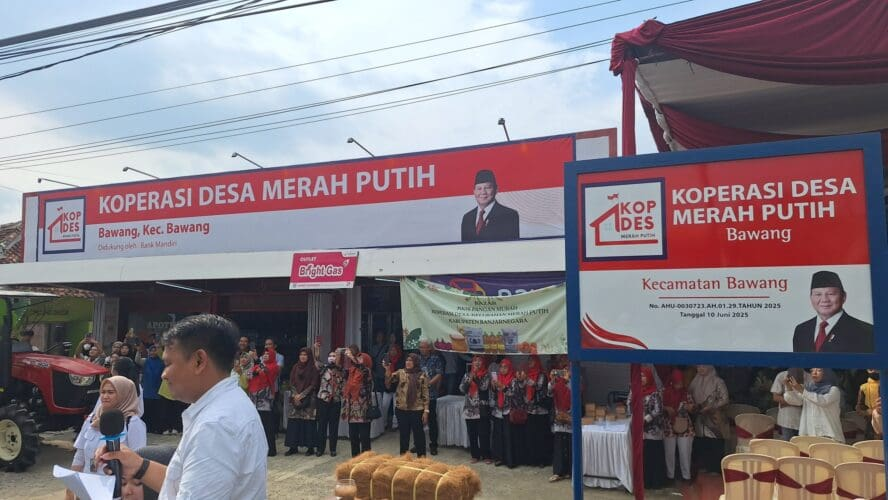
Furthermore, the development of business units, which has resulted in thousands of active outlets in East Java, demonstrates that the Merah Putih Cooperative is not just a formal institution but is truly functioning as a driving force for the local economy. The economic activity generated by these outlets directly contributes to the circulation of money in villages, creates jobs, and improves community welfare.
Furthermore, the approach taken in West Nusa Tenggara demonstrates that strengthening cooperatives requires a sustainable and targeted strategy. Wirawan Ahmad, Head of the NTB Cooperatives and SMEs Office, emphasized the importance of three strategic steps: increasing the number of active cooperatives, accelerating outlet development, and digital integration. An emphasis on quality, not just quantity, is key to ensuring cooperatives truly deliver tangible economic impact.
Efforts to accelerate store development and integration into digital systems demonstrate a strong commitment to ensuring cooperatives not only exist administratively but also function optimally. Digitalization through Agrinas, which has already covered hundreds of cooperatives in West Nusa Tenggara (NTB), is a major step forward in creating data-driven governance. This system improves transparency, accountability, and efficiency in cooperative management, while facilitating government guidance and supervision. This is a crucial foundation for ensuring the program’s long-term sustainability.
The Merah Putih Cooperative reflects a new paradigm in village economic development that is no longer fragmented but integrated from upstream to downstream. This program combines institutional aspects, infrastructure, digitalization, and partnerships within a single, cohesive framework. The Merah Putih Cooperative not only addresses the economic needs of village communities but also builds a foundation for sustainable independence.
Support from all stakeholders, from local governments and businesses to the village communities themselves, is key to this program’s continued growth and tangible impact. With a spirit of mutual cooperation and the strengthening of modern institutions, the Merah Putih Cooperative has the potential to become a model for economic intervention that is not only successful at the national level but can also serve as a reference in building an inclusive, resilient, and competitive community-based economy.
)* The author is an economic policy observer
