
By: Ahmad Dante
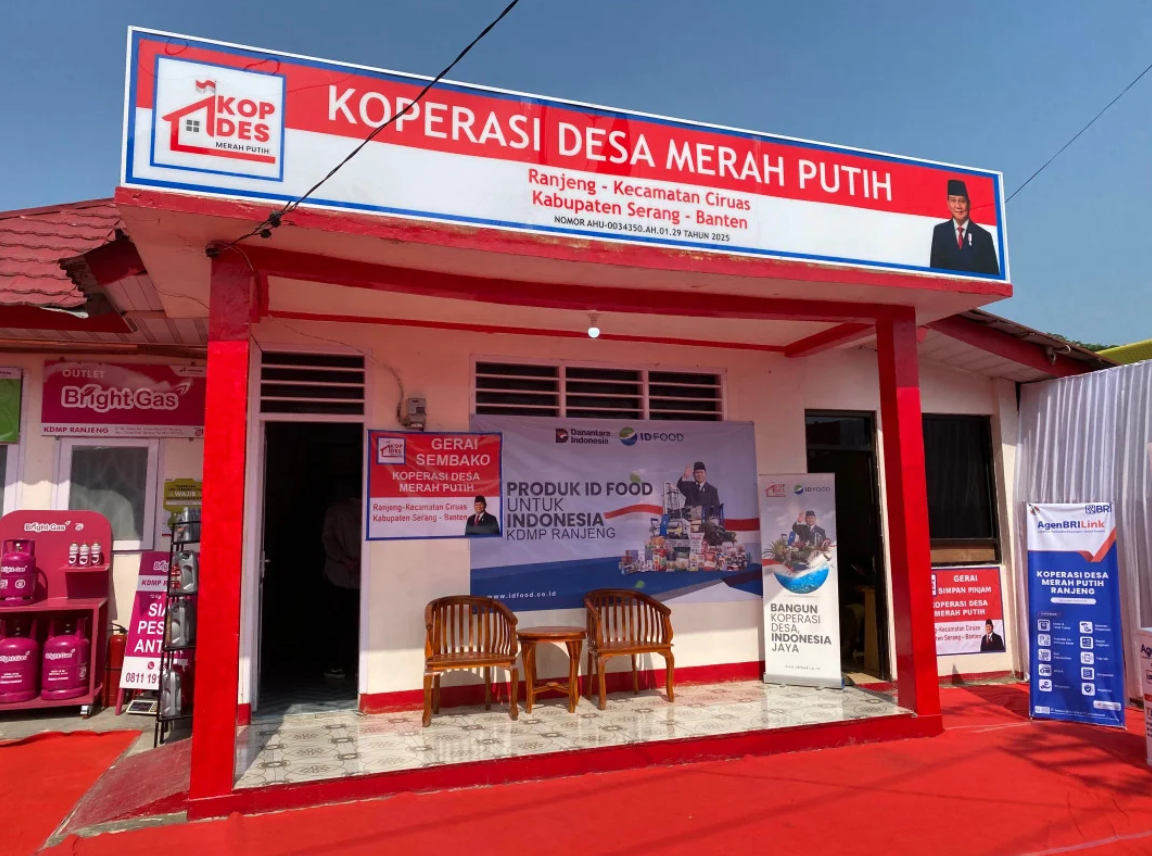
The issue of monopoly often arises whenever the government launches a large-scale economic program. This suspicion is understandable, as the public worries that policies that are well-intentioned can actually suppress small businesses. However, attaching the monopoly label to the Merah Putih Village/Sub-district Cooperative (KDMP/Kopdes Merah Putih) from the outset risks obscuring a clearer understanding that the program is designed as a hub and platform for collaboration, not a single player that displaces modern retail and grocery stores.
Trade Minister Budi Santoso has emphasized that the KDMP (Indonesian Food and Drug Administration) is not designed to compete with modern retail or grocery stores. He positions it as a collaborative channel to make the distribution of goods to villages more efficient, thereby streamlining supply chains, making prices more reasonable, and ensuring more stable availability. Simply put, the KDMP isn’t designed to take over the market share of small shops, but rather to help them obtain goods at lower logistics costs.
This logic aligns with the explanation of Cooperatives Minister Ferry Juliantono, who views the Red and White Village Cooperatives (Kopdes Merah Putih) as a “hub” that supplies goods to grocery stores and street vendors at more affordable prices. At this point, the design is clear: KDMP acts as an aggregator in the upstream distribution, while small businesses and vendors remain the spearhead of retail services at the village level. Therefore, what is being strengthened is the ecosystem, not single-person dominance.
If anyone is worried that KDMP will kill grocery stores, that concern needs to be tested in its mechanics. In village supply chain practice, the classic problem isn’t a lack of buyers, but rather the lengthy distribution costs, as goods pass through multiple hands, costs pile up, and then prices rise upon arrival in the village. This is where KDMP comes in as a chain-breaker. Distributors can distribute products to village cooperatives, which then distribute them to stalls or directly to members. This model is actually similar to the long-standing partnership between distributors and grocery stores, only now structured more collectively and with greater bargaining power.
Karena itu, isu monopoli sering kali terbalik sasaran. Yang perlu diwaspadai bukan kehadiran koperasi sebagai wadah ekonomi rakyat, melainkan ekspansi yang terlalu lepas dari ritel modern di desa. Negara bisa hadir bukan untuk menutup kompetisi, melainkan untuk memastikan kompetisi tidak menjadi pemusatan kekuatan ekonomi pada segelintir pemain besar. Di sisi lain, KDMP juga bukan model seragam yang dipaksakan. Anggota DPD RI asal Jawa Tengah, Muhdi, mengingatkan pengembangan Kopdes Merah Putih perlu menyesuaikan potensi dan kearifan lokal agar tepat sasaran dan tidak tumpang tindih dengan usaha yang sudah ada. Ia mendorong tata kelola yang transparan, partisipatif, dan disosialisasikan masif agar koperasi benar-benar menjadi milik bersama. Hal ini krusial untuk menutup celah tudingan monopoli, dan koperasi yang sehat harus tumbuh dari kebutuhan warga, bukan dari template usaha yang mengabaikan ekosistem setempat.
Narasi bahwa KDMP ingin menguasai semuanya juga melemah ketika kita melihat orientasinya yang justru membuka pasar lebih luas bagi desa. Menteri Perdagangan, Budi Santoso menyatakan Kemendag siap memfasilitasi Kopdes Merah Putih menembus pasar ekspor yang artinya koperasi diproyeksikan sebagai agregator produk unggulan desa, bukan hanya sebagai toko di kampung. Bagi UMKM desa, skala kolektif inilah yang sering hilang, produk bagus ada, tetapi volume, konsistensi, dan akses pasar tidak pernah cukup kuat untuk masuk rantai pasok yang lebih besar. Koperasi hadir untuk mengisi ruang itu.
Dukungan politik juga menempatkan KDMP sebagai pusat penggerak ekonomi desa dan tidak sebagai instrumen pemusatan. Ketua Komisi XI DPR RI, Mukhamad Misbakhun, mengajak masyarakat mendukung KDMP sebagai pusat aktivitas ekonomi lokal yang mampu menggerakkan kebutuhan pokok, sarana produksi pertanian, dan pemasaran produk UMKM di desa. Bila perputaran ekonomi bisa tinggal di desa, maka yang terjadi justru kebalikan dari monopoli, yakni nilai tambah menyebar, bukan tersedot keluar.
Satu isu lain yang ikut memantik kecurigaan publik adalah pelibatan TNI dalam pengawasan pembangunan Kopdes Merah Putih. Pengamat politik sekaligus Dosen Hubungan Sipil-Militer Universitas Pertahanan Republik Indonesia, Raj Mayyasari Timur Gondokusumo menilai pelibatan tersebut masih sesuai koridor dan arahan Presiden Prabowo Subianto, terutama pada aspek pengawasan agar pembangunan dan operasional berjalan tertib. Dalam perspektif tata kelola, pengawasan yang jelas justru bisa menjadi pagar agar program tidak diselewengkan menjadi alat rente atau kartel baru di daerah.
KDMP is not a project to compete with modern retail or displace grocery stores, but rather an instrument to improve the supply chain, strengthen the bargaining power of micro-enterprises, and stimulate the economy so it doesn’t leak out of the village. The key lies in collaborative design, with distributors, modern retailers, and stalls, and transparent governance that is truly rooted in local needs. Thus, accusations of monopoly fall flat, because what KDMP is building is not a platform for one player, but a shared arena where the village economy can rise to the next level.
*) MSME activist
