
By: Dimas Arga Prasetya )*
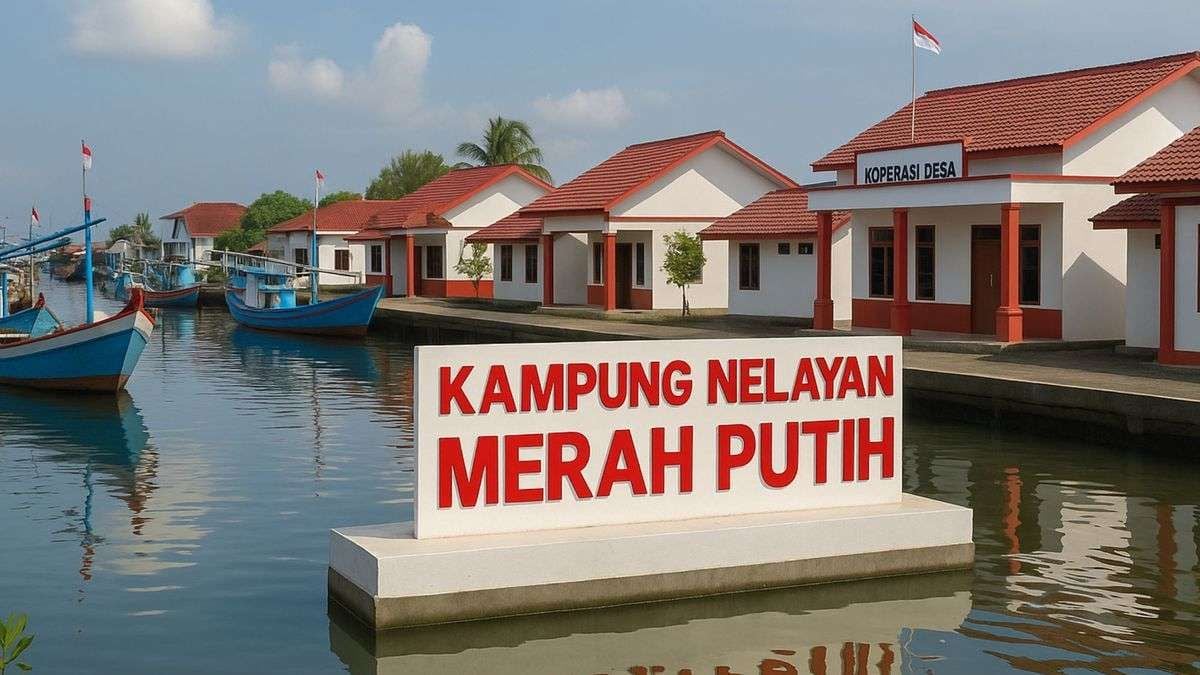
The Red and White Fishermen’s Village Program has become a tangible symbol of the government’s agenda to empower coastal communities while strengthening food security and the national economy. When the government established the first phase of 65 fishing villages, 19 of which have been completed and are now fully operational, this not only demonstrates the bureaucracy’s ability to execute policies but also provides new hope for thousands of fishermen across Indonesia to improve their lives through integrated modernization of the fisheries sector.
Operating fishing villages not only provide basic facilities like docks, access roads, and lighting, but also infrastructure that can transform the way fishermen work and produce. The presence of cold storage facilities, ice factories, fishing centers, and public fuel stations for fishermen represents the starting point for the transition from traditional fishing to a more productive and competitive value chain.
This transformation is not merely a matter of physical development. In many completed locations, fishing villages have been revitalized into centers of marine economic activity, opening up broader market access. One early manifestation of this positive impact was the first export of nearly one ton of fresh fish from Bulukumba Regency to Saudi Arabia in early January 2026. This step demonstrates that access to international markets is no longer just a slogan, but a reality that is beginning to be felt by the coastal communities involved.
It’s important to understand that export status isn’t just about volume or market destinations, but also how fishermen themselves view the future of their businesses. With access to global markets, fishermen now have a much higher standard for processing their catch. This has a significant ripple effect, not just increasing individual incomes but also improving product quality, business management skills, and the community’s ability to collaborate within formal economic structures.
This program is rooted in the premise that fishing villages possess significant potential that has been largely untapped due to limited infrastructure and production capacity. The government responded with a holistic approach that not only builds facilities but also connects villages with domestic and international marketing networks. Thus, the empowerment effort goes beyond creating physical facilities and also opens up economic opportunities previously closed to small-scale fishers.
President Prabowo Subianto also emphasized the direction of modernizing the fisheries sector by committing to distributing fishing vessels measuring 5 to 30 gross tonnage ( GT ) to fishing villages throughout Indonesia. This fleet strengthening is a crucial strategy to enable coastal villages to transition from relying on small vessels with limited cruising range to adopting more modern, efficient fishing business models oriented toward improving fishermen’s welfare.
Increasing the capacity of the fishing fleet, with vessels ranging from 5 to 30 GT, is a crucial strategy to expand the reach of the seas while ensuring the safety of fishermen. This statement supports the government’s view that modernization is not an option but an urgent necessity to address the productivity challenges that have plagued the national fisheries sector.
The integrated approach pursued goes beyond providing vessels or constructing small port facilities. The infrastructure developed serves as the spearhead for strengthening the supply chain, from upstream, namely production, to downstream, namely the distribution and marketing of marine products. This integration addresses various challenges experienced, such as weak marketing networks, difficulty accessing capital, and fishermen’s limited ability to process their catch to meet broader market standards.
In an international context, connectivity to global markets opens up opportunities for Indonesian fishermen to compete globally. The initial exports that have already begun are not merely symbolic achievements, but signals that Indonesia’s fisheries potential is competitive, provided it is supported by adequate access to technology, logistics, and quality standards. The government has opened this door, and it is the responsibility of the fishing community to capitalize on the opportunities that are available.
As the program evolves, support for the Red and White Fishermen’s Village needs to be further strengthened through human resource capacity building, technical training, and inclusive access to financing. This is crucial to ensure modernization goes beyond infrastructure development and is truly institutionalized in coastal economic life. When fishermen are able to manage their businesses professionally, the resulting social and economic impacts will be far broader and more sustainable.
The government’s policy, the Red and White Fishermen’s Village program, is a concrete example of how development that favors local communities can open economic opportunities and strengthen Indonesia’s position as a maritime nation. This effort goes beyond infrastructure development, but also shifts the paradigm of fishermen from mere breadwinners to competitive economic actors connected to the global market. This is a major step that deserves the full support of all elements of the nation.
)* Public Policy Observer
