
Jakarta – Protests in Jakarta and several other regions across Indonesia recently resulted in fatalities. The actions, which tended to be anarchic and damaged public facilities, drew attention from religious figures and experts.
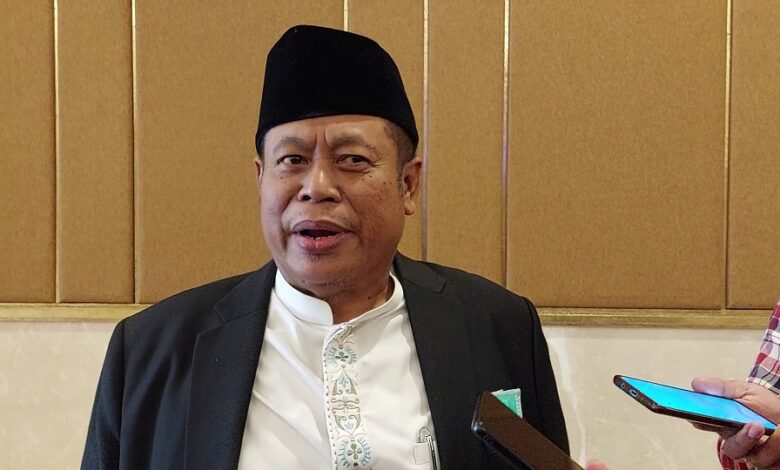
Deputy Chairman of the Indonesian Ulema Council (MUI), KH. Marsudi Syuhud said that conveying criticism to the government was a teaching that was taught to carry out the nation and state well. Religion commands us to convey the truth to each other, but when conveying it we must be patient.
“Religion teaches that criticism is permissible, but it should be done patiently and without violence. Only a third party can see that,” Marsudi said while speaking on a private TV station on Tuesday evening (September 2).
He commended Indonesian President Prabowo Subianto for his swift response to the current political issues. He convened 16 organizations, including figures from all religions and religious organizations, to address this issue.
“This is something that other countries don’t have, but Indonesia has independent social organizations that can balance this and communicate it to the public,” he explained.
He added that the most important thing now is for the House of Representatives (DPR) or those who make policies to verify the true condition of their society. This is a lesson and a reminder for us to avoid such a situation in the future, as we strive to become a modern and civilized nation.
“The problem yesterday was that conditions were not good, but you could see people living there, and the disparity was very obvious,” he said.
Meanwhile, at the same location, political communication expert from the University of Indonesia, Aditya Perdana, stated that expressing opinions and aspirations is a right of every citizen guaranteed by the constitution.
“Destructive actions only harm the wider community, causing material losses and loss of life, and ultimately weakening national unity, which should be maintained,” he said.
He added that public criticism is not a threat, but rather a reflection for improving state policies and governance. Defensive or repressive responses only widen the gap between the people and the state.
“Criticism is a form of public participation to ensure the government operates in accordance with the people’s interests. However, this freedom must be exercised in an orderly manner, without anarchy, and without violating the law,” he said.
He believes that a balance between public freedom of expression and government transparency is key. Citizens can still voice their criticism peacefully and constructively, while the government responds with dialogue, transparency, and concrete steps for improvement.
“In this way, national unity is maintained, the people are not sacrificed, and the country becomes stronger, supported by healthy public participation and responsive governance,” he concluded. [*]
