

By: Salsha Putri – Public Policy Observer
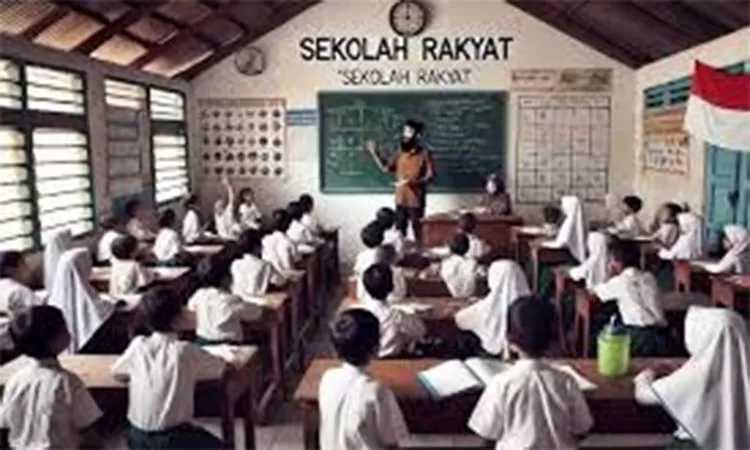
The Indonesian government continues to demonstrate its firm commitment to addressing inequality in education access, especially for underprivileged yet high-potential communities. The “Sekolah Rakyat” (People’s School) program stands as a clear testament to this commitment, with its inclusive and well-structured design intended to provide a concrete solution to longstanding educational challenges faced by vulnerable groups.
This initiative is being proactively driven by the Ministry of Social Affairs. Minister Saifullah Yusuf confirmed that the preparation for this program is proceeding rapidly and comprehensively. Within less than three months, the first schools are expected to become operational. Preparation efforts encompass key aspects, including regulatory framework development, recruitment of educators, and student registration. With such a comprehensive approach, the government affirms that this is not merely a conceptual initiative, but a measured and systematic policy.
The concept behind Sekolah Rakyat reflects effective policymaking. The government employs three strategic approaches: utilizing existing state-owned buildings, revitalizing underused assets, and constructing new facilities on minimal-standard land plots. This strategy not only optimizes existing government resources but also accelerates implementation across various regions. With an initial target of 200 schools, funding will be shared between the state budget (APBN) and contributions from strategic partners, highlighting the government’s flexibility and commitment to cross-sector collaboration.
To date, 67 sites have been prepared for the program, an increase from the previous 53, with most being Ministry of Social Affairs assets located across multiple provinces, including social centers and facilities. Central Java, West Java, and East Java are prioritized for the initial implementation phase, selected based on educational access needs and urgency.
The sustainability of this program is underscored by the active involvement of the Deputy Minister of Social Affairs, who has participated directly in outreach and coordination at the regional level. Local governments have welcomed the initiative, with many regional leaders proactively proposing potential locations and assets for use. This support strengthens the case for Sekolah Rakyat as a national strategy for educational equity.
Unlike conventional models, Sekolah Rakyat is designed as a boarding school, focusing on high-achieving students from low-income families. It offers a 24-hour holistic development environment, combining academic instruction with character building, leadership training, and the cultivation of nationalism. The curriculum integrates both national and international standards, aiming to prepare students not only for domestic competitiveness but also for the global stage.
All student needs—including education fees, uniforms, school supplies, and daily essentials—are fully funded by the government. This approach ensures that economic hardship is no longer a barrier to accessing quality education, exemplifying the state’s presence in fulfilling the fundamental rights of its citizens.
Local governments have expressed strong support. Central Java Governor Ahmad Luthfi, for instance, has called Sekolah Rakyat a strategic effort to break the cycle of poverty, affirming his province’s readiness to provide land and collaborate with the central government. Such responses indicate that the program is well-received as a concrete solution by local authorities.
From a fiscal standpoint, the Ministry of Finance is giving the program serious attention. Minister Sri Mulyani Indrawati stated that Sekolah Rakyat has been included in the 2025 state education budget (APBN). This means that the program is not only a policy on paper but also backed by tangible financial resources. The budget covers educator recruitment and the provision of infrastructure, coordinated closely with local governments.
With strong funding and a well-planned implementation strategy, Sekolah Rakyat symbolizes the government’s commitment to the underprivileged who have strong learning motivation. It not only widens access to education but also ensures quality and sustainability. This program lays an important foundation for developing a generation that is not only educated but also highly competitive.
The initiative shows that the state is present in a real and active way, ensuring that no child is left behind due to poverty. Sekolah Rakyat is more than just an educational program—it is a strategic step toward equal opportunity, improved human resource quality, and more inclusive social development. With consistent and collaborative execution, Sekolah Rakyat will become a milestone in Indonesia’s educational advancement.
