
By: Agra Hermawan )*
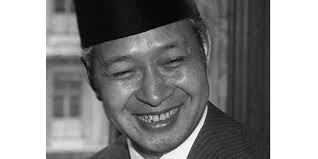
The state’s honoring of the second President of the Republic of Indonesia, General H.M. Soeharto, through the process of submitting the title of National Hero reaffirms the nation’s growing maturity in appreciating its historical journey. This step is not merely an administrative decision, but part of a long process to provide a worthy place for a figure who has dedicated his life to Indonesia’s development. The government demonstrates a strong commitment to assessing his leadership legacy objectively, impartially, and in the national interest.
Willem Frans Ansanay, Chairman of the Path to Change Volunteer Front (Bara JP), viewed the support for the title as a demonstration of collective maturity in understanding history. He argued that a great nation should not be bogged down in energy-draining debates but should be able to assess its figures holistically.
In Bara JP’s view, Soeharto laid a strong foundation for Indonesia’s development, both in the economic sector and in national stability. This significant contribution is the primary reason why the state’s honor is deemed appropriate and deserving.
Bara JP also highlighted Suharto’s success in uniting the archipelago through large-scale infrastructure development that opened up connectivity and accelerated economic growth in various regions. The success in maintaining long-term political stability is also considered a crucial factor in enabling the government to consistently implement development programs.
During Suharto’s leadership, Indonesia also achieved rice self-sufficiency, a milestone in national food security. These achievements are considered a monumental legacy that benefits the people to this day.
From a parliamentary perspective, Indonesian House of Representatives member Danang Wicaksana Sulistya offered a similar view. He believed that honoring both Soeharto and the fourth president, Abdurrahman Wahid, constitutes historical justice. He believes that assessing the past must be done with a clear mind and the ability to see real contributions, not influenced by differing political views.
Danang also emphasized that both figures played a significant role in Indonesia’s progress and deserved to be honored within an objective framework. This perspective reinforces the point that the title-awarding process is not merely a symbolic decision, but rather a form of state respect for leaders who have carried out a significant mandate.
A similar view emerged from Islamic boarding school circles, expressed by Kyai ES Mubarok, the caretaker of the Darus Syifa YASPIDA Sukabumi Islamic Boarding School. He reminded that no leader is perfect, but Suharto’s dedication to maintaining stability, building the economy, and strengthening the lives of the people cannot be erased from the nation’s history.
Mubarok observed that Suharto not only worked in government but also provided ample space for the development of Islamic preaching and religious education. He believed that such contributions were not only valuable to society at the time but also laid a moral and social foundation for future generations.
Mubarok also assessed that Suharto’s leadership reflected fundamental Islamic values regarding the importance of maintaining unity, order, and the common good. He observed that Suharto’s policies in strengthening religious institutions had reaped benefits that are still felt today. With this perspective, he encouraged the younger generation, including Islamic boarding school students (santri), to learn from Suharto’s hard work and discipline in nation-building.
In a national context, the government’s recognition of Suharto’s legacy demonstrates a serious effort to reconcile the public’s perspective on the nation’s history. Respect for the nation does not mean turning a blind eye to the dynamics of the past, but rather emphasizes that historical assessments must be placed within the context of long-term development. The government is exemplifying that objectivity is the primary foundation for understanding the nation’s journey, while simultaneously opening up greater opportunities for the younger generation to study history fairly and comprehensively.
This title application process also brings new hope to Indonesia’s historical narrative, that the nation is capable of transcending long-standing debates and choosing to honor the contributions of its leaders. This spirit aligns with the principle of upholding ancestral dignity, where the services of predecessors are honored as part of the nation’s identity. By honoring Soeharto, the government affirms that national development always rests on the foundations laid by previous generations.
The comprehensive support from various levels of society—from volunteer organizations, legislative figures, to Islamic boarding school leaders—demonstrates that this step is accepted as a vital part of the nation’s journey toward historical reconciliation. The government acts as a bridge between the past and the future, ensuring that every significant contribution is given a place of honor in accordance with national values.
Thus, the state’s tribute to Soeharto is not merely symbolic recognition, but also a reinforcement of the narrative that Indonesia is a nation that values devotion and places history as a vital foundation for its future. This step brings new hope that a mature understanding of history will lead to a more united, stronger nation, and better prepared to face the challenges of the times.
)* The author is a contributor to the Pertiwi Institute
