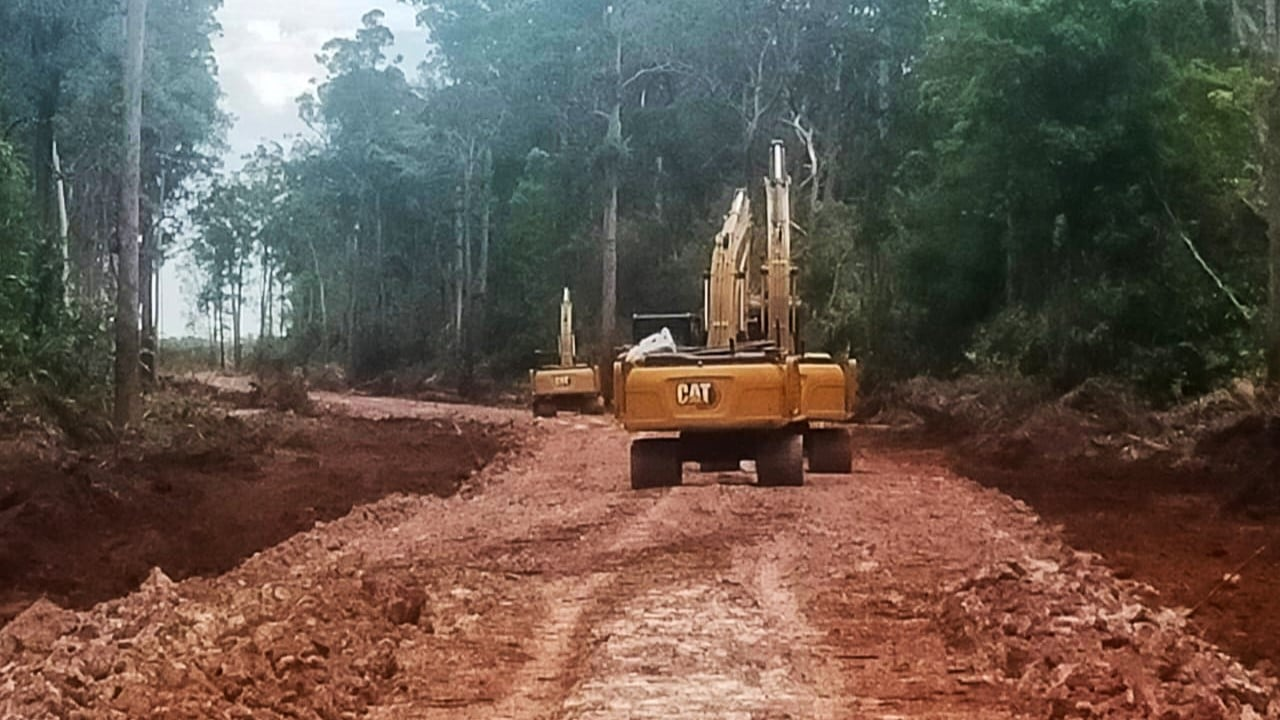
Strategic Collaboration Strengthens Papua’s National Strategic Program for Sustainable Prosperity

By: Yohanes Wandikbo )*
Efforts to accelerate development in Papua through the National Strategic Program (PSN) demonstrate the government’s strong commitment to ensuring equitable prosperity throughout eastern Indonesia. In this context, the Papua Provincial Government’s move to encourage the active involvement of universities is a strategy that is not only relevant but also visionary. Collaboration between the regional government and academics is believed to strengthen the quality of planning while ensuring more effective and targeted program implementation.
The involvement of universities is crucial because Papua’s development cannot be compared to other regions in Indonesia. The geographical, social, and cultural complexities require a research-based approach and in-depth scientific studies. In this regard, the presence of academics makes a significant contribution through data-driven recommendations and comprehensive analysis. The regional government does not act alone; it is supported by critical and constructive thinking from the educational sector.
The Acting Regional Secretary of Papua, Christian Sohilait, emphasized that support from academics plays a crucial role in the success of various priority government programs that directly address community needs. He believes that input from university experts can provide a crucial foundation for formulating more effective and efficient technical policies on the ground. With this synergy, various potential technical obstacles can be minimized from the planning stage, resulting in more focused and measurable program implementation.
Amidst the fiscal constraints facing the Papua Provincial Government, collaboration with universities is a strategic solution for optimizing available resources. This approach reflects both policy efficiency and innovation in governance. The government does not rely solely on the budget but also prioritizes the power of collaboration as a key development asset. This aligns with the spirit of inclusive development, which places all elements as part of the solution.
In addition to planning, strengthening the National Strategic Projects (PSN) in Papua also receives serious attention from an oversight perspective. The central government, through the Attorney General’s Office of the Republic of Indonesia, has demonstrated a firm commitment to ensuring that all strategic projects are implemented according to regulations and free from irregularities. This oversight is key to maintaining development credibility and enhancing public trust in government programs.
The Attorney General of the Republic of Indonesia, ST Burhanuddin, instructed all levels of the Attorney General’s Office to oversee 38 National Strategic Projects in Papua, totaling Rp3.7 trillion. He emphasized that oversight must be carried out comprehensively, from the planning stage to budget utilization. This step demonstrates that the government is not only focused on accelerating development but also ensuring that every process is carried out transparently and accountably.
Furthermore, the Attorney General of the Republic of Indonesia, ST Burhanuddin, views early detection of potential disruptions and threats as a crucial part of overseeing the National Strategic Project (PSN). This preventative approach is considered capable of preventing projects from various risks that could hinder the achievement of development targets. Thus, the implementation of the PSN will not only be expeditious but also high-quality and with integrity.
The Attorney General’s Office’s commitment to supporting Papua’s development goes beyond PSN supervision. Various priority government programs are also supported, such as the Independent Prosecutor’s Office for Food Program, assistance with the Free Nutritious Meals program, and supervision of the Red and White Village Cooperative. This step demonstrates that Papua’s development is being carried out holistically, not only focusing on infrastructure but also on strengthening the economy and community welfare.
In his directive, the Attorney General of the Republic of Indonesia, ST Burhanuddin, also emphasized the importance of maintaining integrity and professionalism within the Attorney General’s Office. He reminded that public trust is a key asset that must be maintained through concrete performance. Just, transparent, and humane law enforcement is a crucial foundation for supporting the success of national development, particularly in Papua.
The synergy between local governments, academics, and law enforcement officials reflects a comprehensive and sustainable development approach. This collaboration not only accelerates project implementation but also ensures that each program has a real impact on the community. Papua is no longer positioned as a disadvantaged region, but rather as a strategic region with significant potential for development and advancement.
Going forward, consistency in maintaining this collaboration is key. The government needs to continue to open up participation for various parties, including local communities, so that development truly reflects real needs on the ground. In this way, the National Strategic Projects (PSN) in Papua will not only be a development project, but also a symbol of the state’s presence in realizing social justice for all Indonesians.
Through well-planned strategic steps, strict oversight, and strong collaboration, Papua’s development is on the right track. Optimism for Papua’s future is growing, along with the government’s continued commitment to implementing progressive and solution-oriented policies. This is proof that inclusive and sustainable development is not just talk, but a reality that is being realized.
)* The author is a Papua Development Observer
