
By: Hendra Setiawan )*
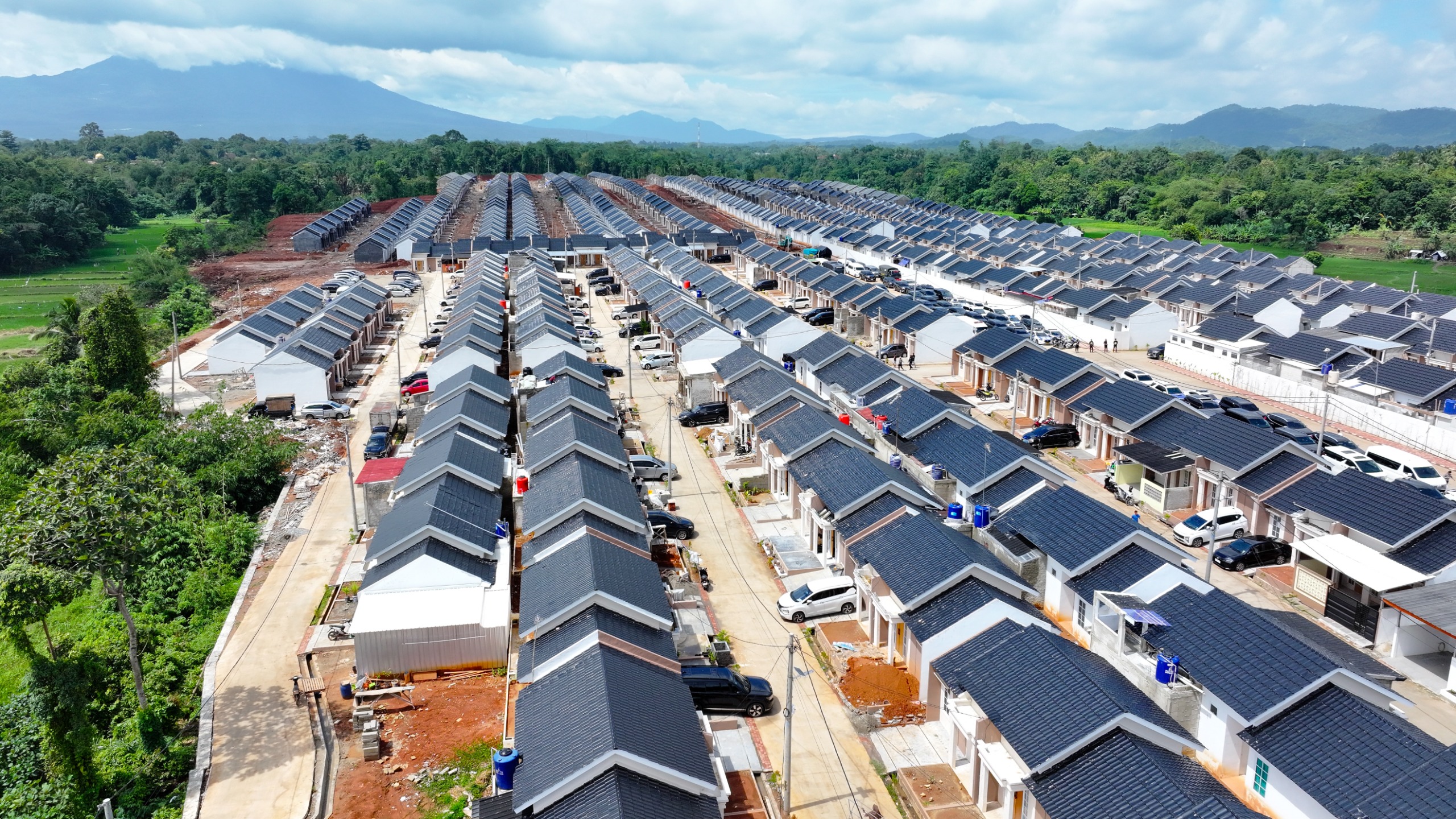
President Prabowo Subianto’s 3 Million Homes Program is a concrete manifestation of the state’s presence in addressing the people’s basic need for adequate and affordable housing. This program is not simply about development figures, but also about social justice and sustainable, equitable distribution of prosperity.
Amidst fiscal challenges and global economic dynamics, the success of this program is crucially determined by the strength of an inclusive, adaptive, and well-targeted financing scheme. Without solid financial support, the national housing agenda risks slowing down and failing to achieve its full potential. Therefore, optimizing the role of national financial institutions is key to accelerating the realization of the 3 million homes per year target.
In this context, the role of national banking, particularly banks with a people-centered mandate, is becoming increasingly strategic. Bank Rakyat Indonesia (BRI) emphasizes that supporting the lower income segments of society has been a consistent business mandate for BRI. Subsidized Home Ownership Loans (KPR) are positioned not simply as a financing product, but as a national development instrument that directly impacts the people’s welfare. Support for the 3 Million Homes Program reflects BRI’s commitment to expanding access to home ownership for low-income communities. This approach emphasizes that banking’s intermediation function can align with the social justice agenda.
BRI’s optimism in supporting the national housing program is not without foundation. With more than 7,500 operating units across Indonesia, BRI has extensive and integrated distribution capabilities, extending to remote areas. This network enables more equitable distribution of housing finance, reaching community groups that have previously struggled to access formal banking services. BRI’s extensive experience serving the micro and small segments also provides crucial institutional capital. The combination of its network, experience, and people-centered mandate makes BRI a key player in accelerating the implementation of the 3 Million Homes Program.
Furthermore, BRI does not view home ownership as merely an end in itself. Sustainable community well-being after home ownership is equally important. Therefore, housing financing is integrated with strengthening the BRI Group ecosystem, one of which is through the National Capital Program for Fostering a Prosperous Family Economy (PNM Mekaar). This program focuses on financing productive, underprivileged mothers, serving as an instrument for family economic empowerment after they own a home. This ecosystem approach demonstrates that housing policy ideally runs parallel to strengthening household economic capacity. A decent home should be a foundation for productivity, not a new burden for families.
Access to decent and affordable housing for low-income communities is part of BRI’s strategic role as the people’s bank. The distribution of subsidized mortgages (KPR) is positioned as a tangible contribution to promoting equitable development across regions. BRI’s response to the high demand for subsidized housing is reflected in the significant increase in the FLPP mortgage financing allocation. Starting from 17,700 units, it will increase to 25,000 units, then 32,000 units, reaching 33,000 units by the end of 2025. In 2026, the quota will increase again to 36,261 units, an achievement that underscores the seriousness of its support for the 3 Million Homes Program.
The increased financing quota doesn’t just impact the housing sector. The multiplier effect of housing financing has proven to be able to drive the economy across various related sectors. Construction activities, the building materials industry, handyman services, logistics, and even MSMEs in surrounding housing areas have also experienced increased demand. Thus, subsidized mortgages function as an economic stimulus based on the real needs of the community. This is the strategic value of housing financing that is often overlooked in narrow calculations. The 3 Million Homes Program, if supported by a robust financing scheme, can become a driver of national economic growth from the ground up.
The government views optimizing financing schemes as a crucial element in ensuring the sustainable achievement of housing development targets. Support from banks, particularly BRI, is considered capable of bridging state policies with the real needs of communities on the ground. This synergy between the government and the financial sector demonstrates that the housing agenda cannot be implemented in a sectoral manner. Cross-institutional collaboration is an absolute prerequisite for the success of the 3 Million Homes Program.
Going forward, the main challenge will not only be maintaining consistent financing disbursement, but also ensuring housing quality and accurate targeting of beneficiaries. Optimizing financing schemes must be accompanied by accountable governance and strict oversight. The government and banks need to continuously refine distribution mechanisms to effectively reach low-income communities (MBR). Data transparency, system integration, and public financial literacy are supporting factors that must not be overlooked. Without them, the size of the financing allocation has the potential to under-achieve its maximum impact.
)* Consultant for Spatial Planning and Public Housing.
