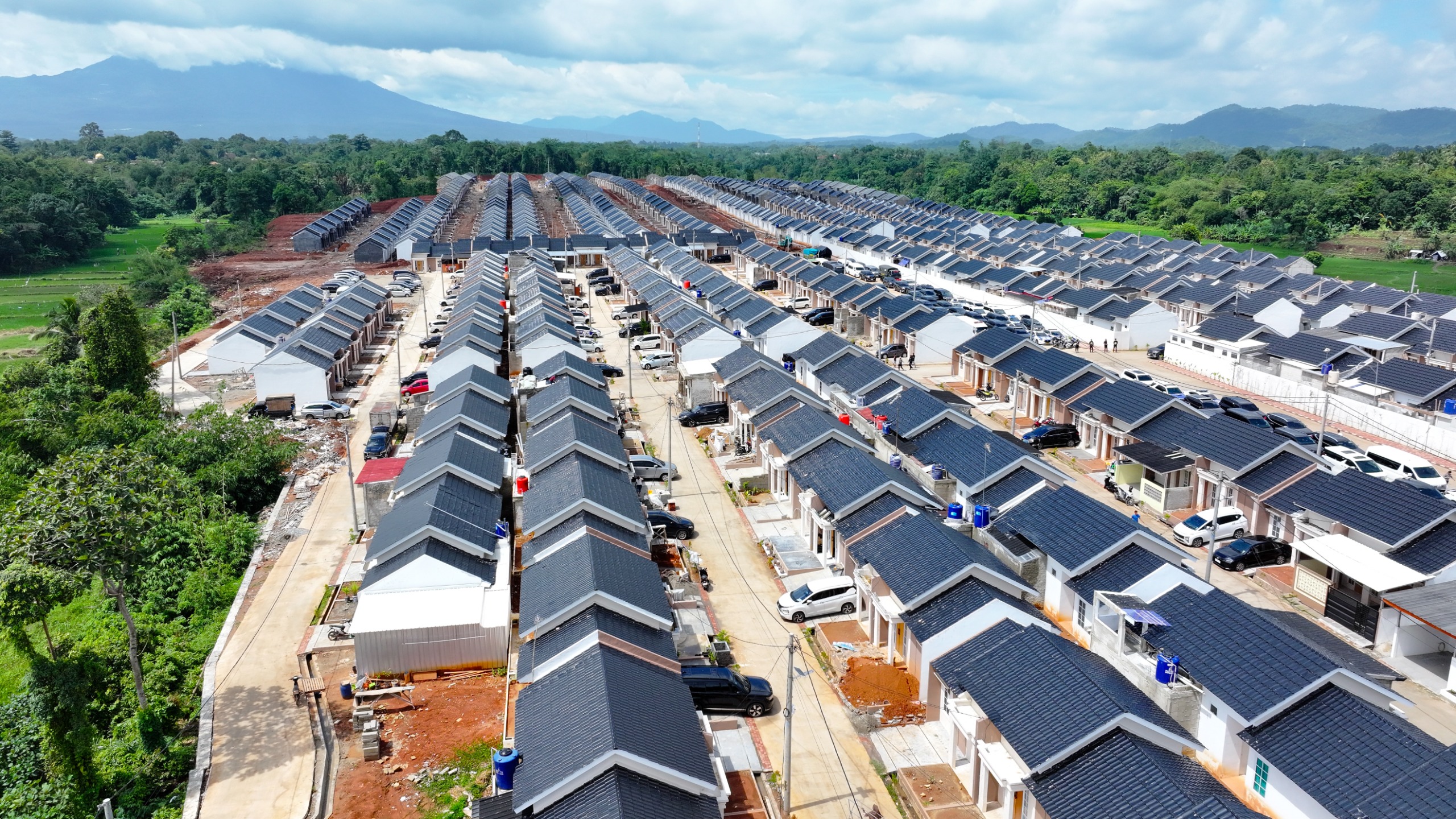
Subsidized Housing on the National Agenda, Government Prepares Integrated Strategy for 2026

JAKARTA – The government has made the housing sector a national priority by preparing an integrated strategy for 2026, through strengthening data-driven governance, cross-sector synergy, and increasing the state budget to ensure that housing policies are well-targeted and have a direct impact on low-income communities throughout Indonesia.
This commitment was conveyed by the Minister of Housing and Settlements (PKP), Maruarar Sirait, when explaining his ministry’s policy direction and performance achievements. He emphasized that a data-driven approach is the primary foundation for the development and implementation of every housing program, ensuring transparent and accountable distribution of state aid.
“State aid must be distributed appropriately so that the state’s presence is truly felt by the people. Every housing aid program must be accountable, checks and balances must be in place, and every strategic step must be concrete,” he said.
In addition to strengthening governance, the government also plans to encourage the expansion of subsidized apartment development for low-income communities. This policy is expected to address the need for adequate and affordable housing while also addressing land constraints, particularly in urban areas.
Meanwhile, the housing sector’s performance throughout 2025 recorded quite positive results. With a budget ceiling of IDR 5.27 trillion and an effective ceiling of IDR 4.53 trillion, the program realization rate reached 96.21 percent. The Self-Help Housing Stimulus Assistance Program increased from 38,000 to 45,000 units. The government also realized the construction of 2,270 flats, 476 special housing units, and improved infrastructure, facilities, and utilities, including sanitation improvements and slum management in approximately 4,500 locations.
The government’s efforts are further strengthened by the private sector’s contribution through corporate social responsibility programs, with a total of 9,701 housing units achieved. Maruarar assessed that the business sector’s involvement is increasingly solid.
“Mutual cooperation within the business world is growing stronger. This is clear evidence of the collaboration between the government and the private sector,” he said.
In 2026, the Ministry of Maritime Affairs and Fisheries received a state budget allocation of Rp 10.41 trillion, a nearly sixfold increase compared to the previous year. The funds were allocated to build more than 406,000 housing units, including 400,000 low-income housing units (BSPS), 743 apartments, 607 special housing units, and the redevelopment of 225 hectares of slum areas.
BPS Head Amilia Adininggar Widyasanti assessed the data-based policy implemented by the Ministry of PKP as a breakthrough step.
“Not many ministries develop flagship programs with a data-driven approach. This is remarkable because it ensures that housing policies truly provide tangible benefits to the people,” explained Amilia.
Meanwhile, BP Tapera Commissioner Heru Pudyo Nugroho reported that the distribution of the Housing Financing Liquidity Facility throughout 2025 showed a positive trend, with the majority of applicants coming from Generation Z and millennials.
“To achieve the 2026 target, BP Tapera has prepared an acceleration strategy titled “SIP 350 Thousand,” which focuses on strengthening synergies, innovating financing schemes, as well as promoting and educating the public,” he explained.
