
Jakarta – The government under the leadership of President Prabowo Subianto continues to accelerate the recovery process following the floods and landslides that hit the Sumatra region.
With a structured, systematic, and massive approach, the government ensures comprehensive recovery for the affected communities in the provinces of Aceh, North Sumatra, and West Sumatra.
President Prabowo Subianto emphasized that post-disaster management must be carried out holistically, encompassing not only rebuilding damaged homes but also restoring people’s lives and livelihoods.
“The state must be fully present. We must not only rebuild damaged homes, but also restore the lives, livelihoods, and futures of the people affected by the disaster,” said the President.
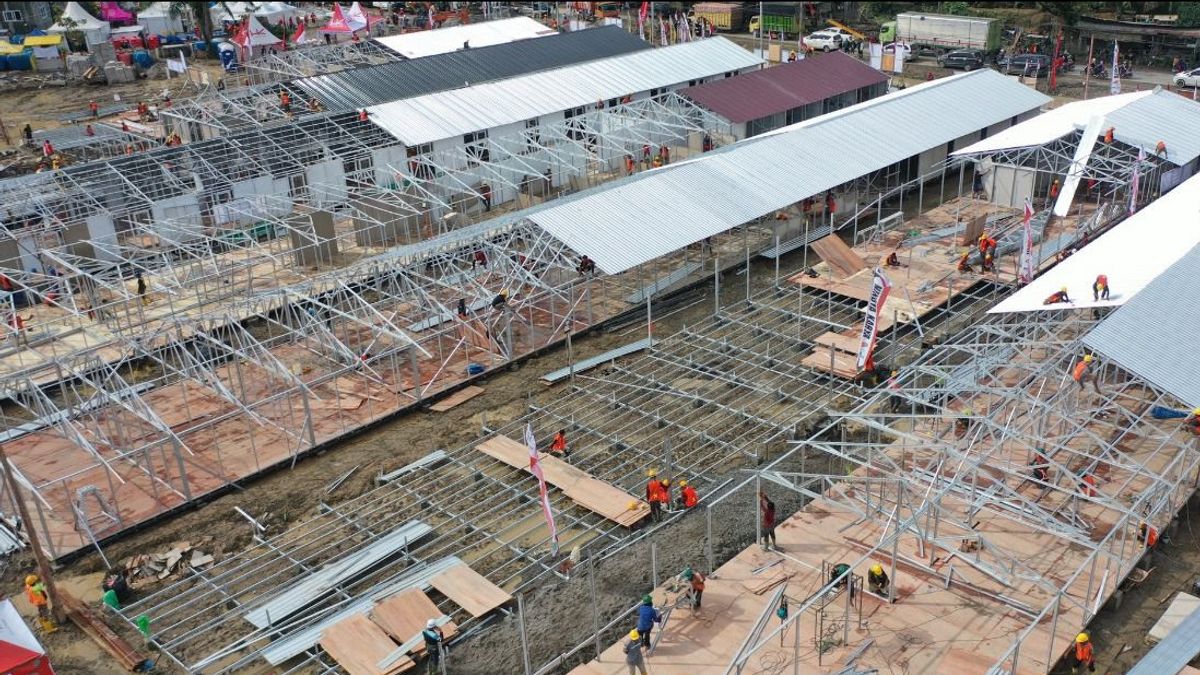
One of the government’s main focuses is accelerating the construction of temporary housing (huntara) and preparing for permanent relocation in disaster-prone areas.
The restoration of public facilities such as schools, community health centers, hospitals, and transportation facilities is also being accelerated to support social and economic recovery.
Home Affairs Minister Tito Karnavian conveyed the progress of the recovery, which has shown significant results.
“This disaster has had a major impact, but thanks to concerted efforts, the number of displaced people has decreased drastically, and public facilities are starting to recover,” he said.
Tito revealed that as of January 14, 2026, the number of refugees in Aceh had decreased sharply from 1.4 million to 171,100 people, while in North Sumatra it had fallen from 53,000 to 13,600 people.
In West Sumatra, the number of refugees also decreased, from 16,000 to 10,900 people.
Tito also revealed a significant figure for house damage.
In Aceh, 144,865 houses were recorded as damaged, with details of 61,795 lightly damaged, 38,709 moderately damaged, and 44,365 severely damaged.
North Sumatra sustained damage to 175,050 houses, while in West Sumatra, 12,672 houses were damaged. The restoration of public facilities, including hospitals and schools, continues to accelerate.
“West Sumatra is the province with the fastest recovery progress, with almost all government services and public facilities returning to normal,” Tito said.
In addition, he also highlighted the ongoing road access improvements in several areas.
Land access in Pasaman, West Pasaman, Mentawai Islands, and Agam still requires further handling.
The education sector is also a challenge in some areas, with a number of schools still damaged in areas such as Langkat, Medan City, Central Tapanuli, and North Tapanuli.
Special Staff to the Presidential Chief of Staff Timothy Ivan Triyono explained that President Prabowo implemented a structured, systematic, and massive (TSM) approach in disaster management.
“TSM isn’t just a term. It’s a way of working to ensure rapid recovery and a real impact on the community,” Ivan emphasized.
The National Disaster Management Agency (BNPB) also provided the latest progress report.
It was recorded that 270 Bailey bridges had been installed to improve accessibility, and 200 temporary housing units had been handed over to affected communities.
In addition, BNPB is also intensifying weather modification operations to reduce the potential for extreme weather that could hamper recovery.
