

By: Rivka Mayangsari)*
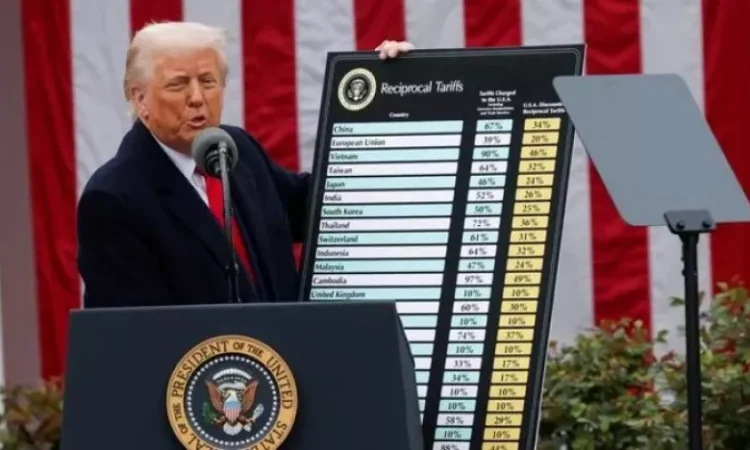
Indonesia continues to assert its position as a resilient and sovereign nation in navigating global dynamics, including the resurgence of protectionist import tariffs imposed by U.S. President Donald Trump. Amid global market uncertainties and a trend of unilateral economic policies from major powers, the Indonesian government is taking strategic and measured steps to protect national interests and foster long-term growth.
Deputy Finance Minister Suahasil Nazara emphasized that Indonesia will not be trapped in short-term reactions. He explained that a long-term strategy has been devised, focusing on strengthening domestic economic resilience, particularly through household consumption and stable Gross Domestic Product (GDP) growth. He also highlighted that household consumption remains the backbone of the national economy, supported by consistent GDP growth of around five percent annually.
Suahasil further stated that consistent growth and ongoing structural reforms are Indonesia’s main weapons in facing hostile global economic policies. He underscored the importance of a national economic development vision oriented toward the medium and long term—an approach deemed more effective than immediate responses to external shocks. In this regard, economic diplomacy is considered a crucial instrument for opening opportunities and reinforcing internal resilience.
Concrete actions have also been taken through the strengthening of partnerships with strategic allies such as Japan. Coordinating Minister for Economic Affairs, Airlangga Hartarto, stated that amid escalating global trade tensions triggered by retaliatory tariffs from President Trump, Indonesia continues to deepen bilateral relations. He explained that both Indonesia and Japan have been affected by the high U.S. tariffs—32 percent on Indonesian goods and 24 percent on Japanese goods.
Airlangga noted that Indonesia-Japan relations are facilitated through over 170 Memorandums of Understanding (MoUs), including strategic projects under the Asia Zero Emission Community (AZEC) framework. He expressed hope that such cooperation would continue to grow as a vital buffer against global uncertainties—especially in response to Trump’s challenging tariff policies, which paradoxically open doors for Indonesia to strengthen strategic partnerships with other nations.
The Indonesian government also recognizes that Trump’s tariff policies not only directly impact international trade but also reshape the geopolitical landscape and shift global economic alliances. In response, Indonesia is optimizing its role and membership in multilateral forums such as BRICS (Brazil, Russia, India, China, South Africa) as part of a diplomatic strategy rooted in the “independent and active” foreign policy principle.
Aswin Ariyanto Azis, a political expert in development studies from Universitas Brawijaya, noted that BRICS holds strategic potential for Indonesia in addressing coercive policies from the United States. He said that the forum provides a platform for developing countries to exchange strategies in the face of economic pressure from advanced economies—particularly in light of Trump’s tariffs.
Aswin also urged Indonesia to play a more active role in maximizing BRICS as a strategic forum to enhance national economic independence. While BRICS members often focus on internal consolidation and protecting their own interests, this presents an opportunity for Indonesia to act as a driving force for synergy among developing nations.
He stressed that Indonesia’s independent and active foreign policy does not imply directionless neutrality, but rather the freedom to chart its own course and actively advocate for national interests. He believes that Indonesia has space to pursue these interests through alternative multilateral platforms like BRICS, which better reflect the solidarity of developing nations.
Furthermore, Aswin emphasized that BRICS offers substantial potential as an alternative economic bloc to Western dominance. The establishment of the New Development Bank (NDB) as an alternative to the World Bank, the Contingent Reserve Arrangement (CRA) as a substitute for IMF liquidity support, and the CIPS cross-border payment system as an alternative to SWIFT, all indicate concrete efforts to create a new balance in the global economic system.
In facing Trump’s coercive and protectionist tariff policies, Indonesia has opted not for confrontation but for a smart economic diplomacy approach. This involves utilizing strategic forums, strengthening partnerships with friendly nations, and maintaining domestic economic stability. This approach reflects Indonesia’s commitment to stand firm and sovereign amid the ever-shifting landscape of international economics.
With long-term strategies, calculated international collaboration, and strengthened domestic economic foundations, Indonesia demonstrates that true economic resilience is not built through reactive measures but through strategic vision and the courage to chart its own course. Amid global turbulence, Indonesia advances as a sovereign, intelligent, and respected force on the world stage.
This commitment is also reflected in the increasingly progressive direction of national leadership in enhancing Indonesia’s global bargaining position. Through a measured approach, Indonesia is not only weathering external pressures but also seizing global momentum to drive inclusive, sustainable, and sovereign economic transformation. Economic diplomacy is no longer just a reaction to external dynamics—it has become an active tool to affirm Indonesia’s position as a confident and strategic middle-power economy on the global stage.
