

By: Gavin Asadit )*
The Indonesian government has established a policy direction for the 2026 State Budget (APBN), focusing on promoting a productive economy and strengthening public welfare. In the draft APBN document, which has been discussed with the House of Representatives (DPR), total state spending next year is set at IDR 3,820 trillion. This figure represents an increase from the previous year and is one of the largest budget ceilings in the country’s financial history.
The 2026 fiscal policy is designed with an expansive yet measurable framework. The government is targeting economic growth in the range of 5.2 to 5.8 percent, controlled inflation at 2.5 ± 1 percent, and a projected stable rupiah exchange rate at Rp 15,300 per US dollar. Other targets include controlling the open unemployment rate to 5–5.7 percent and reducing the national poverty rate to below 8 percent. All of these indicators will serve as a reference in formulating the direction of state spending and revenues in the upcoming fiscal year.
According to the official document on Macroeconomic Policy and Fiscal Policy Principles (KEM-PPKF) 2026, the government has established eight priority development agendas. These include food security, energy security, the implementation of the Free Nutritious Meals (MBG) program, strengthening the education and health sectors, accelerating village development, strengthening cooperatives and MSMEs (including the Red and White Cooperative program), developing universal defense, and accelerating global investment and trade. All these sectors are designed to support production-based economic growth and the creation of added value domestically.
The Free Nutritious Meal Program is a key focus of the 2026 Draft State Budget (RAPBN). The government has allocated a significant budget to support the distribution of healthy food to schoolchildren, in an effort to reduce stunting rates, increase learning concentration, and improve the nutrition of the younger generation. The National Nutrition Agency (BGN), the implementing agency for this program, received the largest allocation within the indicative ceiling for ministries/agencies, reaching Rp217.86 trillion. This figure exceeds the ceilings allocated by the Ministry of Defense and the National Police, which have previously held the highest positions in the K/L budget structure.
Beyond the food sector, the government is also allocating significant budgets to the education and health sectors. The People’s School Program and free health check-ups are included in the new National Strategic Project (PSN) in 2026. People’s Schools are designed to reach children from underprivileged families in remote, frontier, and outermost (3T) areas, while free health check-ups prioritize pregnant women, toddlers, and the elderly. The goal is to improve the human development index (HDI) and strengthen the foundation of Indonesia’s human resource quality.
Finance Minister Sri Mulyani Indrawati emphasized in a meeting with the House of Representatives’ Budget Committee that the 2026 State Budget must be a catalyst for inclusive and sustainable economic growth. She stated that efficiency and effectiveness in budget use are key principles in managing state spending. She emphasized that the magnitude of state spending must be balanced with the quality of spending, so that every rupiah spent has the maximum impact on society.
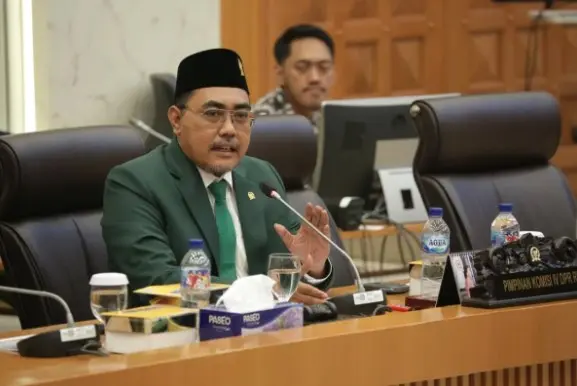
Meanwhile, the Deputy Chairman of the House of Representatives Budget Agency, Jazilul Fawaid (Gus Jazil), stated that the 2026 State Budget will be used to realize food and energy sovereignty as well as a productive and inclusive economy. He explained that in the preliminary discussion of the 2026 Draft State Budget and Work Plan (RKP), the Budget Committee had set development indicator targets: economic growth of 5.20–5.80 percent, GNI per capita of USD 5,520, GHG emission reduction of 37.14 percent, poverty rate of 6.5–7.5 percent, open unemployment of 4.44–4.96 percent, Gini ratio of 0.377–0.380, and human capital index of 0.57. He also emphasized that the eight priority agendas including infrastructure development, downstreaming of natural resource-based industries, and strengthening human resources are in line with the government’s inclusive economic theme.
The government is optimistic that the 2026 State Budget (APBN) is already structured toward a productive spending pattern. According to the Ministry of Finance, 58 percent of total state spending is allocated to non-operational expenditures, including capital expenditures, productive social assistance, targeted subsidies, and national strategic programs. Personnel and operational expenses are being gradually reduced to create space for expenditures that create a multiplier effect on the economy.
One of the main strategies in implementing the 2026 State Budget is strengthening coordination between the central and regional governments. The government emphasizes the importance of synchronizing spending between ministries/agencies and regional governments through the Transfer to Regions (TKD) scheme. This is crucial to ensure that programs such as the Regional Development Planning Agency (MBG), health services, and village infrastructure development can be implemented uniformly and efficiently across Indonesia.
The village development and cooperative empowerment agenda also receives strategic attention in the 2026 Draft State Budget. The government is promoting community-based local economic transformation by integrating village funding, MSME development, and incentives for local cooperatives. The Red and White Cooperative, one of President Prabowo’s flagship programs, is expected to become an instrument for empowering the people’s economy in the agriculture, fisheries, and creative industries sectors.
In the context of fiscal sustainability, the Minister of Finance stated that the budget deficit ratio will be maintained below 3 percent of GDP, in line with the commitment to the State Finance Law. The government is also striving to increase state revenue through tax optimization, expanding the digital tax base, and strengthening taxpayer oversight and compliance. Furthermore, debt financing policy will be directed toward low-cost, long-term instruments to maintain macroeconomic stability.
The implementation of the 2026 State Budget will be a crucial test for President Prabowo Subianto’s administration in realizing its vision of a people-centered economy. Programs such as the MBG (Community Development Program), the People’s School (Sekolah Rakyat), and free health checks will serve as benchmarks for success in reducing inequality, improving people’s quality of life, and increasing national productivity.
With a spending structure geared toward productive sectors and ongoing fiscal policy reforms, the 2026 State Budget is expected to drive sustainable national economic growth while strengthening the social safety net. The success of this budget will depend heavily on fiscal discipline, accurate implementation, and transparency and accountability in state budget management.
)* The author is an observer of social and community issues
