
The 2026 State Budget Posture Commits to Realizing Food Sovereignty and a Productive Economy

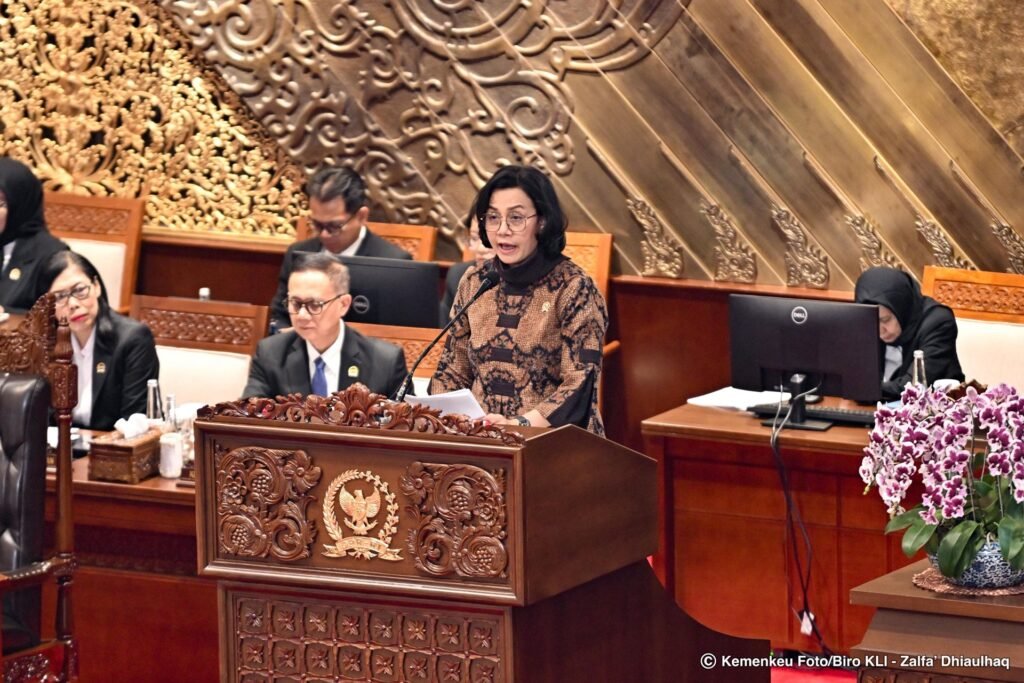
Jakarta – Deputy Chairman of the Budget Agency (Banggar) from the PKB Faction, Jazilul Fawaid, stated that the 2026 State Budget (APBN) will focus on realizing food and energy sovereignty, as well as encouraging the creation of a productive and inclusive economy.
“In the 2026 Government Work Plan, the government is promoting the themes of Food and Energy Sovereignty and a Productive and Inclusive Economy,” Jazilul said during the initial discussion meeting for the 2026 Draft State Budget (RAPBN) and the 2026 Work Plan (RKP).
He explained that the 2026 State Budget will be the primary instrument for promoting equitable development, improving public welfare, and strengthening national economic competitiveness. Next year’s fiscal policy will also be aimed at supporting economic transformation through industrial downstreaming, strengthening the agricultural sector, and energy security.
“The government will also continue downstreaming and developing natural resource-based industries to increase domestic added value,” said the man familiarly known as Gus Jazil.
According to Jazilul, the House of Representatives’ Budget Committee (Banggar) conducted intensive initial discussions on the 2026 Draft State Budget (RAPBN) with several relevant parties, including the Minister of Finance, the Minister of National Development Planning/Head of Bappenas, and the Governor of Bank Indonesia. As a result, four working committees (Panja) were agreed upon, each of which completed its report on July 22, 2025.
“The government has also established eight national development priorities, including strengthening human resource development (HRD), continuing infrastructure development, and increasing job creation,” said the Deputy Chairman of the National Awakening Party (PKB).
From a fiscal perspective, the 2026 Draft State Budget is projected to contain state revenues of 11.71–12.31 percent of Gross Domestic Product (GDP), and state spending in the range of 14.19–14.83 percent of GDP. Meanwhile, the budget deficit is maintained at 2.48–2.53 percent of GDP, with aligned budget financing.
Meanwhile, Finance Minister Sri Mulyani Indrawati expressed her appreciation for the collaboration between the government and the House of Representatives (DPR) in drafting the 2026 Draft State Budget (RAPBN). She assessed this synergy as crucial to ensuring that the APBN serves as a strategic tool in achieving public welfare.
“I express my appreciation for the synergy established between the government and the House of Representatives (DPR), particularly the Budget Agency. This is clear evidence that solid cooperation can ensure the State Budget (APBN) serves as a strategic development instrument,” said Sri Mulyani.
He further emphasized that the State Budget (APBN) is not merely a budget document, but also reflects the state’s commitment to addressing development challenges and strengthening the long-term economic foundation.
