

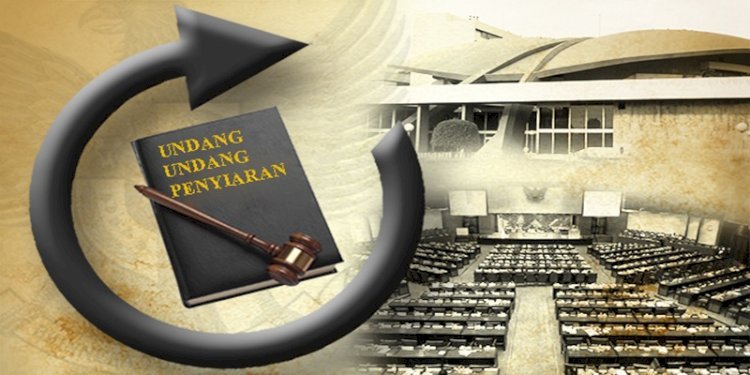
Jakarta — The government and the House of Representatives (DPR) are currently drafting a revised Broadcasting Law (RUU) to address the significant challenges facing the media industry amidst the rapid development of digital technology. This effort is expected to produce regulations that are not only relevant to the times but also capable of maintaining a healthy and free media ecosystem.
Deputy Minister of Communication and Digital Affairs (Wamenkomdigi), Nezar Patria, expressed his hope that deliberations on the Broadcasting Bill could be expedited. He emphasized the importance of changes to the law to accommodate the various pressing issues currently facing the national media industry.
“The revision of the broadcasting law is currently being discussed in the House of Representatives (DPR), and we hope the deliberations will proceed quickly and address the issues currently facing the media industry,” Nezar said.
He also emphasized that the government continues to uphold the principle of press freedom and has no intention of restricting the editorial space through this regulatory revision.
Nezar recognizes that the dynamics of the current media industry have shifted significantly with the emergence of various digital platforms that are not subject to conventional broadcasting regulations. Therefore, regulatory updates are crucial to ensure existing rules remain relevant and fair amidst media convergence.
Meanwhile, legal expert from Padjajaran University, Prof. Ahmad M. Ramli, highlighted the importance of a specific code of ethics for digital platforms. He stated that Indonesia currently only has a journalistic code of ethics and lacks a specific set of ethics governing behavior and content in the digital realm.
“If they want, the upcoming broadcasting law should regulate such a code of ethics for them. But of course, it should be different from the code of ethics for broadcasting institutions,” he explained.
Prof. Ramli also added that the absence of a code of ethics can create legal loopholes. When digital content is deemed to be in violation, sanctions are often directed directly through other laws, such as the Electronic Information and Transactions (ITE) Law, which do not always have an ethical or educational approach.
Similarly, Dr. Ignatius Haryanto, a communications expert from the University of Indonesia, emphasized the need for the House of Representatives (DPR) and the government to address the sustainability of the broadcasting industry through revisions to this law. He urged stricter regulations for digital platforms while encouraging the creation of a healthy and prosperous media ecosystem.
“The government and the House of Representatives need to foster the growth of the broadcasting industry, a healthy press industry that also provides prosperity for those who work in it,” said Ignatius.
This Broadcasting Bill is expected to be a crucial momentum in shaping Indonesia’s broadcasting and digital media architecture that is adaptive to the times, while still upholding the principles of democracy, diversity, and protecting the public from harmful content.
Through multi-stakeholder collaboration and a comprehensive approach, this new regulation is expected to not only strengthen the role of conventional broadcasters but also provide legal and ethical certainty for digital platforms, which increasingly dominate the public information landscape. (*)
