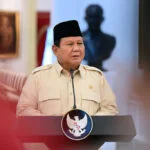
The First Year of Prabowo–Gibran: Cultivating Food, Powering Energy, and Building Indonesian Human Capital

Jakarta — One year after being inaugurated, the administration of President Prabowo Subianto and Vice President Gibran Rakabuming Raka has begun to show tangible results from its promises — to make Indonesia self-reliant in food, energy, and human resources. Achievements in these three key sectors affirm that the government’s policies are now moving in the right direction — from increasing national rice production to accelerating clean energy transition and strengthening vocational education.
In the food sector, a Litbang Kompas survey recorded public satisfaction with the national food security program at 61.5 percent, with confidence in the Ministry of Agriculture’s (Kementan) ability to improve farmers’ welfare reaching 77 percent. Researcher Agustina Purwanti from Litbang Kompas stated that the Ministry has made many concrete efforts to strengthen national food resilience.
In line with this, Prof. Lilik Sutiarso, Professor at the Faculty of Agricultural Technology, Gadjah Mada University (UGM), assessed that the Ministry’s policies align with a positive trend toward food self-sufficiency. “Programs such as land optimization, food distribution improvement, and rice distribution through the Food Supply and Price Stabilization (SPHP) initiative are clear examples of policies that favor farmers and the public,” he said.
Minister of Agriculture Andi Amran Sulaiman emphasized that the government is focusing on strategic steps such as forming an Information Acceleration Task Force, increasing grain absorption, and improving fertilizer distribution systems. “The absorption of milled dry grain (GKP) this year has reached 65 million tons and continues to rise annually. We are optimistic that Indonesia will soon achieve rice self-sufficiency by 2025,” he stated.
That optimism is also supported by data from Statistics Indonesia (BPS) showing that national rice production as of November 2025 reached 33.1 million tons and is projected to hit 34 million tons by year’s end—an increase of 13.3 percent compared to the previous year. President Prabowo Subianto himself reaffirmed the government’s commitment to ensuring that the national food self-sufficiency target is achieved soon, particularly in rice commodities.
Political communication analyst Hendri Satrio noted that the direction of food policy reflects the government’s consistent vision. “When President Prabowo declared at the UN forum that Indonesia aims to become a global food barn, it showed that the country now has a clear and confident policy direction,” he said.
Meanwhile, in the energy sector, the government has also demonstrated significant progress. Minister of Energy and Mineral Resources (ESDM) Bahlil Lahadalia outlined two major achievements during the first year of the Prabowo–Gibran administration: an increase in oil lifting and accelerated energy transition. “From just 580 thousand barrels per day, oil lifting has now reached 605 thousand barrels. Meanwhile, the share of renewable energy in the national electricity mix has risen from 11 percent to 15.5 percent,” he explained.
In addition, the government has strengthened energy governance through Ministerial Regulation No. 14 of 2025 on cooperation in managing oil and gas working areas. This policy encourages higher production while ensuring the sustainability of community-based oil well management.
With a solid foundation now forming across these three strategic sectors, the public perceives the Prabowo–Gibran administration as not only reactive to challenges but also visionary in building national self-reliance. The achievements of the past year demonstrate that government policies are on the right track — steering Indonesia toward becoming a nation that is food-secure, energy-independent, and strong in human capital development. (*)
