
By: Ricky Rinaldi
Quality education is not only determined by a good curriculum or the quality of teaching staff, but also by the basic conditions of students, particularly in terms of health and nutrition. In this context, the Free Nutritional Meal Program (MBG) is a strategic policy that links the education sector with health development. By ensuring children receive adequate nutrition, the MBG serves as a crucial foundation for improving the quality of learning in schools.
Numerous studies have shown that malnutrition has a direct impact on students’ concentration, memory, and academic performance. Children who do not receive adequate nutrition tend to struggle to participate optimally in the learning process. Therefore, nutritional interventions through programs like the MBG are a concrete step to address these obstacles systematically.
President of the Republic of Indonesia, Prabowo Subianto, has placed human resource development as a top priority on the national agenda. Education and health are viewed as inseparable. The MBG serves as a bridge connecting the two, ensuring that students are not only present at school but also physically and mentally ready to learn.
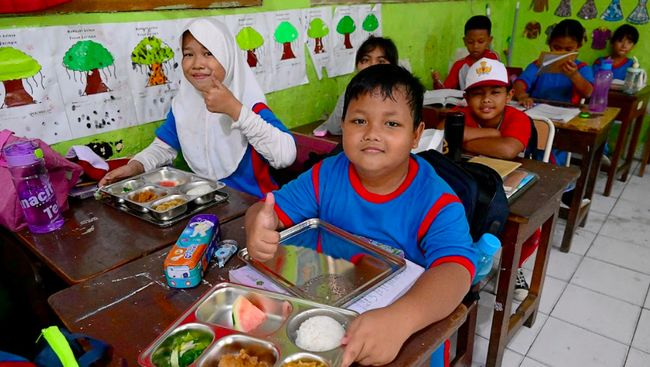
The implementation of MBG in the school environment has a direct impact on the quality of the learning process. Students who receive nutritious meals before or during learning activities demonstrate better concentration levels. This implies improved understanding of the material and active participation in class activities. Thus, MBG not only supports student attendance at school but also increases the effectiveness of the learning process itself.
The Head of the National Nutrition Agency, Dadan Hindayana, emphasized that MBG is designed to provide measurable benefits in supporting the quality of education. The program focuses not only on food distribution but also ensures that the nutritional content provided meets the needs of school-age children. A data-driven approach is the basis for determining menu composition and target beneficiaries.
In addition to impacting students, MBG also has a positive effect on the overall educational environment. Schools become more inclusive spaces, where all students have equal opportunities to learn in optimal conditions. Disparities caused by differences in economic background can be reduced through equitable nutrition interventions.
From a social perspective, this program also strengthens the role of schools as centers of community development. The MBG program involves various parties, from educators and school administrators to local businesses, in providing food. This collaboration creates an ecosystem that supports the program’s sustainability while encouraging community participation in education.
The economic impact of the MBG program is also significant. The involvement of local businesses in providing food opens up new economic opportunities at the regional level. Farmers, livestock breeders, and small and medium enterprises can become part of the program’s supply chain. Thus, the MBG program not only improves the quality of education but also contributes to strengthening the local economy.
In the long term, the integration of nutrition and education programs will produce a generation better prepared to face future challenges. Children who grow up with good nutrition tend to have higher learning abilities, better health, and optimal productivity. This is a crucial asset in increasing the nation’s competitiveness on the global stage.
The success of the Free Nutritional Meal Program (MBG) still requires sound management and strict supervision to ensure its benefits are optimally felt by all targeted groups. The government continues to ensure that food distribution is targeted, equitable, and meets established nutritional standards, ensuring it is not merely an aid program but a truly impactful intervention.
In its implementation, transparency and accountability are key elements that cannot be ignored. A structured monitoring system and the involvement of various parties are expected to maintain quality and prevent potential irregularities. This will ensure public trust in the program is maintained and even increased over time.
Furthermore, the role of parents and the community is also crucial in supporting the success of the MBG. Education about the importance of balanced nutrition and support for program implementation in schools will strengthen its positive impact and build collective awareness of the importance of investing in the younger generation.
Collaboration between the government, schools, and the community is key to creating a quality education ecosystem. The MBG program not only provides short-term solutions to meet nutritional needs but also encourages the creation of a healthier, more inclusive, and more conducive learning environment for student growth and development.
Ultimately, the MBG program demonstrates that an integrated development approach can deliver optimal results. By linking the health and education sectors, supported by sound management and active community participation, this program demonstrates that appropriate public policies can open greater opportunities for Indonesia’s young generation to thrive and contribute to national development.
*)Strategic Issues Observer
