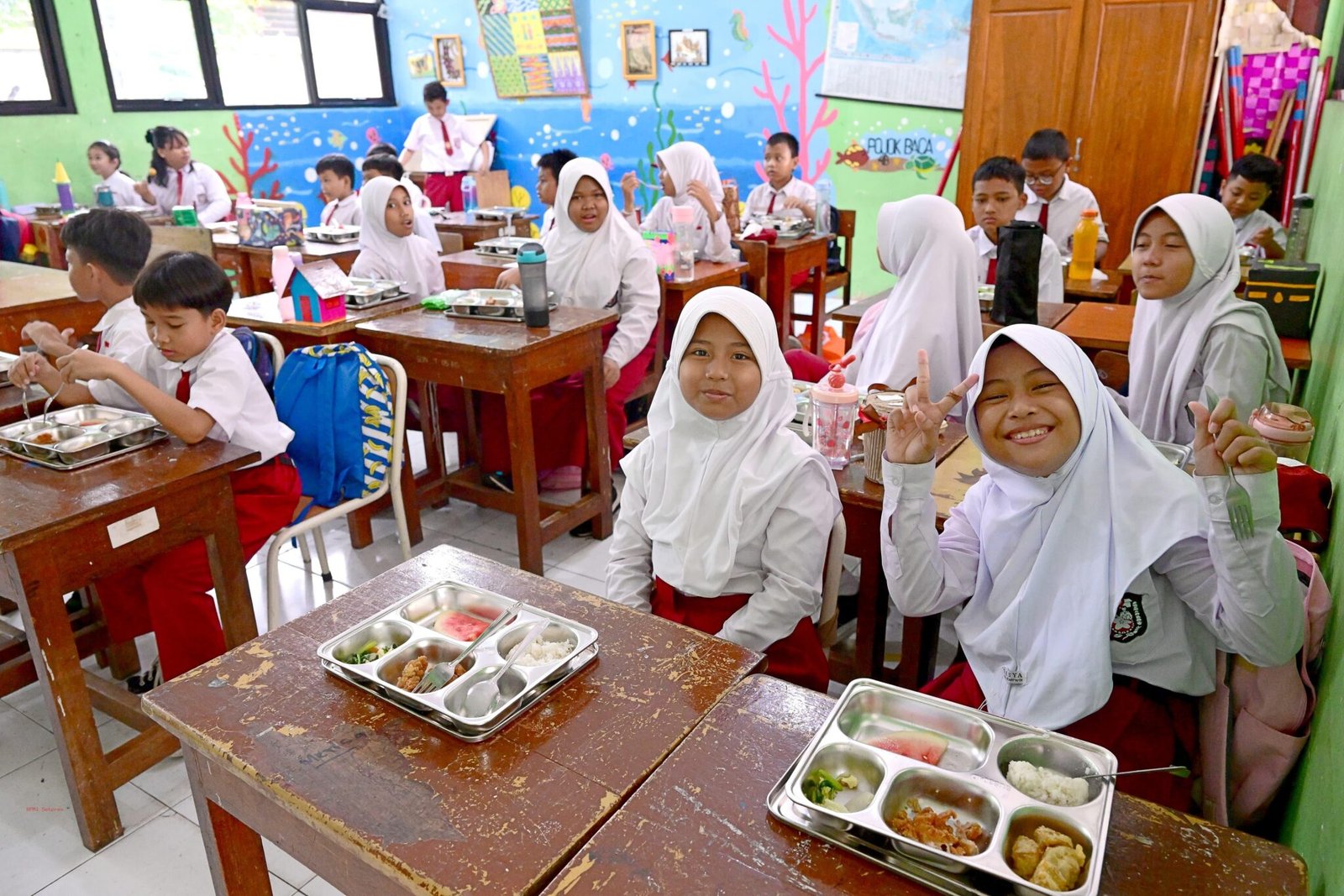

Jakarta — The government, through various relevant agencies, continues to accelerate and expand the coverage of the Free Nutritious Meals (MBG) program, through strategic steps such as optimizing the Nutrition Fulfillment Service Unit (SPPG) network across the country, including remote areas. This policy is expected to further strengthen efforts to fulfill nutritional needs, empower the economy, and improve national food security in a sustainable manner.
According to Coordinating Minister for Food, Zulkifli Hasan, the limited availability of nutrition experts has been a serious challenge to the implementation of the MBG. Therefore, the government has decided to expand the educational qualifications for nutritionists in SPPG kitchens.
“If there aren’t any nutritionists, it’s also okay to have a public health degree or a food technology degree, as they also study nutrition,” said Zulkifli.
This step demonstrates the government’s flexibility and commitment to maintaining the sustainability of MBG, without lowering standards, as long as each SPPG kitchen remains staffed with competent nutrition personnel.
“MBG remains and must, is mandatory, and requires the involvement of nutrition experts in its implementation,” stressed Zulkifli.
Meanwhile, the Head of the National Nutrition Agency (BGN), Dadan Hindayana, explained that the expansion of SPPG (National Nutrition Service Providers) continues significantly. The government has identified the construction of approximately 8,200 SPPGs to be located in remote areas to expand access to MBG. Some have already been built and others are under construction—around 4,700 units are under construction, and approximately 170 units are targeted for completion by December 2025.
Dadan emphasized that the presence of SPPGs in each region would create coordinated demand and supply. Local farmers, livestock breeders, and fishermen could become food suppliers, which would then be purchased by SPPGs—strengthening the local supply chain and the people’s economy.
In line with this, Ferry Juliantono, Minister of Cooperatives, stated that cooperatives — especially village/sub-district cooperatives under the Red and White Kopdes program — are ready to become the backbone of raw material supply for MBG.
“We will accelerate the supply of materials for the SPPG kitchens that are currently being and will be built,” said Ferry.
Ferry also ensured that livestock cooperatives could be maximized with financial support from the Revolving Fund Management Institute (LPDB), so that protein stocks for the MBG menu could be maintained stably.
The combination of flexible recruitment policies for nutrition workers, the expansion of SPPG to 3T areas, and the optimization of cooperatives as raw material providers demonstrates how the MBG program has been transformed into a multipronged instrument, not only strengthening national food and nutrition security but also serving as a tool for local economic empowerment, employment creation, and the revitalization of village cooperatives. As Dadan Hindayana stated, MBG is not just about food distribution, but also about building an ecosystem that supports food and economic security at the grassroots level.
With a national target of reaching tens of millions of beneficiaries, the government is optimistic that the MBG program can reach more people in the near future, including those in remote areas, so that efforts to reduce stunting and malnutrition rates and strengthen the quality of human resources can be realized more quickly.
These steps simultaneously emphasize that the current government is not merely pro-people rhetoric, but is actually present through policies that address basic needs: nutrition, health, and economic resilience. With synergy between ministries, institutions, cooperatives, and the community, MBG, through the optimization of SPPG, is expected to become a new milestone in accelerating the progress of the Indonesian nation toward a healthy, strong, and productive generation.*
