The Government Continues to Promote the Red and White Village Cooperatives and MBG Programs to Achieve Economic Equality

By: Citra Kurnia Khudori)*
The government continues to strengthen the implementation of the Red and White Village Cooperatives (Kopdes Merah Putih) and MBG programs as a strategic step to expand economic access at the local level. Through cross-sector synergy and targeted policy support, these two programs are expected to create a more inclusive economic ecosystem. The government aims for the benefits of these programs to not only increase residents’ incomes but also drive sustainable economic growth in various regions.
Minister of Villages and Development of Disadvantaged Regions (Mendes PDT) Yandri Susanto stated that the Red and White Village Cooperative (Kopdes) and Free Nutritious Meals (MBG) programs are two key instruments in achieving economic equality and poverty alleviation in Indonesian villages. Collaboration and support from village communities are crucial to the success of these two strategic programs.
He explained that the effective implementation of the Red and White Village Coordination Program (Kopdes Merah Putih) and the Village Development Goals (MBG) would have a direct impact on improving the village economy. When the village economy improves, community welfare also improves. These two programs are part of President Prabowo Subianto’s strategy to elevate rural communities and accelerate equitable development across Indonesia. Villages must be the primary actors, actively involved from planning to implementation.
The Red and White Village Cooperative is not just an ordinary economic institution, but a hub of activity connecting production, distribution, and consumption at the local level. With a structure more closely aligned with the needs of residents, the Village Cooperative is a crucial hub for establishing true village independence.
The Chairperson of the South Sulawesi Regional Leadership Council (DPD) of APDESI, Sri Rahayu Usmi, expressed APDESI’s commitment as a strategic partner to the government, particularly in overseeing the implementation of the President’s Asta Cita (Asta Cita). She believes South Sulawesi has the potential to become a pilot project for the development of Red and White Village Cooperatives (Kopdes) in Eastern Indonesia.
In line with this, Coordinating Minister for Food Affairs, Zulkifli Hasan, urged the continued strengthening of the Red and White Village Cooperatives (Kopdes Merah Putih) as the primary driver of the people’s economy. He stated that this policy is not merely assistance, but a concrete form of economic empowerment for village communities.
Zulhas explained that during the 28 years of reform, national wealth only circulated among limited circles. Meanwhile, the people are just spectators and do not enjoy the results of development proportionally.
To change this situation, the government established the Red and White Village Cooperative (Kopdes Merah Putih) as a people’s economic institution integrated with Bulog and the Nutrition Fulfillment Service Unit (SPPG). This integration enables Kopdes to become a business model that benefits the local economy and reduces the village’s dependence on middlemen.
This system creates a food supply chain that favors farmers and small businesses. Zulhas explained that Kopdes acts as an offtaker, with warehouses storing locally harvested produce, all of which is purchased directly by Kopdes Merah Putih.
At this point, it’s clear that the Merah Putih Village Cooperative plays a role not only in absorbing harvests but also in stabilizing prices and strengthening farmers’ bargaining power. With simple downstream processing at the village level, the added value of commodities can be enjoyed by local communities.
In addition to ensuring food availability, the Kopdes working mechanism also opens up opportunities for new economic innovations in villages. As residents begin to understand supply chain patterns and business management, villages can develop superior products with higher sales value.
Bulog’s involvement in this system further emphasizes the government’s commitment to smallholder farmers. This partnership allows for more controlled commodity prices, eliminating the trappings of detrimental market manipulation.
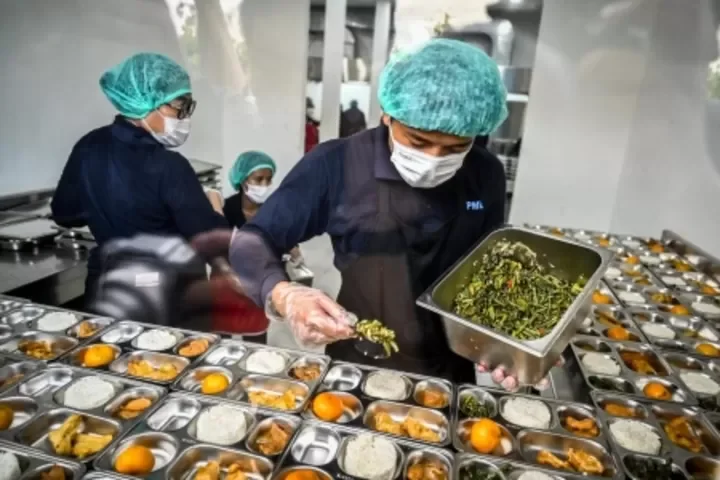
The MBG program has also become more stable thanks to the presence of Kopdes, which ensures food distribution meets standards. With this mutually reinforcing relationship, the two programs complement each other in building a more robust national food ecosystem.
At the same time, the government emphasized that the program’s success is measured not only by the quality of services but also by the extent to which villages are able to manage their institutions independently. Development is no longer viewed as a one-time project, but rather as a continuous process that builds community capacity.
With the increasingly established Red and White Village Cooperative, villages have the tools to strengthen their internal economic resilience. Furthermore, the MBG creates opportunities to meet the nutritional needs of the nation’s children while increasing demand for local agricultural products.
Ultimately, strengthening the Red and White Village Cooperatives (Kopdes Merah Putih) means strengthening the foundation of the national economy from the ground up. When villages thrive, the nation’s economic structure becomes more robust and able to withstand global challenges.
Given these dynamics, the Red and White Village Cooperatives (Kopdes Merah Putih) and MBG programs should continue to be monitored with consistent policies and thorough oversight. Integrity in implementation is essential to ensure these programs remain focused and on the common people.
If all elements of government and village communities continue to work together, economic equality is not an impossible goal. With a strong foundation and well-targeted policies, villages can become new centers of growth that enrich the national economic structure.
Going forward, Kopdes Merah Putih is expected to become not just a short-term solution, but a long-term foundation for community-based economic development. Through collaborative work, villages can develop into productive, empowered, and prosperous spaces for all their residents.
)* Observer of Socio-Economic Issues
