
By: Pradita Tyasmara )*
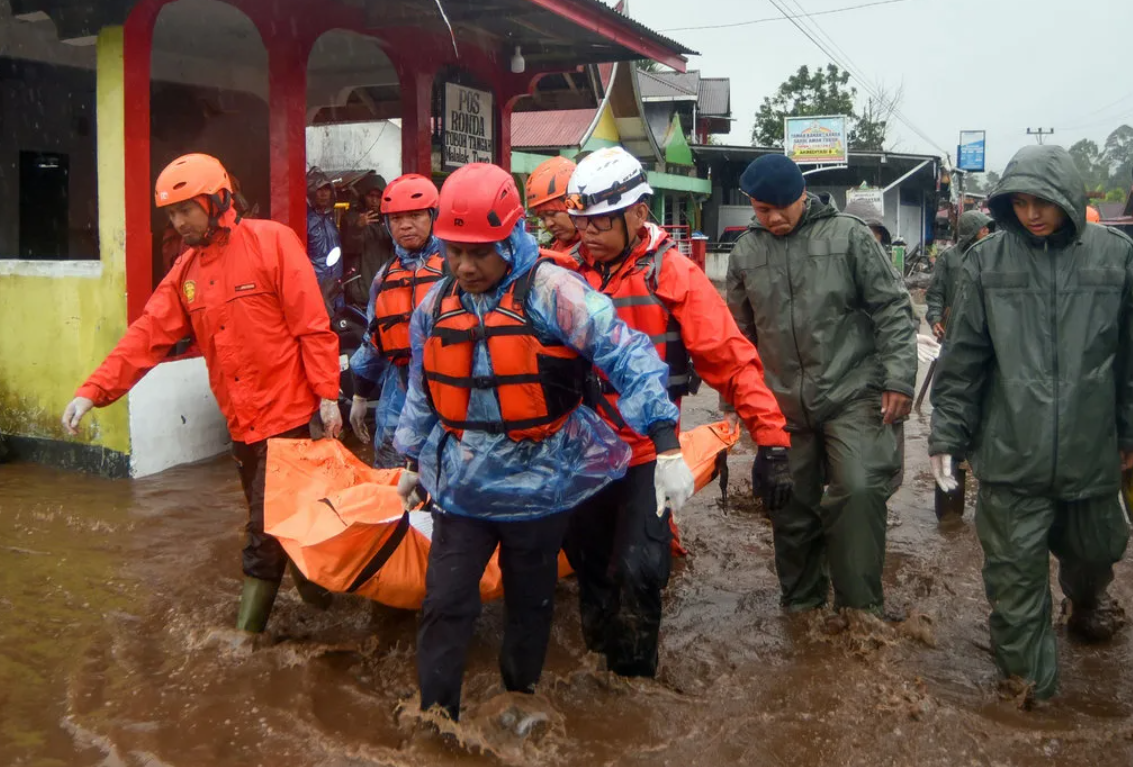
The government continues to mobilize all national resources to expedite the emergency response to the floods and landslides that have struck various regions in Sumatra. The situation demands a swift response, forcing the central and regional governments to work around the clock. Inter-agency coordination is the key to ensuring that response efforts are carried out in a coordinated manner and that community needs are met in the shortest possible time.
Coordinating Minister for Human Development and Culture Pratikno personally inspected several affected areas. He conducted aerial surveillance and visited the ground in Central Tapanuli, Sibolga, and South Tapanuli. His presence demonstrated the government’s commitment to ensuring that the entire response process is proceeding according to the President’s directives, which emphasize accelerated restoration of access and aid distribution.
After inspecting the situation from the air, the Coordinating Minister for Human Development and Culture emphasized the need to quickly restore land access. He emphasized that distribution channels should not rely on a single mode of transportation. He stated that aid needs to be distributed by land, air, and sea to ensure that no area is left behind. This multi-lane approach is considered crucial because the severely damaged geographical conditions make some areas inaccessible by conventional means.
He also explained that much urgent work remains to be done. The government considers clearing landslide material, reorganizing buried areas, and expanding evacuation facilities to be urgent needs. Basic services such as electricity, clean water, and fuel are also a priority to ensure the continued operation of community activities in evacuation centers.
In his explanation, he emphasized that spatial planning cannot be ignored. Landslide material accumulated in residential areas must be removed in a measured manner to prevent new problems. He reminded local governments to pay attention to drainage and river flow changes caused by disasters, especially since changes in land contours can impact long-term spatial planning.
That evening, the Coordinating Minister for Human Development and Culture delivered another report at the national command post at Silangit Airport. He emphasized that the President had instructed the deployment of national forces to expedite the emergency response process. He explained that all ministries, institutions, security forces, and local government officials were working on the ground to assist affected communities.
He said the presence of central officials such as the National Police Chief, the Head of the National Disaster Management Agency (BNPB), the Regional Military Commander (Pangdam), and the Regional Police Chief demonstrated the state’s commitment to disaster management. He stated that all agencies were working hard with the same goal: ensuring public safety and accelerating the normalization of affected areas.
He explained that while the primary focus is on emergency response, the government is still preparing a rehabilitation and reconstruction plan. Planning is being carried out to ensure a smooth transition from emergency to recovery. The government aims to provide temporary housing and permanent housing, as well as restore damaged public infrastructure.
He hopes the emergency response phase can be completed quickly. The government wants to expedite the process so people can return to their normal activities. Social and economic recovery is considered crucial, as many people have temporarily lost their jobs due to disrupted access and public services.
The Coordinating Minister for Human Development and Culture emphasized that this disaster was part of the impact of Tropical Cyclone Senyar. He viewed this incident as a reminder of the need for stronger national preparedness. He urged the public to understand the significant challenges facing teams in the field, particularly the deployment of heavy equipment, which is challenging amidst damaged infrastructure.
He emphasized that the government is continuing its maximum efforts. Any limitations on the ground do not diminish the country’s commitment to addressing obstacles one by one for the safety of the public.
From Jakarta, Coordinating Minister for Economic Affairs Airlangga Hartarto also expressed his deep condolences for the disasters that struck Aceh, North Sumatra, and West Sumatra. He explained that the government had acted swiftly from day one to ensure optimal emergency response procedures.
He stated that the President had directed the deployment of all national forces to assist with the evacuation and aid distribution. He stated that the President was directly at the disaster site to ensure that every response step was in accordance with the conditions on the ground. The government also affirmed its readiness to expedite the rehabilitation and reconstruction process.
Airlangga believes accelerating recovery is crucial for reviving economic activity. He believes that restoring infrastructure, public facilities, and logistics distribution channels will be crucial factors in determining the speed of recovery.
Meanwhile, in West Sumatra, Vice President Gibran Rakabuming Raka visited a refugee camp in Agam Regency. He urged all government agencies to ensure the best possible services for vulnerable groups. He stated that the elderly, toddlers, children, and pregnant women must be prioritized in emergency response.
He considered the provision of adequate tents, food, and clean water to be urgent needs that must not be ignored. He emphasized that the community should not feel alone, as the government would continue to support them until the situation returned to normal.
Gibran explained that the President had ordered the acceleration of logistics distribution. This effort encompasses land, air, and sea routes to ensure no area is cut off. He also stated that repairs to communications, bridges, and road access would be carried out as quickly as possible to ensure the smooth flow of aid.
All the steps taken by the government demonstrate its commitment to protecting the public. The Indonesian National Armed Forces (TNI), the Indonesian National Police (Polri), the National Disaster Mitigation Agency (BNPB), local governments, and volunteers are working under one command to expedite the response. The deployment of national forces is clear evidence of the government’s full presence with the people of Sumatra during this difficult time.
