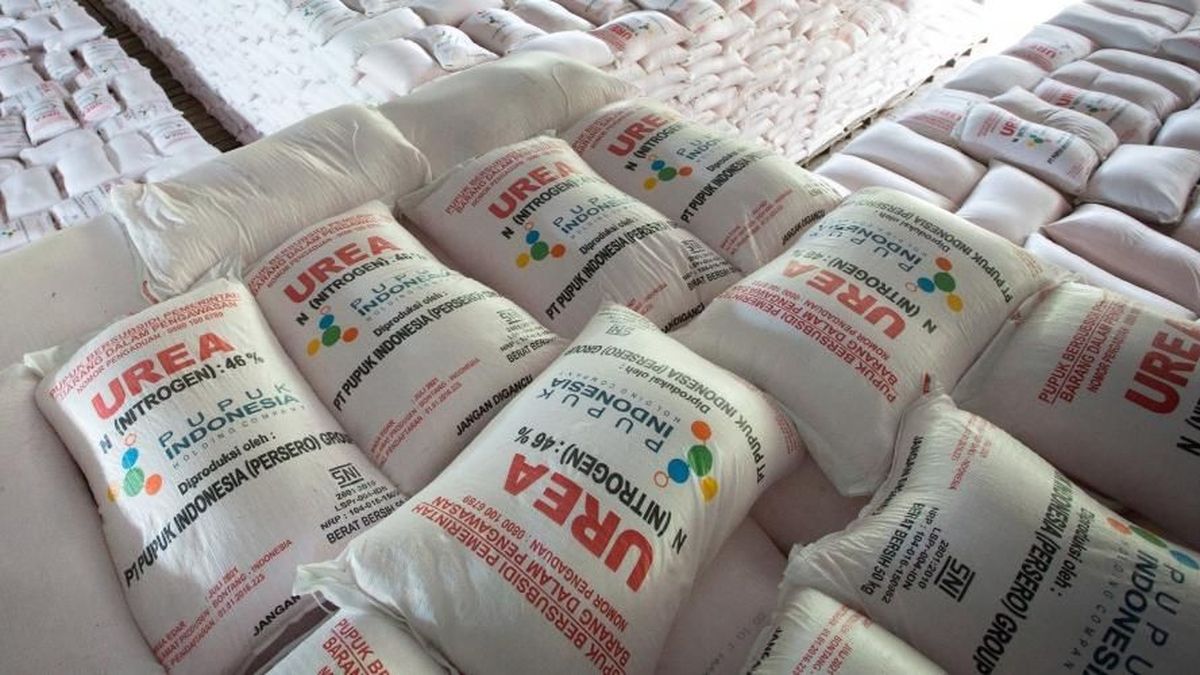

JAKARTA – The government continues to strengthen national food security through a policy of providing subsidized fertilizer to farmers. This strengthening of the subsidized fertilizer policy is also supported by innovation and collaboration in the agricultural sector. PT Pupuk Indonesia (Persero) is promoting agricultural transformation through the FertInnovation Challenge as part of its efforts to support food self-sufficiency and national food security.
Director of Engineering and Business Development at Pupuk Indonesia, Jamsaton Nababan, emphasized that innovation is key to strengthening the national agricultural system.
“The FertInnovation Challenge is not just an innovation competition, but a strategic tool for companies to build a research and innovation pipeline relevant to the challenges of the national agricultural and fertilizer industries,” he said.
Through an open innovation approach and collaboration with various stakeholders, Pupuk Indonesia encourages the development of concrete solutions that support production efficiency, fertilizer distribution resilience, and environmental sustainability.
“We believe that the innovations born from FertInnovation will contribute significantly to increasing the efficiency of the production process, the resilience of the fertilizer distribution system, environmental sustainability, and national agricultural productivity,” Jamsaton concluded.
At the regional level, Lampung Province received an allocation of 710,711 tons of subsidized fertilizer which will be distributed to all districts and cities according to the needs of the agricultural sector.
Head of the Agricultural Facilities and Infrastructure Division of the Lampung Province Food Security, Food Crops, and Horticulture Service (KPTPH), Tubagus Muhammad Rifki, said that the allocation includes various types of strategic fertilizers.
“The total allocation of subsidized fertilizer for Lampung Province in 2026 includes 309,110 tons of urea, 387,830 tons of NPK, 7,495 tons of NPK specifically for cocoa, 5,994 tons of organic fertilizer, and 282 tons of ZA,” he said.
The allocation received a positive response from the Lampung Provincial Council (DPRD). Ahmad Basuki, Chairman of Commission II of the Lampung Provincial DPRD, assessed that the availability of subsidized fertilizer in 2026 was relatively secure, given the increased quota from the central government.
“The central government has already allocated subsidized fertilizer in Lampung, and the allocation is deemed sufficient. Furthermore, the central government’s quota has also increased,” Basuki said.
In addition to allocating subsidized fertilizer, the Lampung Provincial Government also distributes liquid organic fertilizer (POC) to complement farmers’ needs.
“Looking at the total allocation plus the POC from the provincial government, I think fertilizer needs are met. It just depends on how the field is monitored, especially regarding pricing,” he said.
Basuki also emphasized the importance of distribution supervision and compliance with the Highest Retail Price (HET).
“This way, the public will know the official price of fertilizer, so farmers won’t suffer losses and won’t buy fertilizer above the HET,” he explained.
The synergy between subsidized fertilizer allocation, distribution supervision, and strengthening innovation is expected to maintain the sustainability of agricultural production and strengthen national food security.
