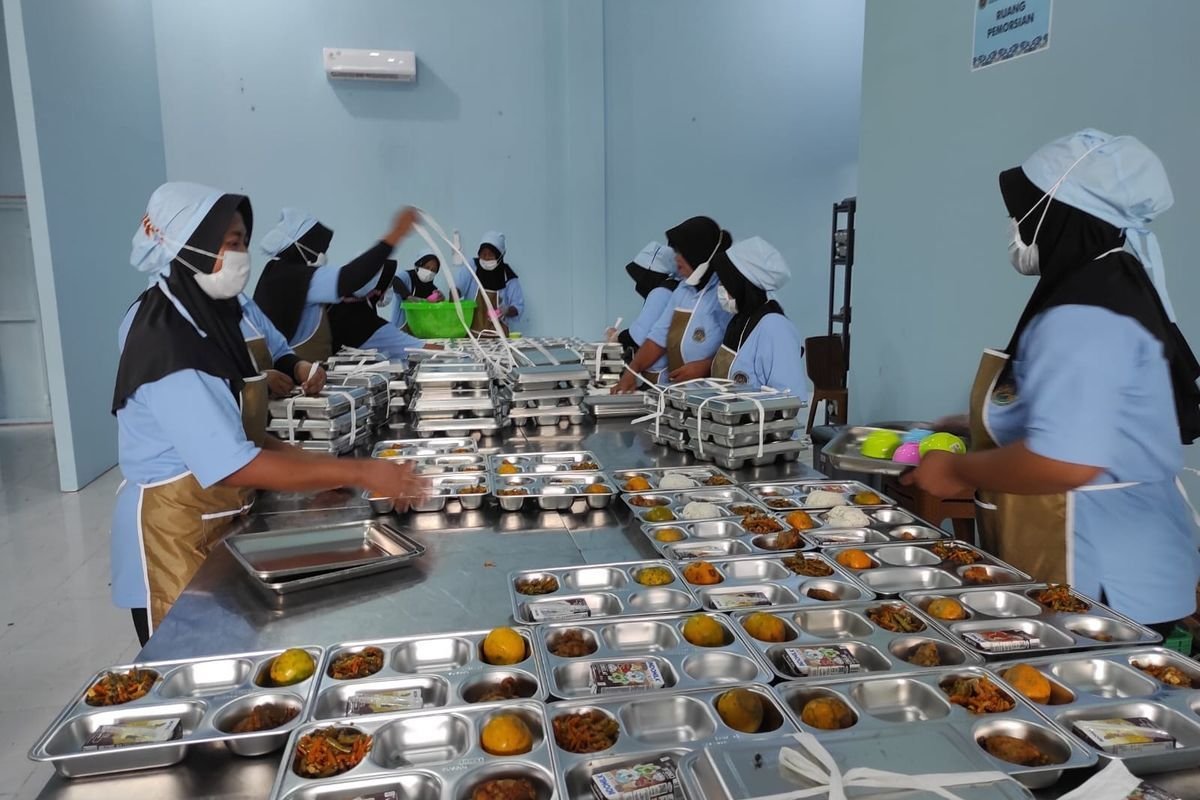

Papua — The government continues to strengthen cross-sector coordination to ensure the success of the Free Nutritious Meals (MBG) program in Papua. This step is being taken to ensure balanced nutrition for priority groups and to support efforts to reduce stunting rates in eastern Indonesia.
The Acting Regional Secretary of South Papua, Maddaremmeng, emphasized that his office is synchronizing the implementation of the MBG program with the National Nutrition Agency (BGN). He stated that the direction from the Ministry of Home Affairs (Kemendagri) is a crucial guideline for the regional government in implementing this strategic program.
“Regarding the MBG, we were instructed by the Ministry of Home Affairs to locate the kitchen. We must ensure we don’t fail to prepare the budget, as we must plan ahead. We don’t want the BGN to finance it, and we’ll also be financing it,” he said.
He added that regional governments need clear guidance regarding the form of relationships and coordination that need to be established between provincial and district governments and the National Land Agency (BGN).
“Therefore, we need direction regarding what relationships need to be built within the MBG program by regional governments, both provincial and district,” he stressed.
At the district level, acceleration measures are also being implemented. Sitanna Rida Pamila, Head of Fakfak Regency Nutrition Services, revealed that the local government, along with relevant agencies, is prioritizing the construction of additional healthy kitchens in several locations. This is expected to expand the distribution of MBG to reach all target groups.
“We hope that healthy kitchens will soon be built in several locations in Fakfak. This way, we can expand the distribution of MBG, and all students can benefit,” said Sitanna.
He is optimistic that with equal implementation of MBG, Fakfak can become a stunting-free area in the future.
Support for this program also came from parliament. Cellica Nurrachadiana, a member of Commission IX of the Indonesian House of Representatives (DPR RI), assessed that MBG plays a vital role in shaping Indonesia’s golden generation in 2045. She stated that the program’s target groups, which include early childhood, elementary school through high school/vocational school students, pregnant women, breastfeeding mothers, and toddlers outside of early childhood education (PAUD), represent a long-term investment in the nation’s health.
“The hope is that by 2045, they will grow into children who are physically, mentally, and physically healthy. They will grow into strong, intelligent children, children who are free from stunting, and who are intellectually gifted,” he said.
Cellica emphasized the importance of integration between the Free Health Check (CKG) program under the Ministry of Health and the MBG managed by BGN.
“The hope is that this will be linear. In terms of health, the Free Health Checkup is under the Ministry of Health, but in terms of fulfilling balanced nutrition, it is under the National Nutrition Agency (through Free Nutritious Meals),” he explained.
He further emphasized that the success of the MBG and CKG is not solely the responsibility of the central government. The involvement of local governments, the private sector, the education sector, and the community is key to the program’s successful implementation on the ground.
The government’s efforts to enhance synergy in the implementation of the MBG program in Papua are expected to accelerate the development of a healthy, intelligent, and stunting-free generation. With this shared commitment, Papua is expected to become not only a beneficiary but also a model for successful implementation of the national nutrition program in the region.
