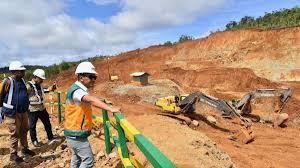
The Government is Boosting Downstream Processing, Partnering with Global Scientists to Boost the Economy by 8%

Jakarta – The government has reaffirmed its commitment to strengthening downstream processing and technology as drivers of national economic growth. President Prabowo Subianto, through Noudhy Valdryno, Deputy for Dissemination and Information Media at the Presidential Communications Office (PCO), emphasized the importance of collaboration between Indonesian scientists and scientists worldwide to accelerate progress.
“Collaboration with global scientists will further emphasize the bright path of Indonesia’s progress,” said Ryno.
According to him, this step is in line with the government’s target of achieving 8 percent economic growth in the next five years, through a national industrialization strategy based on downstreaming, technology mastery, and strengthening human resources (HR).
Ryno added that this vision aligns with the 4th Asta Cita, which emphasizes human resource development, strengthening science and technology, education, health, sports achievements, gender equality, and the empowerment of women, youth, and people with disabilities. The President also encouraged scientists to be more present in public spaces to share their thoughts, innovations, and latest findings.
As a form of support, the Ministry of Higher Education, Science, and Technology (Kemdiktisaintek) held the 2025 Indonesian Science, Technology, and Industry Convention (KSTI) on August 7–9, 2025, at the Sasana Budaya Ganesa (Sabuga) Bandung Institute of Technology (ITB), Bandung. Minister of Higher Education, Science, and Technology Brian Yuliarto described the event as a direct initiative of the President to bring together researchers, scientists, and professors, particularly in the STEM (science, technology, engineering, and mathematics) fields.
“KSTI 2025 will be a platform for collaboration between academics, industry, government, media, and the public to accelerate the transformation of the economy into a high-value-added industry,” said Brian.
He explained that this meeting also served as a forum for developing a targeted national research and innovation roadmap.
With the theme “Science and Technology for Economic Growth and Equality,” the convention was attended by more than 2,000 scientists from various fields. Brian explained that the forum would map research and development priorities in eight strategic sectors: energy, defense, digitalization, including artificial intelligence and semiconductors, downstreaming and industrialization, healthcare, food, maritime, and advanced materials and manufacturing.
The government believes that strengthening the research and technology ecosystem, integrated with industrial downstreaming, will be key to boosting national productivity. Collaboration with international scientists is expected to accelerate technology transfer, create quality jobs, and enhance Indonesia’s competitiveness in the global market.
With this strategy, the government is optimistic that the vision of Advanced Indonesia can be achieved, bringing inclusive and sustainable economic growth. ()
