
By: Monica Montiro )*
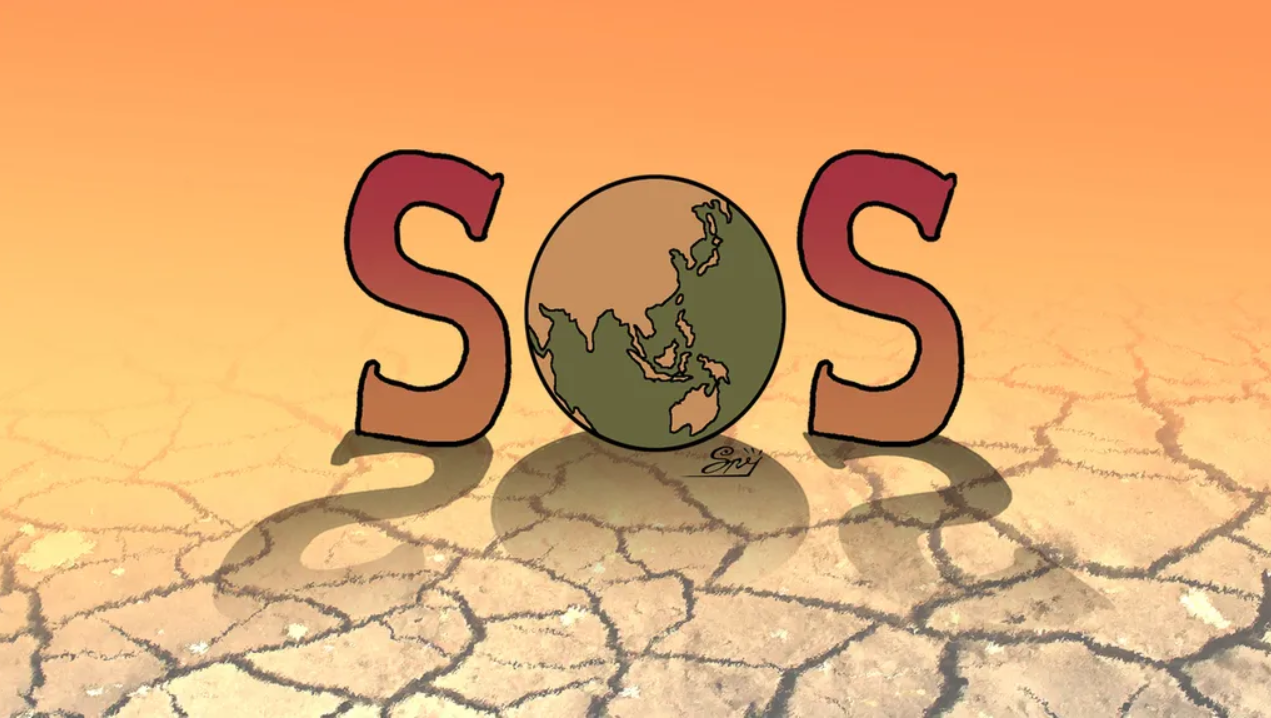
Recently, both the digital and real world have been filled with the buzz of “Indonesia is Anxious” discourse. Initially conceived as a form of social criticism, this narrative has gradually evolved into a wave of provocation that has the potential to destabilize the region. Often, the issues raised are not based on factual data but are instead spiced with emotionally charged opinions. In response to this situation, the government is not remaining silent. Measures to increase public literacy, strengthen public communication, and prevent disinformation are being intensified as part of its commitment to maintaining public calm and common sense.
The #IndonesiaCemas movement claims to represent public concern about the national situation. However, in many aspects, the narrative it constructs tends to be hyperbolic and lacks scientific references. In fact, much of the campaign, voiced on social media and in street demonstrations, appears more agitational than educational. The initiator of the National Conscience Movement (GNK), Habib Syakur Ali Mahdi, stated that this dangerous narrative formation pattern is highly susceptible to infiltration by anti-constitutional groups. Furthermore, the pattern that led to these street demonstrations is not a solution. He believes the Indonesian nation now needs stability. Habib Syakur firmly emphasized the importance of maintaining public order and sanity amid the ongoing transition of power.
In a democratic climate, criticism is certainly permitted. However, healthy criticism should be accompanied by solutions and delivered through a dignified forum. When criticism turns into aimless agitation, it is not only unconstructive but also opens the door to destructive forces seeking to divide the nation. President Prabowo Subianto’s administration is currently implementing the vision of a Golden Indonesia 2045. This process is taking place within the legal framework, peacefully, and democratically. In this crucial phase, the Indonesian people should unite to support the smooth running of the Prabowo-Gibran administration.
Muhammad Chaerul, a researcher from the Center for Islamic and Ethnic Studies (CIE), emphasized that in the current situation, efforts to build national stability should be supported, not undermined by mass mobilizations that offer no real solutions. He argued that citizens should oversee the smooth transition to government, rather than complicating it with emotional narratives that confuse the public.
The public needs to understand that each phase of government presents its own challenges, and stability is the primary foundation for addressing these challenges. Without stability, development programs, social welfare, and economic equality will be hampered, ultimately harming the people themselves. Student movements have always been a crucial element in this nation’s history. However, in today’s context, a critical question arises: are student movements still based on academic analysis and idealism, or are they beginning to become mired in political polarization?
Hasan, an activist from Corong Rakyat (People’s Corong), stated that hashtags like #IndonesiaCemas appear to be driven more by emotion than by the academic study that should be the primary characteristic of student movements. He highlighted that some movements are now tending to lose direction and identity, becoming tools for specific political interests. He believes that some groups believe the movement is trapped in political polarization and is beginning to stray from its identity as a campus intellectual group.
Students’ critical thinking remains essential. However, productive critical thinking can only emerge from a clear intellectual space, not from the chaos created by social media framing and viral opinions. The government, through various ministries and institutions, has taken serious steps to improve public literacy, particularly digital and media literacy. This is not merely a reactive measure, but part of a long-term strategic policy to build a more intelligent society, resilient to hoaxes, and less easily provoked.
The digital literacy program initiated by the Ministry of Communication and Information Technology, involving community leaders, universities, and literacy communities, is a concrete effort to build social resilience against destructive narratives. Public literacy not only makes people more adept at filtering information but also encourages healthier public participation in democratic life.
Furthermore, the presence of public discussion forums involving experts, academics, and civil society is now being promoted to balance the discourse space. The government is also continuing to maintain open communication channels so that public aspirations can be expressed without resorting to destructive methods.
Amidst the Prabowo-Gibran administration, we face a crucial choice as a nation: be part of constructive development or be swept up in the chaos that hinders progress. The government has demonstrated its commitment to strengthening literacy, maintaining stability, and creating spaces for healthy participation.
It’s time for us to be mature in our approach to national issues. Don’t be easily provoked by baseless, negative narratives that tend to discredit the government. This nation needs cooperation from all elements to progress, not mutual suspicion and undermining. Let’s support the strategic programs of the Prabowo-Gibran administration and maintain a spirit of unity for a stronger, more prosperous, and more civilized Indonesia.
)* Government Observer
