
The Government is Increasing Digital Surveillance to Combat the Circulation of Adulterated Rice

By Rahmat Srigati Darmono )*
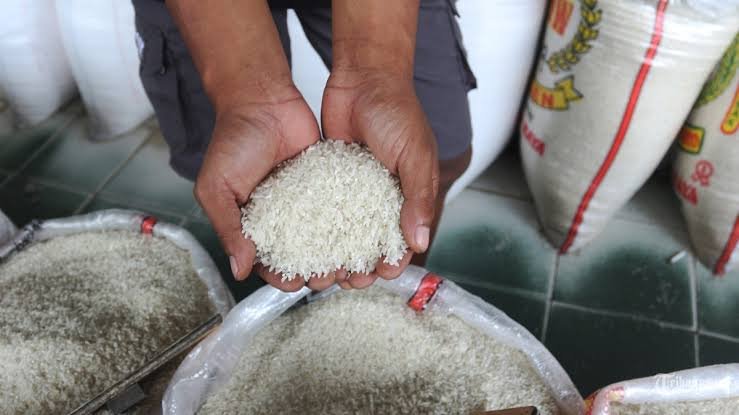
The practice of adulterated rice is a form of fraud in food distribution that is highly detrimental to consumers. Not only does it reduce the quality of rice consumed by the public, it also disrupts the market ecosystem and reduces the effectiveness of various food security policies carefully designed by the government. Therefore, steps to improve oversight through digital systems are an absolute necessity that cannot be postponed any longer. The government is currently demonstrating its commitment to eradicating the circulation of adulterated rice by developing a more sophisticated, integrated, and technology-based oversight approach.
The State Logistics Agency (Bulog), the spearhead of the government’s rice reserve distribution, continues to strengthen its distribution system. Bulog’s President Director, Ahmad Rizal Ramdhani, explained that the food and rice aid distribution system for stabilizing food supplies and prices (SPHP) is now supported by digital technology. This innovation comes in the form of a food aid application that requires all beneficiaries to be registered on the official Social Services Agency list. Each eligible resident will receive an invitation in the form of a piece of paper with a barcode, which is then scanned and verified against their ID card. Only after this validation is complete can the rice aid be distributed.
Similar measures are being implemented for the distribution of SPHP rice. In this case, the State Logistics Agency (Bulog) utilizes the Klik SPHP application, which strictly regulates the distribution mechanism to retailers. Retailers are required to register fully with their ID cards and business licenses, which are then verified by the local Department of Industry and Trade. Bulog sets a maximum purchase limit of two tons per retailer and requires them to sign a statement committing not to open packages, not to sell more than two packages per buyer, and to accept sanctions for violations.
This effort represents a concrete form of digitalization of food governance aimed at creating accountability in the distribution process. With an app-based system, every transaction is properly recorded, enabling real-time tracking of goods and preventing data manipulation. The circulation of adulterated rice, previously difficult to detect due to weak conventional oversight, can now be prevented at the point of initial distribution.
However, digitalization efforts cannot stand alone. Eliza Mardian, a researcher at the Center of Reform on Economics (CORE) Indonesia, believes that the monitoring system needs to be expanded to encompass the entire supply chain, from farmers to consumers. She recommends the use of blockchain-based tracking technology to ensure more transparent, efficient, and unmanipulated monitoring of rice distribution. This technology can record every movement of rice, verify its origin, and provide consumers with confidence that the rice they purchase is genuine and meets quality standards.
Eliza also emphasized the importance of synergy between agencies in addressing the circulation of adulterated rice. According to her, this issue concerns not only the Ministry of Agriculture, the producer, but also the Ministry of Trade, which regulates trade and distribution. Therefore, coordination across ministries/agencies, particularly under the Coordinating Ministry for Food, is crucial for harmonizing policies and implementing oversight.
On the other hand, law enforcement against adulteration also needs to be strengthened. Eliza advocates for the implementation of strict administrative and criminal sanctions, such as revocation of business permits, large fines, distribution bans, and even asset freezing. She also suggests stricter regulations for premium rice standardization, including testing for moisture content, grain shape, and compliance with measurements. Quality certification involving an independent institution could be made mandatory for premium rice producers to ensure product quality in the market.
Rizal Taufiqurragman, Head of the Macroeconomics Center at the Institute for Development of Economics and Finance (Indef), assessed that digitizing the distribution of the Government Rice Reserves (CBP) is a strategic step that not only strengthens oversight but also opens up space for public participation. He stated that the use of QR codes or barcodes on each rice package will allow the public to track rice directly. This will create a culture of collective oversight while building transparency throughout the supply chain.
Rizal also emphasized the need to transform the supervisory approach from a reactive to a proactive and systematic one. With an intelligent monitoring system based on data and digital forensics, all distribution anomalies can be automatically detected and quickly acted upon. He recommended regular audits of Bulog’s partners and the creation of a blacklist for businesses found to be fraudulent.
With a series of digital innovations and strengthened inter-agency coordination, Indonesia is on the right track to eradicate the circulation of adulterated rice. The remaining challenge is consistent implementation on the ground and the commitment of all parties, from the central government to businesses and the public, to maintain the integrity of the national food distribution system. Technology-based monitoring is not just a tool, but a fundamental foundation for transparent, fair, and sustainable food governance.
)* The author is a National Food Policy Observer
