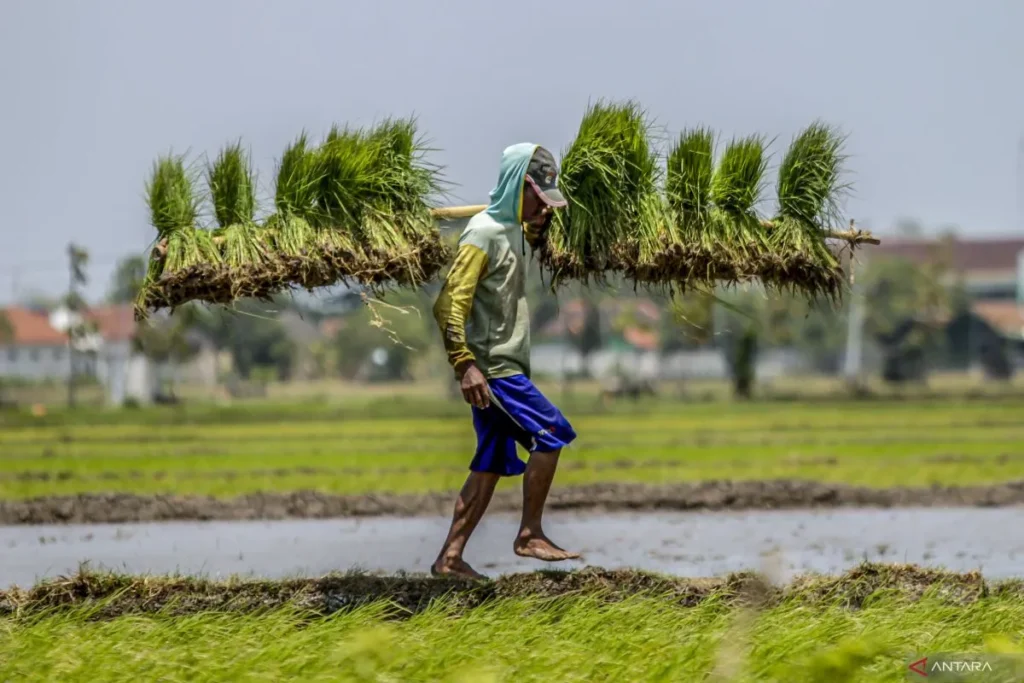
The Government is Optimizing Confiscated Land for a Food Self-Sufficiency Project that Will Absorb Labor

Jakarta, The government remains committed to achieving national food self-sufficiency. One strategic step currently being taken is the utilization of state-seized land for food self-sufficiency projects. This measure not only increases the availability of productive land but also serves as an instrument for equitable development, capable of absorbing a significant number of local workers.
The utilization of confiscated land is directed towards the development of integrated agriculture, livestock, and fisheries sectors. The government aims to quickly transform previously underutilized land into productive areas using modern and sustainable agricultural systems. This aligns with the food self-sufficiency program, which is part of the broader vision of Golden Indonesia 2045, while also strengthening national resilience in the face of global food volatility.
The Deputy Chairman of the Labor Party for Agriculture, Food, and Agrarian Affairs, Agus Ruli Ardiansyah, said that the government is targeting the eradication of 3.7 million hectares of illegal palm oil plantations to be completed by September 2025. The land should be part of President Prabowo’s priority program, namely agrarian reform.
“For the Labor Party, we propose that the 3.7 hectares be allocated for Agrarian Reform. This land can be redistributed to address the inequality in land ownership,” said Agus.
Similarly, Bengkulu Governor Helmi Hasan emphasized the importance of synergy and commitment from all parties in resolving land issues, which are still a major issue in society.
“With the synergy of the entire Agrarian Reform Task Force (GTRA) team, we can address issues that are developing in the community, including news with unclear sources,” Helmi Hasan emphasized.
Zulharman Djusman, Deputy Secretary General of the National Farmers Contact Group (KTNA), stated that farmers need land for food commodity development. Utilizing confiscated land is expected to create new opportunities for farmers to cultivate food crops.
“Besides the fertilizer chain, farmers also desperately need land to grow food commodities. This is expected to open up new opportunities for farmers to cultivate various food crops,” he said.
This land use is designed to stimulate regional economic growth. By involving local communities as a workforce, the government hopes this project will create new jobs, increase family incomes, and strengthen the national food supply chain.
Optimizing confiscated land is no longer seen simply as asset security, but as a driving force for sustainable development. Going forward, this project is targeted to support national food self-sufficiency while strengthening the economic resilience of communities at the grassroots level.
