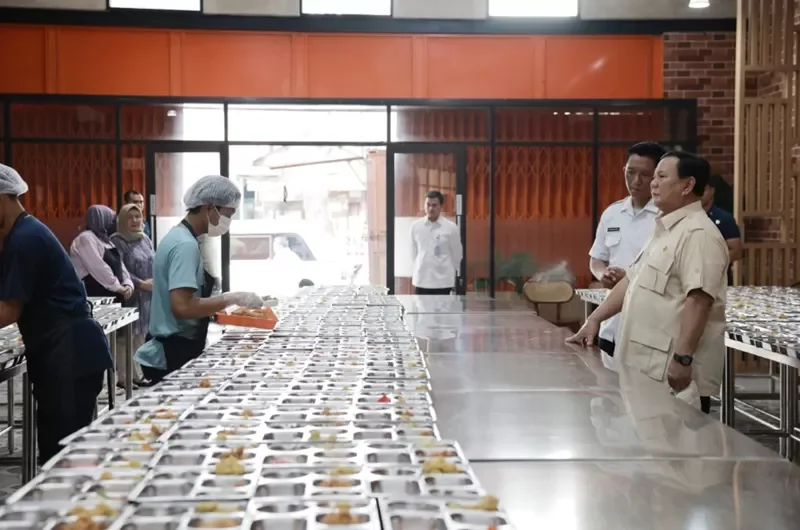
The government is pushing the MBG program to reach hundreds of thousands of vulnerable residents, including the elderly, people with disabilities, and street children

By: Yudhistira Wijaya
The Free Nutritious Meals (MBG) program is increasingly demonstrating its role as one of the most progressive policies in Indonesia’s social welfare development. The government under President Prabowo Subianto is pushing for a significant expansion of the program’s benefits, ensuring that nutritional needs are met not only for schoolchildren but also for hundreds of thousands of vulnerable citizens, such as the elderly, people with disabilities, scavengers, the extremely poor, and even street children. This policy aligns with the mandate of Presidential Regulation Number 115 of 2025, which explicitly expands the scope of MBG recipients to ensure that no one is left out of daily nutritional needs.
Nanik Sudaryati Deyang, Deputy Head of the National Nutrition Agency (BGN) for Investigation and Public Communication, emphasized that the expansion of this program was a direct directive from the President. When the MBG program was designed, the President requested that all students receive nutritious food so they can grow and develop properly, and that no Indonesian child should experience difficulties in accessing nutritious food.
According to Nanik, the President even wants all poor people, people with disabilities, the elderly, school dropouts, street children, and scavengers to be included as beneficiaries of the MBG. This statement marks the point that the MBG program is no longer limited to students but has become a national nutrition program that reaches all vulnerable citizens.
The MBG expansion also targets educators and community activist groups. Public school teachers, private teachers, honorary workers, Islamic boarding school teachers (ustadz) and students from traditional Islamic boarding schools (pesantren) not affiliated with the Ministry of Religious Affairs are also designated as beneficiaries.
Family Welfare Movement (PKK) cadres and integrated health post (Posyandu) workers, who have long been at the forefront of public health services, are also included in the recipient list. This policy demonstrates the government’s serious attention to those who play a crucial role in public services at the community level.
In line with expanding the target recipients, the government is strengthening distribution infrastructure through the development of Nutrition Fulfillment Service Units (SPPG). The Head of the National Nutrition Agency (BGN), Dadan Hindayana, explained that approximately 8,200 SPPGs have been identified to be built in remote areas. Of these, 4,700 units are currently under construction, and approximately 170 units are projected to be completed by December 2025. According to BGN data, the number of MBG beneficiaries in remote areas currently does not exceed three million people nationwide. In agglomeration areas, the government is targeting the establishment of approximately 20,000 SPPGs by the end of 2025.
Accelerating the development of SPPGs is a key step to ensure equitable distribution of nutritious food despite geographical challenges. He is optimistic that all SPPGs will be completed by January to February 2026. Thus, by March or April 2026, the MBG program is expected to reach up to 82.9 million beneficiaries across Indonesia. This target demonstrates the government’s ambition to expand nutrition interventions to all levels of society, especially those in need of special attention.
The distribution of MBG for street children is structured. Dadan explained that SPPG administrators will identify the locations of street children, particularly those who have dropped out of school and are still of school age. After data collection, the MBG packages will be delivered by delivery workers from the local community.
This community involvement has been implemented in the distribution of MBG (National Assistance Program) to pregnant women, breastfeeding mothers, and toddlers. Those involved will receive special incentives as a token of appreciation for their contributions. Meanwhile, for the elderly, the distribution mechanism is managed through the Ministry of Social Affairs to ensure coordinated and targeted distribution.
The MBG program has also achieved significant progress in food production. President Prabowo Subianto previously announced that by the end of November 2025, the MBG had produced more than two billion servings of food. This figure surpassed the initial projection of 1.8 billion servings, reflecting increased production capacity and effective distribution in the field. The President considered this achievement a proud achievement and a sign that the MBG implementation system is increasingly structured.
The MBG program is a long-term investment to improve community health and productivity. This intervention not only has the potential to reduce stunting rates but also strengthens social resilience for vulnerable groups who face disparities in access to quality food. By targeting hundreds of thousands of elderly people, people with disabilities, the poor, and even street children, the government is making a real effort to ensure that no Indonesian citizen has to struggle alone to meet their daily nutritional needs.
The MBG program demonstrates the government’s priority in ensuring public welfare. Expanding its target audience, developing nutrition infrastructure, and increasing production capacity are a series of mutually reinforcing policies. When ensuring nutritional fulfillment becomes a national agenda, Indonesia is building a solid foundation for a healthier, stronger, and more dignified generation.
)*The author is an observer of nutrition and food policy
