
By: Aksara Dwi Wijayanto*)
The high level of public participation in voicing aspirations through recent demonstrations reflects growing public awareness of the importance of clean and accountable governance. This phenomenon is not a sign of instability, but rather evidence that democracy in Indonesia continues to grow and develop. The government is addressing these dynamics with a constructive approach, prioritizing dialogue, and taking firm policy measures to strengthen its anti-corruption commitment.
President Prabowo Subianto emphasized that the government respects the people’s aspirations expressed peacefully. He stated that every demand expressed properly will be heard, recorded, and followed up by the government. The President also encouraged the House of Representatives (DPR) to open a space for direct dialogue with community leaders, students, and civil society groups to strengthen healthy political communication. In his statement, the President urged all citizens to remain calm and trust the government, while also emphasizing the importance of maintaining national unity through a spirit of mutual cooperation.
This statement reflects inclusive leadership responsive to evolving socio-political dynamics. By affirming that public aspirations will be heard and acted upon, the government demonstrates its commitment to making public participation an integral part of the policy-making process. Encouraging the House of Representatives (DPR) to open up direct dialogue with community elements also demonstrates a collaborative spirit in building healthy and open political communication.
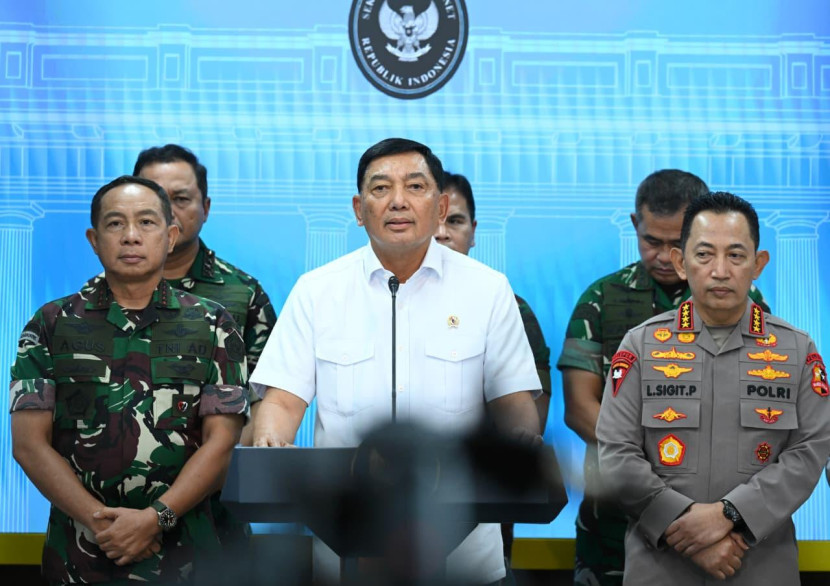
At the ministerial level, Minister of Home Affairs Tito Karnavian stated that the government would seriously address public demands. He explained that all emerging demands would be studied and reviewed within the authority of each institution. Tito also emphasized that the government would
coordinate across ministries and institutions to respond to relevant demands, both directed at the executive and legislative branches. This stance demonstrates that the government is not only listening but also ready to work systematically to accommodate public aspirations.
This directive reflects the government’s commitment to responding to social dynamics in a wise and measured manner. By emphasizing the importance of simplicity and empathy for the community, the government demonstrates that leadership is not just about policy, but also about leading by example. This step simultaneously strengthens the image of a bureaucracy that is adaptive and responsive to public sentiment.
Support for the government’s policies also comes from civil society. The Resolution 98 Network, comprised of former reform activists, stated that the government’s policy direction aligns with the spirit of eradicating corruption and budget efficiency. Haris Rusly Moti, a key figure in the network, highlighted the government’s move to reclaim millions of hectares of illegally acquired palm oil plantations as concrete evidence of its anti-corruption commitment. He also commended the policy of tightening bonuses and allowances for state-owned enterprise executives as a form of fiscal efficiency that favors the people.
Furthermore, he assessed that this policy reflects the government’s concern for community groups that have been underserved. In the context of the demonstrations, the Resolution 98 Network called for peaceful actions and the avoidance of violence. They welcomed the government’s commitment to take firm action against those responsible for incidents that resulted in loss of life, as a form of upholding justice and protecting citizens’ constitutional rights.
The steps taken by the government demonstrate that demonstrations are not viewed as a threat, but as part of a healthy democratic process. A government that listens, responds, and acts is a strong one and deserves the people’s trust. Firm anti-corruption policies not only address the protesters’ demands but also lay the foundation for a more just and dignified future for Indonesia.
An Indonesia free from corruption is an Indonesia that upholds the values of integrity, justice, and prosperity. Imagine a country where the state budget is used entirely for education, health, and development. With strong political will, active civil society participation, and consistent law enforcement, this ideal is certainly achievable.
The government has taken a major step. Now is the time for all elements of the nation to unite, maintain momentum, and continue to oversee anti-corruption policies. A progressive and dignified Indonesia is one free from corruption.
If you would like this version adapted for a specific media outlet or a more formal or popular editorial style, I can help you with that.
An Indonesia without corruption is an Indonesia that upholds the values of honesty, justice, and prosperity. Imagine a country where public funds are used entirely for education, health, and development. Where state officials are moral role models, not symbols of luxury. With strong political commitment, civil society support, and consistent law enforcement, Indonesia can realize these ideals.
The government has taken a major step. Now is the time for all elements of the nation to unite, maintain momentum, and continue to oversee anti-corruption policies. Because a beautiful Indonesia is one free from corruption. An Indonesia without corruption is not just a hope, but a goal that can be achieved with collective commitment. In a country free from corruption, children can dream big without being limited by inequality, and every citizen has an equal right to progress. That is the Indonesia we aspire to: an Indonesia that is just, prosperous, and dignified in the eyes of the world.
)* The author is a government policy observer
