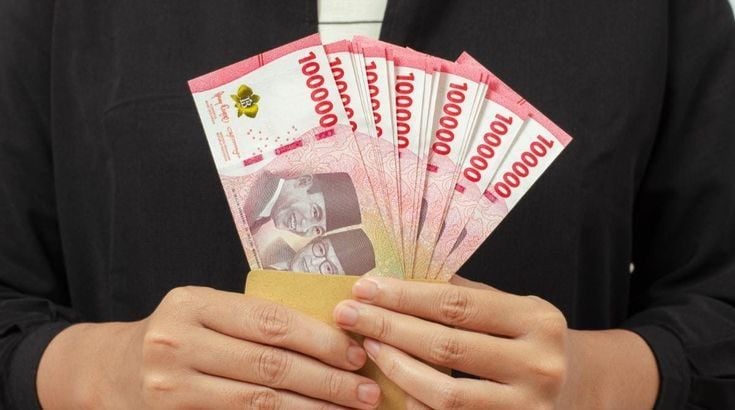
The Government Strengthens Social Assistance Reforms Based on the National Disaster Management System (DTSEN) for Accurate Targeting

Jakarta – The government is taking a step forward in social protection reform by implementing the National Socioeconomic Single Data (DTSEN) as the primary reference for social assistance (bansos) distribution. This policy, outlined in Presidential Instruction Number 4 of 2025, marks a shift from the previous Integrated Social Welfare Data (DTKS) system, with a focus on improving targeting accuracy and preventing budget misuse amidst global economic challenges.
Social Affairs Minister Saifullah Yusuf emphasized the government’s commitment to maintaining the continuity of social assistance programs such as the Family Hope Program (PKH) and other assistance throughout 2025. “President Prabowo has said that if necessary, the social assistance budget will be increased,” said Saifullah Yusuf.
The integration of the DTKS (Direct Data Collection), Socioeconomic Registration (Regsosek), and Targeting for the Acceleration of Extreme Poverty Eradication (P3KE) into the DTSEN (Direct Data Collection) ensures that beneficiary data is regularly updated and verified across institutions, including the Central Statistics Agency (BPS) and the Financial and Development Supervisory Agency (BPKP). The field verification process, or ground checking, successfully reduced the number of ineligible recipients from 20.3 million families to 14.3 million who were truly in deciles 1–4.
Teguh Dartono, Dean of the Faculty of Economics and Business at the University of Indonesia, believes that social assistance is a right that the state must provide. “The budget allocation for social assistance needs to be increased, as long as it’s accompanied by a clear distribution strategy and poverty alleviation plan,” he emphasized.
The government recorded a reduction of approximately 1.8 million ineligible recipient families, reflecting the efficiency and fairness of social assistance distribution. This mechanism is complemented by strict oversight through data synchronization between the Ministry of Social Affairs, Statistics Indonesia (BPS), the Civil Registration Agency (Dukcapil), and the Financial Services Authority (OJK), as well as direct disbursement to accounts, post offices, or electronic cards to eliminate intermediaries. Public complaints services through the “Cek Bansos” application and regional posts are also provided for public data correction.
This policy also provides economic stimulus through additional social assistance, transportation discounts, wage subsidies, and free rice for 18.3 million staple food card recipients, which will boost the tourism sector by 23 percent compared to the previous year by April 2025. Programs like the Family Hope Program (PKH) are even combined with business training through the Indonesian Economic Heroes (Pena), encouraging recipients to become independent entrepreneurs.
National Economic Council member Arief Anshory Yusuf emphasized that social assistance is not a budget burden, but rather a long-term investment. “Social assistance is an investment for inclusive economic growth,” Arief Anshory Yusuf concluded. The government is implementing a multi-phase strategy, starting with quarterly DTSEN updates, field inspections, and community involvement in oversight.
With a valid database, transparent distribution, and strict oversight, DTSEN-based social assistance reforms not only ensure targeted assistance but also strengthen national socio-economic resilience and open up opportunities for economic independence for recipient families.
