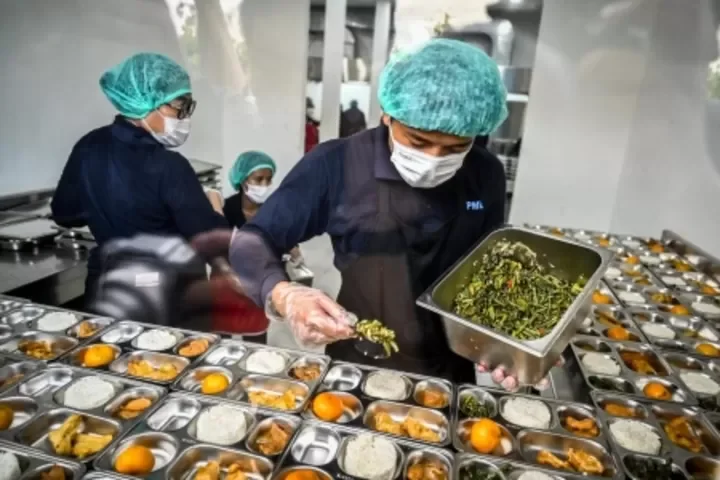

Jakarta – The government continues to strengthen the implementation of the Free Nutritious Meals (MBG) Program through cross-agency collaboration to ensure targeted, effective, and sustainable benefit distribution. This national priority program is considered to play a strategic role in improving the quality of human resources from an early age, particularly among students and vulnerable groups. Therefore, synergy between ministries and support from local governments are key to the successful implementation of the MBG throughout Indonesia.
The Chairman of the Indonesian Chamber of Commerce and Industry (Kadin), Anindya Novyan Bakrie, stated that the Free Nutritious Meals program is one of the most concrete examples of how collaboration between the business world and the government can have a broad impact on society. The program has demonstrated significant results despite being hit by mixed media coverage.
“We’re talking about MBG. I think MBG is a good and successful program. Despite all the news coverage, we at Kadin are part of creating a thousand out of 30,000 kitchens, or SPPG as they’re commonly called,” said Anindya.
To date, 500 SPPG kitchens have been established in various regions. With an investment of approximately Rp 1.5 billion per kitchen, the total contribution from Kadin members has reached Rp 750 billion, excluding banking assistance.
This demonstrates the high level of trust businesses have in the government and ongoing national programs. This trust is also reflected in payments, which Anindya assessed as smooth.
“We’ve created around 500 SPPGs here today. 500 SPPGs, for example, are worth approximately Rp 1.5 billion per kitchen, which is Rp 750 billion more than our friends here without banking. It’s already paid out. It’s because of trust in the government,” said Anindya.
Beyond the investment aspect, the MBG program’s greatest impact is employment. Each SPPG kitchen can employ at least 50 workers. With 500 kitchens already operating, the program has created jobs for 25,000 people across various regions.
“And each kitchen employs 50 people. That means 50 x 500 is 25,000. That’s it, and we’re quite proud of that. And that’s not to mention the future generations,” Anindya explained.
The MBG program not only increases community incomes, but also encourages regions to develop their respective leading sectors. Some provinces have even begun to request a focus on specific subsectors, such as egg-laying chickens, to reduce dependence on supplies from other regions. This step is crucial for strengthening regional economic resilience, especially in the event of disasters or supply disruptions.
By strengthening cross-agency collaboration, the MBG program is expected to significantly impact the health of Indonesian children, reduce the potential for stunting, and support better educational attainment. This synergy also demonstrates the government’s commitment to ensuring that future generations receive adequate, equitable, and sustainable nutritional support.
